
Sign Language Translator BSL – Tools and Interpretation

Searching for a sign language translator BSL users can rely on brings up a mix of professional interpretation services, technology tools, and experimental apps. Understanding what’s currently available — and the significant limitations of automated translation — helps you find the right solution whether you need BSL interpretation for a meeting, an event, a medical appointment, or everyday communication.
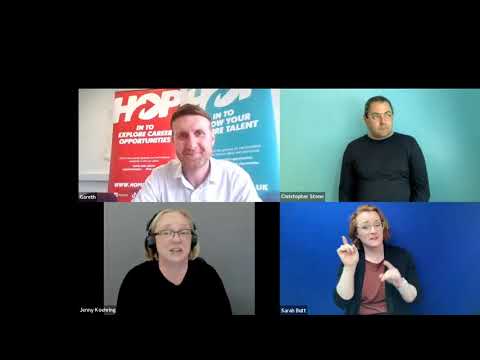
Professional BSL Interpreters
Qualified BSL interpreters are the gold standard for accurate, reliable BSL translation. Registered interpreters have completed years of BSL study (typically to Level 6), undergone rigorous assessment, and are registered with the National Registers of Communication Professionals working with Deaf and Deafblind People (NRCPD). They provide real-time translation between English and BSL in both directions.
BSL interpreters work across a wide range of settings — medical appointments, legal proceedings, workplace meetings, educational settings, conferences, broadcasts, and social events. Each setting requires specific knowledge and skills beyond general BSL fluency. Medical interpreters need health terminology. Legal interpreters need courtroom procedures. The profession involves continuous professional development to maintain competence across these diverse contexts.
Booking a BSL interpreter typically involves contacting an interpreting agency, though some interpreters accept direct bookings. Costs vary by duration, complexity, and location, but expect £25 to £50 per hour for standard bookings with additional charges for travel, unsociable hours, and specialised settings. For public services like NHS appointments, the service provider is legally required to arrange and fund interpretation under the Equality Act.
Practice Makes Perfect
Test your sign language skills with our free practice app.
There is a significant shortage of qualified BSL interpreters in the UK. Demand regularly exceeds supply, leading to booking difficulties, long wait times, and situations where Deaf people cannot access interpretation when they need it. This shortage is one of the driving factors behind interest in technology-based translation solutions, though current technology cannot replicate what a qualified human interpreter provides.
Remote BSL Interpretation Services
Video Remote Interpreting (VRI) connects Deaf people with BSL interpreters via video call. Services like SignLive and InterpreterNow provide on-demand access to qualified BSL interpreters through smartphone apps and web platforms. You open the app, connect to an interpreter, and the interpreter facilitates communication between you and a hearing person — whether that’s a phone call, a face-to-face interaction, or an online meeting.
VRI has dramatically improved access to BSL interpretation for everyday situations. Making a phone call to a doctor’s surgery, speaking with a utility company, or handling a banking query — situations where booking an in-person interpreter would be impractical — become accessible through VRI. The interpreters are qualified professionals providing the same quality of interpretation as in-person services.
Some VRI services are free for Deaf users. The UK government funds certain relay services that enable Deaf BSL users to make phone calls through a BSL interpreter at no cost. Other VRI platforms operate on subscription or pay-per-use models. Check eligibility and pricing for the specific service, as the landscape of funded and commercial VRI services continues to evolve.
Limitations of VRI include dependency on good internet connectivity, the inability to see the full signing space on a small screen, and challenges in complex multi-party conversations. VRI works excellently for one-to-one interpreted conversations but can struggle with group discussions, noisy environments, or situations where visual context beyond the screen is important. In-person interpretation remains preferable for complex or high-stakes situations.
BSL Translation Technology
Automated BSL translation technology is in active development but remains far from reliable. Several startups and research projects are working on systems that can recognise BSL from video input and translate it to English text, or generate BSL avatars from English text input. The technical challenges are immense, and no current product approaches the accuracy of a human interpreter.
Sign language recognition technology faces fundamental difficulties. BSL uses three-dimensional space, subtle hand orientation differences, facial expressions with grammatical meaning, and body movement — all of which must be captured and interpreted correctly. Current computer vision systems struggle with the complexity and variability of natural BSL, particularly at the sentence and discourse level rather than individual sign recognition.
BSL avatar technology generates animated figures that produce BSL signs from text input. While visually impressive, current avatars produce stilted, grammatically simplified signing that lacks the natural flow, facial expression, and spatial grammar of human signing. Deaf community feedback on avatar technology has been mixed, with many feeling that the quality is not yet sufficient for meaningful communication.
Be cautious of apps and products claiming to “translate” BSL. Many sign language translation apps actually only recognise a small set of isolated signs or the manual alphabet — far from the connected discourse translation that real communication requires. Claims of BSL translation breakthroughs in media coverage often overstate the actual capabilities of the technology. Genuine BSL translation at human interpreter quality remains a long-term research goal, not a currently available product.
Learning BSL Instead of Relying on Translation
For ongoing communication with Deaf people — a colleague, friend, family member, or regular customer — learning BSL yourself is more effective than relying on translation. Even basic BSL skills enable direct communication that builds stronger relationships, reduces dependency on third parties, and demonstrates genuine respect for the Deaf person’s language.
BSL courses are widely available and accessible. Signature-accredited Level 1 courses take 20 to 30 weeks and give you foundational conversational skills. For immediate basic communication, free online resources can teach you greetings, common phrases, and the manual alphabet within days. The investment of time in learning BSL yields ongoing returns that translation services — however good — can never match.
Workplaces benefit from having BSL-skilled staff rather than relying entirely on interpreters. An employee who can communicate in BSL with Deaf colleagues and customers provides immediate, natural interaction without the delay and cost of booking interpretation. Many employers now support BSL learning as part of equality, diversity, and inclusion initiatives, sometimes funding courses for interested staff.
Translation and interpretation will always be needed for complex, high-stakes communication. Medical consultations, legal proceedings, and formal workplace processes require the precision that only qualified interpreters provide. But for everyday interaction — chatting in a corridor, ordering at a café, welcoming a Deaf customer — your own BSL skills create the direct human connection that makes communication meaningful, not just functional.
Related Articles
Practice ASL Signs
Use your camera to practice signs and get real-time AI feedback on your technique.
Free · No signup required