
How to Learn BSL – Your Complete Starter Guide

If you’re wondering how to learn BSL, the good news is that British Sign Language is accessible to everyone regardless of age, background, or ability. BSL is used by over 150,000 people in the UK as their primary or preferred language, and learning it connects you with the vibrant Deaf community while developing a valuable life skill.
Where to Start with BSL
Begin with the BSL manual alphabet. This two-handed system lets you spell any word, giving you a communication safety net from day one. Spend your first week learning all 26 letters and practising fingerspelling your name until it flows smoothly. Free alphabet charts and tutorial videos are widely available online.
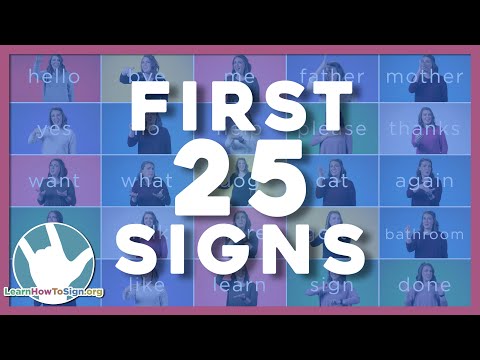
Learn your first ten signs for everyday essentials. Hello, goodbye, thank you, please, yes, no, sorry, help, good, and bad give you the foundation for polite basic interaction. These signs are simple to learn and immediately useful.
Understand from the start that BSL is not visual English. It’s a complete, independent language with its own grammar, word order, and cultural context. BSL uses topic-comment sentence structure, facial expressions for grammar, and spatial referencing — all different from English. Approaching BSL as its own language rather than trying to translate English word-for-word is essential for genuine progress.
Decide your learning goal early. Are you learning for personal communication with a Deaf friend or family member? For career purposes? For general enrichment? Your goal shapes which learning methods will serve you best and how much time and investment your BSL journey will require.
Best Ways to Learn BSL
A formal Signature-accredited course provides the most structured path. Evening classes at local colleges, running once a week for 20 to 30 weeks, offer qualified tutor guidance, regular practice, and a nationally recognised qualification. This is the recommended starting point for serious learners.
Online courses offer flexibility for those who can’t attend in-person classes. The best online BSL courses include live video sessions with Deaf tutors, interactive exercises, and structured progression. Signature-approved online courses lead to the same qualifications as classroom-based learning.
Self-study using free online resources works as a complement to formal courses or as a starting point. YouTube channels, BSL SignBank, social media content, and dictionary apps provide vocabulary building and passive exposure. However, self-study alone lacks the interactive feedback and guided grammar instruction that courses provide.
Deaf community engagement is the single most powerful accelerator. Attending Deaf clubs, social events, and practice groups provides real-world signing experience with native BSL users. This immersion develops fluency, cultural understanding, and confidence that no course or app can fully replicate. Start engaging with the Deaf community as early as possible in your learning.
Practice Makes Perfect
Test your sign language skills with our free practice app.
Essential BSL Skills to Develop
Receptive skills — understanding what others sign — are as important as expressive skills. Many learners focus on producing signs but neglect training their eye to read other people’s signing. Watching BSL content at natural speed, even when you don’t understand everything, develops this crucial receptive ability over time.
Facial expressions serve grammatical functions in BSL that have no equivalent in English. Questions, negation, emphasis, and emotional tone are all conveyed through your face. Practise signing in front of a mirror to check that your facial expressions match your intended meaning. A sentence signed with a neutral face is like a spoken sentence with no intonation.
Spatial awareness develops with practice. BSL uses the space in front of your body to establish locations for people, objects, and concepts. Once you place something in a specific location, you can refer back to it by pointing or directing signs toward that spot. This spatial grammar is uniquely beautiful and becomes intuitive with experience.
Fingerspelling fluency requires dedicated practice. While most BSL communication uses vocabulary signs rather than fingerspelling, you’ll encounter fingerspelling in every conversation. Practise both producing and reading fingerspelled words at increasing speeds. Even a few minutes of daily fingerspelling practice makes a significant difference over weeks and months.
Staying Motivated on Your BSL Journey
Set short-term goals alongside your long-term aspirations. “Learn 50 new signs this month” or “attend one Deaf event this term” gives you achievable milestones that maintain momentum. Celebrating these smaller victories sustains your motivation through the longer journey to fluency.
Find a signing partner for regular practice. Having someone to practise with — whether a fellow learner, a patient friend, or an online signing buddy — provides accountability and interactive experience. Two learners practising together progress faster than either would alone.
Consume BSL content daily. Following Deaf creators on social media, watching BSL Zone, and seeking out BSL-interpreted content keeps the language present in your life between formal study sessions. This daily exposure prevents the “use it or lose it” effect that can slow progress between courses.
Remember why you started. Whether you’re learning for a relationship, a career, or personal growth, reconnecting with your original motivation during challenging moments keeps you moving forward. The Deaf people you’ll eventually communicate with, the connections you’ll build, and the perspectives you’ll gain make every hour of practice worthwhile on your BSL learning journey.
Related Articles
Practice ASL Signs
Use your camera to practice signs and get real-time AI feedback on your technique.
Free · No signup required