
American Sign Language Vs British Differences

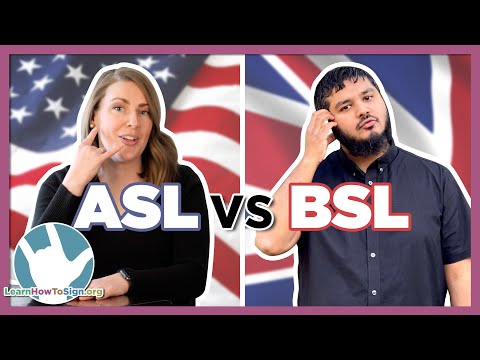
The comparison of American Sign Language vs British sign language reveals two fundamentally different languages despite both serving English-speaking Deaf communities. Many people assume that ASL and BSL would be similar since both countries share a spoken language, but in reality, these two sign languages evolved from entirely separate roots and are mutually unintelligible to their respective users.
Historical Origins of ASL and BSL
The most surprising fact about ASL and BSL is that they belong to completely different language families. British Sign Language evolved organically within the British Deaf community over several centuries, with documented use dating back to the 1570s. It developed independently within Deaf schools and communities across England, Scotland, Wales, and Northern Ireland.
American Sign Language, by contrast, has strong French roots. When Thomas Hopkins Gallaudet travelled to Europe in 1816 to learn methods for educating Deaf students, he was unable to gain access to British Deaf education methods, which were closely guarded as trade secrets by the Braidwood family. Instead, he connected with Laurent Clerc, a Deaf educator from the Institut National de Jeunes Sourds in Paris, and brought him back to America.
Clerc’s French Sign Language (LSF) merged with the local sign languages already in use among American Deaf communities, including Martha’s Vineyard Sign Language, to form what we now know as ASL. This means ASL is linguistically closer to French Sign Language than to British Sign Language — a fact that surprises most people.
BSL, meanwhile, gave rise to its own family of languages known as BANZSL, which includes Australian Sign Language (Auslan) and New Zealand Sign Language (NZSL). These three languages share approximately 80 percent of their vocabulary due to their common British origins, making BSL signers and Auslan signers far more mutually intelligible than BSL and ASL signers.
Alphabet and Fingerspelling Differences
One of the most immediately visible differences between ASL and BSL is their fingerspelling systems. ASL uses a one-handed alphabet where each letter is formed by a single hand. BSL uses a two-handed alphabet where both hands work together to create each letter formation. These systems are completely different and share virtually no common letter forms.
The ASL one-handed alphabet was inherited from the French manual alphabet, which was developed in the 18th century. Each of the 26 letters is formed by specific finger positions and orientations of a single hand, making it possible to fingerspell while holding an object in the other hand or while one hand is otherwise occupied.
Practice Makes Perfect
Test your sign language skills with our free practice app.
The BSL two-handed alphabet has roots dating back several centuries in Britain. Each letter requires a specific arrangement of both hands, often with one hand acting as a base and the other creating the distinguishing feature. The two-handed system produces larger, more visible letter shapes that can be easier to read from a distance, which is an advantage in group settings.
These different alphabets mean that a person trained in ASL fingerspelling cannot read BSL fingerspelling and vice versa. Even the sign for the letter A is completely different in the two systems. This fundamental difference in the most basic component of each language underscores just how distinct ASL and BSL truly are from each other.
Vocabulary and Grammar Contrasts
The vocabulary differences between ASL and BSL are extensive. Signs for the same concept are almost always different between the two languages. The BSL sign for mother bears no resemblance to the ASL sign for the same word. Similarly, common signs for concepts like water, school, and house are completely distinct in each language.
Research estimates that ASL and BSL share only about 30 percent of their vocabulary — roughly the same degree of overlap you would find between any two unrelated sign languages. Compare this with the 80 percent overlap between BSL and Auslan, and it becomes clear that geographic proximity to Britain matters far more than shared spoken language in determining sign language similarity.
Grammatically, both ASL and BSL are visual-spatial languages that use facial expressions, body positioning, and spatial referencing to convey meaning. However, the specific grammatical rules differ. BSL tends to use a topic-comment sentence structure more consistently, while ASL has more flexibility in word order. The use of mouth patterns also differs significantly — BSL uses mouthed English words as a grammatical feature more extensively than ASL does.
Both languages use classifiers — handshapes that represent categories of objects — but the specific classifier systems have differences. The handshape used to represent a person standing might differ between ASL and BSL, and the conventions for depicting movement, location, and spatial relationships have their own language-specific rules.
Cultural and Community Differences
The Deaf communities in America and Britain, while sharing some common experiences, have developed distinct cultural practices and institutions. The American Deaf community has a strong tradition of Deaf education centred around Gallaudet University in Washington, D.C. — the world’s only university designed specifically for Deaf and hard-of-hearing students. Gallaudet has been a cultural hub for the American Deaf community since its founding in 1864.
The British Deaf community has its own rich institutional history, including the British Deaf Association (founded in 1890) and a tradition of regional Deaf clubs that have served as social and cultural centres for generations. The BSL recognition campaign, which culminated in BSL being recognised in the BSL Act of 2022, was a landmark achievement for Deaf rights in the United Kingdom.
Attitudes toward sign language in education have followed different trajectories in each country. The United States was an early leader in sign language education through the establishment of residential Deaf schools, though the oralist movement of the late 19th and early 20th centuries disrupted this tradition. Britain experienced a similar oralist period but has seen a strong revival of BSL-based education in recent decades.
International Deaf events, such as the Deaflympics and World Federation of the Deaf conferences, bring ASL and BSL users together. In these settings, Deaf people from different countries often communicate using International Sign — a contact variety that draws on multiple sign languages and shared gestural strategies. While not a fully developed language, International Sign facilitates basic communication across sign language boundaries.
Which Sign Language Should You Learn
Choosing between learning ASL and BSL depends primarily on where you live, work, and who you want to communicate with. If you are in the United States, Canada, or parts of West Africa and the Caribbean where ASL influence is strong, learning ASL is the obvious choice. If you are in the United Kingdom, or in countries with BSL-family languages like Australia or New Zealand, BSL is the more practical option.
Both languages are rich, expressive, and fully capable of conveying any concept or emotion. Neither is “better” or “easier” than the other — they are simply different languages that serve different communities. Your decision should be based on practical considerations rather than any perceived hierarchy between the two.
If you plan to travel between ASL-using and BSL-using countries, learning both languages at a basic level can be beneficial. However, be aware that the fundamental differences in alphabet, vocabulary, and some grammatical features mean that knowledge of one does not directly transfer to the other. You would essentially be learning two separate languages, much like learning both English and French.
Regardless of which language you choose, the most important step is to engage with the local Deaf community. Both ASL and BSL are living languages maintained by vibrant cultural communities, and learning either language is most effective when it involves direct interaction with native signers. Explore resources on Deafened.org to begin building your vocabulary in BSL or connect with local Deaf organisations to find classes in your area.
Related Articles
- American Sign Language Vs British Sign Language
- ASL Vs BSL Differences
- ASL Vs BSL Alphabet
- ASL Vs BSL Sign Language
Practice ASL Signs
Use your camera to practice signs and get real-time AI feedback on your technique.
Free · No signup required