
BSL Interpreter in British Sign Language (BSL)
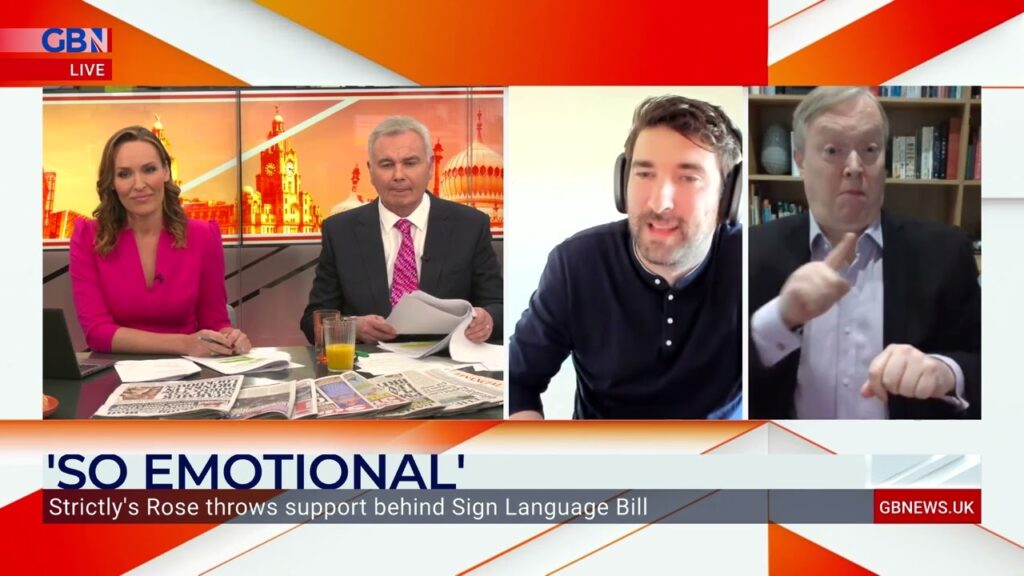
The sign for “BSL Interpreter” is used to refer to individuals who facilitate communication between Deaf and hearing people using British Sign Language. This sign is commonly used in various contexts, such as during meetings, events, or any situation where accessibility is essential for Deaf individuals. It emphasizes the important role interpreters play in bridging communication gaps.
How to Sign “Bsl Interpreter” in BSL
- Begin with your dominant hand in a flat hand shape (like a “B” handshape) at your chest level.
- Move your hand slightly forward and then down while maintaining the flat hand shape.
- With your non-dominant hand, make a “flat” handshape as well, and place it in front of your dominant hand.
- Bring your dominant hand around to the front of the non-dominant hand, indicating the concept of ‘interpreting‘ or ‘translating’.
- Throughout the sign, maintain a neutral or positive facial expression, as this helps convey the meaning of the sign effectively.
Common Mistakes
- Using a fist instead of a flat hand shape, which changes the meaning.
- Failing to use appropriate non-manual features, such as facial expressions that match the context.
- Not maintaining the correct positioning of the hands, which can confuse the sign’s interpretation.
BSL vs ASL
In BSL, the sign for “interpreter” involves a specific movement that reflects the act of interpreting. In contrast, American Sign Language (ASL) uses a different handshape and movement sequence to convey the same concept. Each language reflects its unique grammatical structure and cultural nuances.
Related Signs
- Interpreter – A general term for someone who translates spoken language into sign language.
- Deaf – Referring to individuals who identify as part of the Deaf community.
- Communication – The process of sharing information and ideas.
- Accessibility – Ensuring that everyone can participate equally, especially in communication.
Frequently Asked Questions
How can I use “bsl interpreter” in a sentence?
You can say, “I need a BSL interpreter for the meeting,” by first signing “I” (point to yourself), then “need,” followed by the sign for “bsl interpreter.”
Are there any regional variations for this sign in the UK?
While the core sign remains the same, some regions may have slight variations in movement or emphasis, reflecting local Deaf culture.
What are some similar signs to “bsl interpreter”?
Similar signs include “interpreter,” “deaf,” and “communication,” each with its own unique meaning but related to interaction within the Deaf community.
What tips do you have for learning this sign?
Practice regularly in front of a mirror to check your handshape and movements, and try to incorporate facial expressions that match the context.
Are there any other signs related to accessibility?
Yes, signs like “accessibility” and “support” are often used in conjunction to highlight the importance of inclusive communication.
Practice ASL Signs
Use your camera to practice signs and get real-time AI feedback on your technique.
Free · No signup required