
Manual Alphabet in British Sign Language (BSL)

The “British Sign Language Manual Alphabet” refers to the system of hand shapes used to represent the letters of the English alphabet in BSL. This sign is commonly used when fingerspelling names, places, or words that do not have a specific sign. It is a crucial part of communication within the UK Deaf community, allowing for clarity and precision in language.
How to Sign “Manual Alphabet” in BSL
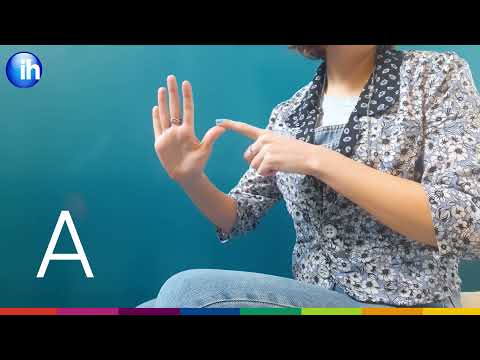
- Start with your dominant hand in a flat position, palm facing forward.
- Bring your hand towards your chest, maintaining the flat position.
- As you move your hand, slightly arch your fingers to represent the shape of the letter “A”.
- Use a neutral facial expression while signing, ensuring that your eyes convey focus and engagement.
- To indicate that you are referencing the Manual Alphabet, you can nod your head slightly as you finish the sign.
Common Mistakes
- Forgetting to maintain a clear palm orientation; the palm should always face forward.
- Moving the hand too quickly, which can make the sign unclear to the viewer.
- Not using facial expressions or non-manual features, which are essential for conveying meaning in BSL.
BSL vs ASL
In BSL, the manual alphabet consists of distinct handshapes for each letter, similar to ASL. However, the handshapes and some aspects of the signing process differ significantly between the two languages, reflecting their unique cultural contexts. For instance, while both systems use fingerspelling, the specific handshapes for letters can vary greatly.
Related Signs
- (Bsl – A related sign indicating the use of BSL within a conversation.
- (Bsl) – Another variant referring to British Sign Language.
- 1 – The sign for the number one, often used in fingerspelling.
- 10 – The sign for the number ten, which can be used in various contexts.
- 100 – The sign for one hundred, useful for numerical discussions.
Frequently Asked Questions
How do I use the manual alphabet in BSL sentences?
You can use the manual alphabet to fingerspell names or words that don’t have a specific sign. For example, when introducing someone, you might fingerspell their name.
Are there regional variations in the manual alphabet across the UK?
Generally, the manual alphabet is consistent across the UK, but some regional signs may differ slightly, so it’s good to learn from local Deaf community members.
What are some similar signs to the manual alphabet?
Other signs related to communication include signs for ‘name’ and ‘spell’, which complement the use of the manual alphabet.
What tips can help me learn the manual alphabet more effectively?
Practice regularly, use visual aids, and engage with Deaf individuals to improve your fingerspelling skills and gain confidence.
How does the manual alphabet support communication in BSL?
The manual alphabet enhances communication by allowing signers to convey precise information, especially for words without established signs.
Can I use the manual alphabet for all words in BSL?
While you can use it for names and specific terminology, BSL also has a rich vocabulary of signs that should be used whenever possible for efficiency.
Is fingerspelling used in daily conversation within the Deaf community?
Yes, fingerspelling is commonly used in daily conversation, particularly for names, places, and technical terms that may not have a direct sign.
Practice ASL Signs
Use your camera to practice signs and get real-time AI feedback on your technique.
Free · No signup required