
BSL Interpreters in British Sign Language (BSL)
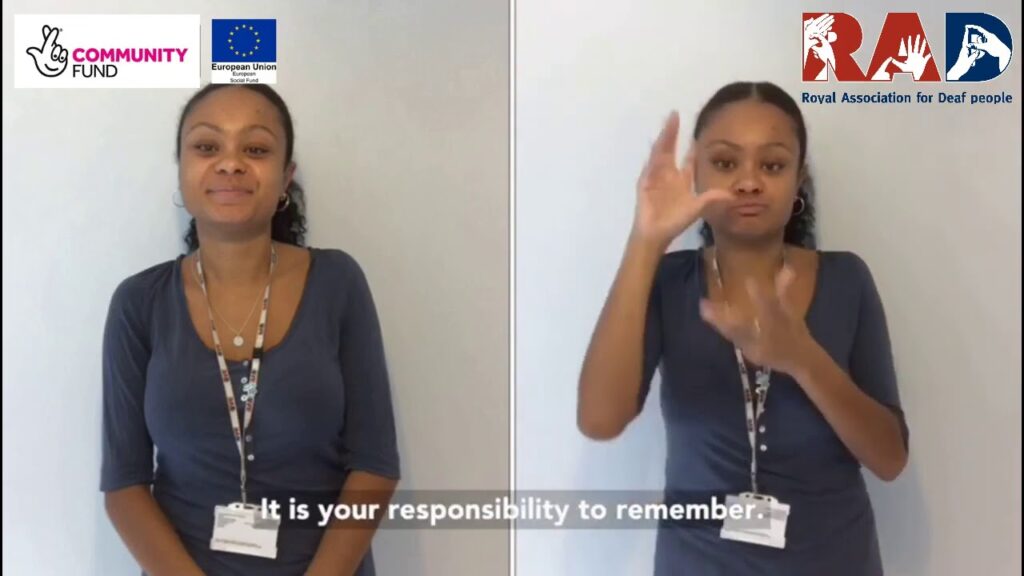
The sign for “BSL interpreters” is an important term within the UK Deaf community, referring to professionals who facilitate communication between Deaf and hearing individuals using British Sign Language. This sign is commonly used in settings such as educational institutions, public services, and social events where interpreters play a crucial role in ensuring access to information.
How to Sign “Bsl Interpreters” in BSL
- Start with your dominant hand in the ‘B’ handshape (flat hand with fingers together).
- Position your hand near your mouth, palm facing inwards.
- Move your hand away from your face while maintaining the ‘B’ handshape.
- Now, switch to an ‘I’ handshape (pinky extended, other fingers curled in) with your non-dominant hand.
- Keep your non-dominant hand stationary in front of your body while you circle your dominant ‘I’ hand around it.
- Use facial expressions to convey the context—an interested or serious expression works well.
Common Mistakes
- Forgetting to use facial expressions, which can change the meaning of the sign.
- Incorrectly positioning the hands; ensure the movements are clear and distinct.
- Not using the correct handshapes, which can lead to confusion in understanding.
BSL vs ASL
In BSL, the sign for “interpreters” involves specific handshapes and movements that are different from American Sign Language (ASL). While ASL uses a different handshape and a more fluid motion to represent interpreters, BSL focuses on a distinctive ‘B’ handshape followed by an ‘I’ handshape to convey the role clearly.
Related Signs
- BSL: The sign for British Sign Language itself.
- Interpreter: A more general sign that can refer to any interpreter, not just BSL.
- Deaf: The sign for Deaf culture and identity.
- Speech: A sign related to spoken language.
- Communication: The broader concept of exchanging information.
Frequently Asked Questions
How do I use “Bsl interpreters” in a BSL sentence?
You can use it in a sentence like “I need BSL interpreters for my meeting.” by signing ‘I NEED BSL INTERPRETERS MEETING’. Ensure to emphasize ‘need’ with your facial expressions.
Are there regional variations for this sign across the UK?
While the sign is generally consistent, some regions may have slight variations in hand movements or speed. It’s good to observe local users.
What are similar signs to “Bsl interpreters”?
Similar signs include ‘INTERPRETER’ and ‘DEAF’. Both communicate roles within the Deaf community.
Any tips for learning this sign?
Practice with a Deaf friend or a BSL class to ensure you’re capturing the nuances of the sign.
Can I use “Bsl interpreters” in formal settings?
Yes, it’s appropriate to use in formal settings, especially when discussing accessibility needs.
How can I improve my signing skills?
Regular practice and engaging with the Deaf community will greatly improve your skills and confidence in using BSL.
Practice ASL Signs
Use your camera to practice signs and get real-time AI feedback on your technique.
Free · No signup required