
New Zealand Sign Language Translator – Services & Tools

When people search for a New Zealand Sign Language translator, they typically need either a professional NZSL interpreter for a specific situation or information about NZSL translation technology. Both exist in New Zealand’s NZSL ecosystem, though human interpreters remain the gold standard for accurate, culturally sensitive communication between Deaf NZSL users and hearing English speakers.
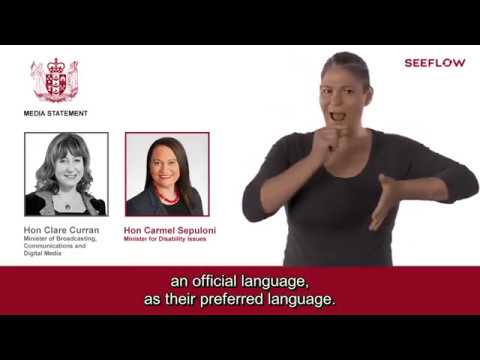
Table of Contents
Professional NZSL Interpreters
NZSL interpreters are qualified professionals who translate between New Zealand Sign Language and spoken English in real time. They work in healthcare, legal, educational, workplace, and community settings, enabling communication between Deaf NZSL users and hearing people. The role requires advanced bilingual fluency, cultural competence, and professional ethics.
The Sign Language Interpreters Association of New Zealand (SLIANZ) is the professional body for NZSL interpreters. SLIANZ members adhere to a code of ethics covering confidentiality, impartiality, and accuracy. When booking an interpreter, requesting a SLIANZ member ensures professional standards.
The NZSL Act 2006 gives Deaf people the right to use NZSL in legal proceedings and when accessing government services, which means interpretation must be provided in these contexts. Healthcare providers, courts, and government agencies have obligations to arrange NZSL interpretation for Deaf clients — the service user doesn’t need to arrange their own interpreter.
Practice Makes Perfect
Test your sign language skills with our free practice app.
New Zealand faces a shortage of qualified NZSL interpreters, with demand exceeding supply in most regions. This shortage means booking early is important for planned events, and urgent interpretation may not always be immediately available. The shortage also drives interest in technology solutions and in training more interpreters.
Accessing NZSL Interpretation
For medical appointments, the healthcare provider (GP practice, hospital, clinic) is responsible for arranging NZSL interpretation. Deaf patients should inform the provider of their NZSL communication need when booking, allowing time to secure an interpreter. If a provider fails to arrange interpretation, this may constitute a failure to meet accessibility obligations.
For workplace communication, employers can access government funding to support NZSL interpretation in the workplace. This funding covers the cost of interpreters for meetings, training, and other work-related communication needs of Deaf employees.
Video Remote Interpreting (VRI) services connect Deaf people with NZSL interpreters via video call, providing on-demand interpretation for phone calls and face-to-face situations. New Zealand Relay Service provides telecommunications relay services using NZSL interpreters, enabling Deaf people to make phone calls through an interpreter.
For events, conferences, and public gatherings, organisers can book NZSL interpreters through interpreting agencies or directly. Providing NZSL interpretation makes events accessible to Deaf attendees and demonstrates commitment to inclusive practice. Book well in advance due to interpreter availability constraints.
NZSL Translation Technology
Automated NZSL translation technology is in development but not yet reliable for practical use. Sign language recognition and generation are among the most challenging problems in language technology due to the three-dimensional, movement-based, facial-expression-dependent nature of sign languages. Current technology cannot approach human interpreter accuracy.
The NZSL Online Dictionary at Victoria University of Wellington is the most useful technology tool currently available — a comprehensive searchable dictionary with video demonstrations. While not a real-time translator, it provides vocabulary reference that helps both Deaf and hearing people communicate about specific concepts.
Be cautious of apps or products claiming to “translate” NZSL. Most sign language translation apps have severe limitations — typically recognising only isolated signs or the manual alphabet rather than connected discourse. Claims of NZSL translation breakthroughs in media often overstate actual capabilities. For reliable communication, human interpreters remain essential.
Research into NZSL technology continues at New Zealand universities and internationally. Future developments may provide useful supplementary tools, but full NZSL translation matching human interpreter quality remains a long-term research goal rather than a current reality.
Learning NZSL Yourself
For ongoing communication with Deaf people, learning NZSL yourself is more effective than relying on translation services. Even basic NZSL skills enable direct communication that builds stronger relationships and reduces dependency on third-party interpreters for everyday interaction.
NZSL courses are available through Deaf Aotearoa, community education providers, and Victoria University. Free resources including the NZSL Online Dictionary, YouTube tutorials, and social media content provide accessible starting points. Engaging with the Deaf community accelerates learning beyond what any translation tool can facilitate.
Workplaces benefit from having NZSL-skilled staff. An employee who can communicate basic NZSL with Deaf colleagues or customers provides immediate, natural interaction without the delay and cost of booking interpretation for routine exchanges.
Translation services and personal NZSL skills serve complementary purposes. Professional interpreters are essential for complex, high-stakes communication (medical, legal, formal). Your own NZSL skills handle everyday interaction — greetings, simple exchanges, relationship-building. Together, they provide comprehensive communication access for Deaf people in your life or workplace.
Related Articles
Practice ASL Signs
Use your camera to practice signs and get real-time AI feedback on your technique.
Free · No signup required