
50 in Sign Language (ASL)
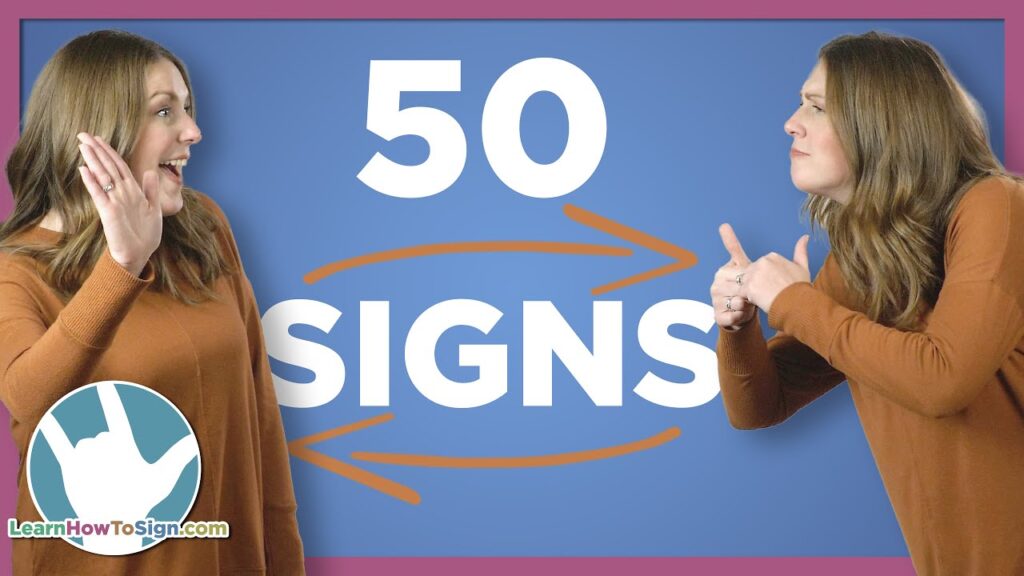
The sign for 50 represents the number fifty in American Sign Language. It’s commonly used in a variety of contexts, such as discussing quantities, age, or other numerical information. Mastering this sign is essential for effective communication in many settings, including education, finance, and daily conversation.
[VIDEO_PLACEHOLDER]
Table of Contents
Forming the sign
- Handshape: Use the dominant hand in the “5” handshape, with fingers spread wide.
- Location: Position your hand slightly in front of your chest.
- Movement: The sign for 50 is made by moving the hand downwards from the “5” position to a “0” handshape, which can be a simple gesture of closing the fingers to form a fist.
- Non-manual signals: Maintain a neutral facial expression throughout the sign. This indicates clarity in the numerical context and ensures the information is received accurately.
When forming the sign for 50, ensure your fingers are well spread for the initial “5”, and smoothly transition into the “0” handshape. The movement should be fluid, so practice maintaining a smooth flow from one formation to the next, as this will help convey the number clearly.
Using “50” in sentences
In everyday communication, “50” can be used in various contexts. For example, you might sign, “I have 50 apples,” which can be conveyed as “Me have 50 apple.” Another example could include discussing age, such as, “She is 50 years old,” which would be signed as “She 50 year old.” When discussing numerical information, context is essential for clarity, so try to incorporate “50” naturally into your sentences.
Signs related to “50”
When discussing numbers or related concepts, you might encounter several other signs:
- 5: The base handshape for the number.
- 0: The sign that represents the zero part of fifty.
- 100: A related numerical sign that helps in counting.
- 25: Another number that often comes up in conversation.
- 75: A sign for a higher number to contrast with fifty.
A learner’s tip
When learning to sign numbers like “50,” it can be helpful to practice alongside a partner. This way, you can get feedback on your handshapes and movements. Using a mirror can also be beneficial, allowing you to see your own hand movements and ensure they are correct. Additionally, try incorporating numbers into daily conversations to strengthen your understanding and recall of the sign.
FAQ
What is the correct handshape for “50”?
The correct handshape starts with a “5,” where your fingers are spread wide, and transitions to a “0,” which is a fist. This transition represents the number fifty.
How do I use “50” in a sentence?
You can use “50” in sentences like “I have 50 dollars” by signing “Me have 50 dollar.” Remember to keep your facial expressions neutral to avoid confusion.
Are there regional variations for the sign “50”?
While the sign for 50 is generally consistent across different regions, minor variations in movement and speed may occur based on local signing communities.
Can “50” be used in different contexts?
Yes, “50” can be used in various contexts, such as discussing age, quantity, or scores in games. It’s a versatile number sign in everyday ASL usage.
What common mistakes should I avoid when signing “50”?
A common mistake is to rush the transition from “5” to “0”. Ensure your movements are clear and smooth to communicate effectively.
Practice ASL Signs
Use your camera to practice signs and get real-time AI feedback on your technique.
Free · No signup required