
Thank You in British Sign Language (BSL)
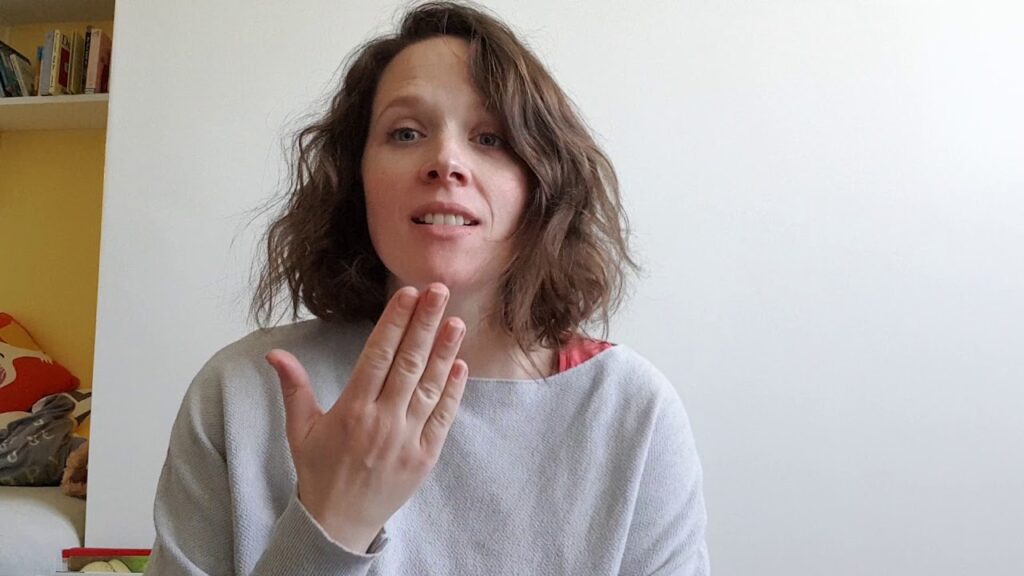
The sign for “thank you” is an important expression of gratitude in the UK Deaf community. It is commonly used in various social interactions, from casual conversations to formal settings, to show appreciation. This sign reflects the values of respect and acknowledgment within the Deaf culture.
How to Sign “Thank You In Bsl” in BSL

- Start with your dominant hand open, with fingers together and palm facing towards your chin.
- Bring your hand away from your chin, moving it slightly forward and outward. This motion should be smooth and gentle.
- As you perform the movement, maintain a friendly facial expression, perhaps with a slight smile, to convey warmth and sincerity.
Common Mistakes
- Forgetting to use a facial expression, which can make the sign feel less genuine.
- Moving the hand too quickly, making the sign unclear.
- Using the non-dominant hand instead of the dominant hand, which can confuse the meaning.
BSL vs ASL
In BSL, the sign for “thank you” involves moving your hand away from your chin, while in ASL, the motion is typically directed from the chin outward with a flat handshape. The differences in hand shapes and movements reflect distinct cultural expressions in each signing community.
Related Signs
- Please – A polite request or addition to your thanks.
- Excuse Me – A way to gain attention or apologize.
- Sorry – An expression of regret or apology.
- Hello – A common greeting to start a conversation.
- Goodbye – A farewell sign used when parting ways.
Frequently Asked Questions
How can I use “thank you” in a BSL sentence?
You can use “thank you” at the end of a sentence to express gratitude, for example, “I enjoyed the meal, thank you.” Position the sign after the statement.
Are there regional variations for “thank you” in BSL?
The sign is generally consistent across the UK, but some regions may have slight variations in speed or facial expressions.
What are some similar signs to “thank you”?
Signs like “please” and “sorry” share similar usage contexts of politeness and acknowledgment.
What tips can help me learn this sign effectively?
Practice in front of a mirror to see your facial expressions and movements, and observe native signers for nuances.
Can I use “thank you” in formal situations?
Yes, “thank you” is appropriate in both formal and informal settings, making it a versatile sign to use.
How important is facial expression in this sign?
Facial expressions are crucial in BSL to convey emotions and sincerity, so always remember to smile while signing.
Practice ASL Signs
Use your camera to practice signs and get real-time AI feedback on your technique.
Free · No signup required