
Differences Between ASL and BSL in British Sign Language (BSL)

The sign for “differences between ASL and BSL” is used when discussing the unique characteristics of British Sign Language (BSL) compared to American Sign Language (ASL). This sign is especially relevant during conversations about language learning, cultural exchanges, or when meeting Deaf individuals from different regions. Understanding these differences helps promote appreciation of both languages within the Deaf community.
How to Sign “Differences Between Asl And Bsl” in BSL
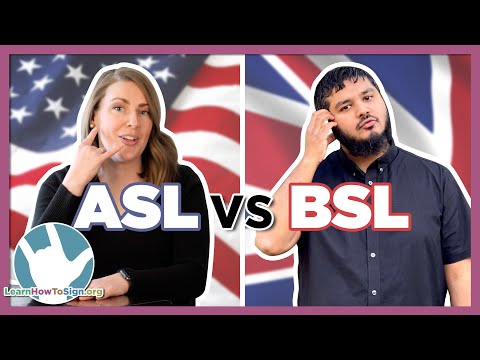
- Start with your dominant hand in a flat ‘B’ shape (palm facing down) to represent BSL. Position it near your chest.
- Move your dominant hand slightly to the right, indicating the language BSL.
- Now make a ‘D’ handshape (like the letter D) with your dominant hand to represent ASL. Place it near your chest, similar to the first handshape.
- Move the ‘D’ handshape slightly to the left, indicating the language ASL.
- As you sign, use facial expressions to show curiosity or interest, emphasizing the comparison. Non-manual features like raised eyebrows can help indicate the topic-comment structure.
Common Mistakes
- Forgetting to use non-manual features, which can lead to confusion about the topic being discussed.
- Mixing up the handshapes for BSL and ASL, which may result in unclear communication.
- Not using space effectively; signs should be positioned relative to each other to illustrate the differences clearly.
BSL vs ASL
In BSL, the sign for “differences between ASL and BSL” uses distinct handshapes and relies heavily on non-manual features to convey meaning. In ASL, the signs may involve different hand configurations and movements. BSL emphasizes the topic-comment structure and uses space to represent the relationship between the two languages, while ASL has its own grammatical structures and spatial orientations.
Related Signs
- (Bsl) – The sign for British Sign Language.
- 1 – The sign for the number one.
- 1 Dollar – The sign for one dollar.
- 10 – The sign for the number ten.
- 100 – The sign for the number one hundred.
Frequently Asked Questions
Can I use this sign in a full BSL sentence?
Yes, you can incorporate this sign into a full sentence by establishing the topic first, such as “Differences between BSL and ASL are…” and then using the sign.
Are there regional variations for this sign across the UK?
While the basic sign remains consistent, some regions may have slight variations in speed or facial expressions used.
What are some similar signs to learn?
It may be useful to learn signs related to “comparison” or “language” to enhance your understanding and vocabulary.
What tips can help me learn this sign better?
Practice in front of a mirror to see your facial expressions and hand positions. Watching videos of native BSL users can also provide valuable context.
Is it important to know both BSL and ASL?
Understanding both languages can enhance communication with a broader range of Deaf individuals and foster cultural appreciation.
How can I practice this sign with others?
Join a local Deaf group or BSL class where you can practice and receive feedback from fluent users.
Practice ASL Signs
Use your camera to practice signs and get real-time AI feedback on your technique.
Free · No signup required