
ASL Vs BSL Sign Language — Full Breakdown
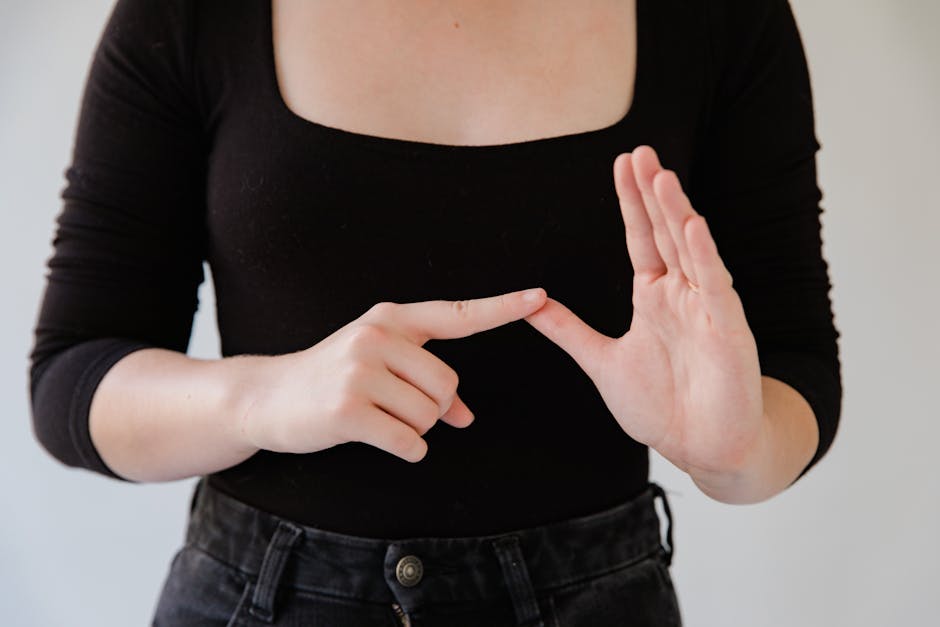
Comparing ASL vs BSL sign language gives you a window into the remarkable diversity of human communication. American Sign Language and British Sign Language are two of the most widely used sign languages in the world, yet they are mutually unintelligible — meaning signers of one language cannot understand the other without dedicated study. This guide covers every major difference and helps you understand what makes each language unique.

Two Languages, Not One
The most important thing to understand about ASL vs BSL sign language is that these are genuinely two separate languages — not two versions of one language, not dialects, and not regional variations. They belong to different language families, developed through different historical processes, and serve Deaf communities that have evolved independently of each other.
ASL descends primarily from French Sign Language (LSF). When Thomas Hopkins Gallaudet and Laurent Clerc founded the American School for the Deaf in 1817, they brought French Sign Language to the United States, where it merged with existing local sign systems to create ASL. This French heritage means that ASL shares more vocabulary with LSF (approximately 60 percent) than it does with BSL (approximately 30 percent).
BSL evolved within the British Deaf community over centuries, with the earliest documented references to organised signing in Britain dating to the 1500s. BSL gave rise to a family of languages known as BANZSL, which also includes Australian Sign Language (Auslan) and New Zealand Sign Language (NZSL). These daughter languages share approximately 80 percent of their vocabulary with BSL.
The percentage of shared vocabulary between ASL and BSL — around 30 percent — is roughly the same as the chance overlap between any two randomly selected, unrelated sign languages. This statistic alone demolishes the myth that sign languages are universal or that English-speaking countries would naturally share a sign language. Sign languages develop within Deaf communities, not hearing ones, and they follow their own evolutionary paths independent of spoken languages.
Comparing How Each Language Works
At the structural level, ASL and BSL share certain broad features that are common to visual-spatial languages worldwide. Both use handshapes, movements, locations, and facial expressions to convey meaning. Both employ spatial grammar, where locations in the signing space represent people, objects, and concepts. Both use classifiers to depict actions and describe objects visually.
However, the specific rules governing these shared features differ significantly. Take fingerspelling: ASL uses a one-handed alphabet inherited from France, while BSL uses a two-handed alphabet with British roots. The letter A in ASL (a closed fist with thumb alongside) looks nothing like the letter A in BSL (dominant hand touching the thumb tip of the non-dominant hand). Every single letter of the alphabet is formed differently in the two systems.
Practice Makes Perfect
Test your sign language skills with our free practice app.
Grammatical non-manual markers — the facial expressions and head movements that serve grammatical functions — exist in both languages but follow different rules. Both use raised eyebrows for yes-or-no questions and furrowed brows for wh-questions, but the precise timing, duration, and combination of these markers with manual signs are language-specific.
BSL uses mouthing (producing English word shapes on the lips while signing) more systematically as a grammatical feature than ASL does. In BSL, mouth patterns can distinguish between signs with identical hand movements, making them a crucial component of the language’s phonological system. ASL incorporates mouthing as well, but it functions more as a supplement than as a core grammatical element.
Verb agreement — where the direction of a verb sign indicates who is doing the action and who is receiving it — exists in both languages but follows different rules about which verbs agree and how the agreement is produced. The specific set of “agreement verbs” is not identical between ASL and BSL, and the spatial conventions for indicating third-person references differ.
Vocabulary That Sets Them Apart
For learners, the vocabulary differences between ASL and BSL are the most immediately apparent contrast. Signs for nearly every common concept — greetings, family members, food, emotions, colours, numbers, and everyday actions — are completely different between the two languages.
The sign for “mother” in ASL involves an open hand with the thumb touching the chin. In BSL, the sign for mother uses an entirely different handshape and location. The same pattern holds for father, sister, brother, and other family terms. A learner who has memorised all ASL family signs would find none of them useful when trying to communicate with a BSL signer.
Colour vocabulary illustrates an interesting structural difference between the languages. Many BSL colour signs are produced near the lips and incorporate a mouth pattern, reflecting BSL’s systematic use of mouthing. ASL colour signs are typically produced in the neutral signing space with distinctive movements like wiggling or tapping, without the lip-based component.
Regional variation within each language adds another layer of complexity. BSL has significant dialectal differences across England, Scotland, Wales, and Northern Ireland, with signs for numbers, colours, and common objects varying between regions. ASL has its own regional variation, and Black ASL — the variety developed within the African American Deaf community — has distinctive features in vocabulary, phonology, and syntax. Learning signs like good in BSL means learning the standard form while being aware that regional variants exist.
Despite the vast differences, occasional similarities between ASL and BSL do exist. These are usually cases of shared iconicity — where both languages independently arrived at visually similar representations for the same concept because the concept naturally lends itself to a particular visual depiction. These coincidental overlaps are rare enough that they provide no practical basis for mutual understanding between ASL and BSL signers.
The Communities Behind Each Language
Language and culture are inseparable, and the Deaf communities that use ASL and BSL have developed rich, distinct cultural traditions. Understanding these communities is essential for anyone studying either language, as sign language learning is not just about memorising signs but about engaging with a living cultural community.
The American Deaf community has approximately 500,000 people who use ASL as their primary language, with millions more who use it as a second language. Gallaudet University in Washington, D.C. has served as the intellectual and cultural centre of this community since 1864. The National Association of the Deaf, state associations, and a network of residential Deaf schools provide the institutional infrastructure that supports ASL and Deaf culture across the United States.
The British Deaf community comprises approximately 87,000 BSL users, according to recent census data. The British Deaf Association has been the primary advocacy organisation since 1890, and regional Deaf clubs across the UK have historically served as social and cultural centres. The recognition of BSL through the BSL Act of 2022 was a culmination of decades of community advocacy and represents a major milestone for Deaf rights in Britain.
Both communities have produced remarkable arts traditions. American Deaf theatre, spearheaded by groups like the National Theatre of the Deaf, has created unique performance styles that blend ASL with visual storytelling. British Deaf arts, supported by organisations like Deafinitely Theatre and the BSL Broadcasting Trust, have their own traditions of theatre, film, and visual arts rooted in BSL and British Deaf experience.
Choosing Your Sign Language Path
If you are deciding between learning ASL or BSL, the most practical factor is geography. Learn the sign language used by the Deaf community where you live, work, or plan to engage. If you are in the United States or Canada, ASL is the clear choice. If you are in the United Kingdom, BSL is what you need. If you are in Australia, Auslan (closely related to BSL) would be most appropriate.
Both languages are equally rich, expressive, and capable of conveying any thought or emotion. Neither is “easier” or “harder” in absolute terms, though individual learners may find certain features of one language more intuitive based on their background and learning style. Both require significant time and commitment to learn, and both reward that investment with access to vibrant cultural communities.
For BSL learners in the UK, formal qualifications are available through Signature (formerly the Council for the Advancement of Communication with Deaf People) at Levels 1 through 6. Community classes, often taught by Deaf instructors, provide accessible entry points. Online resources like Deafened.org offer dictionary entries for signs such as love and friend to supplement your studies.
Regardless of which ASL vs BSL sign language path you choose, the most transformative step is connecting with the Deaf community. Classes teach you signs; community teaches you language. Attend Deaf events, join Deaf social groups, and immerse yourself in the visual world of sign language. This combination of structured learning and authentic interaction is the proven path to meaningful fluency in any sign language.
Related Articles
- ASL Vs BSL
- ASL Vs BSL Differences
- ASL Vs BSL Alphabet
- American Sign Language Vs British Sign Language
Practice ASL Signs
Use your camera to practice signs and get real-time AI feedback on your technique.
Free · No signup required