
Braille in New Zealand Sign Language (NZSL)
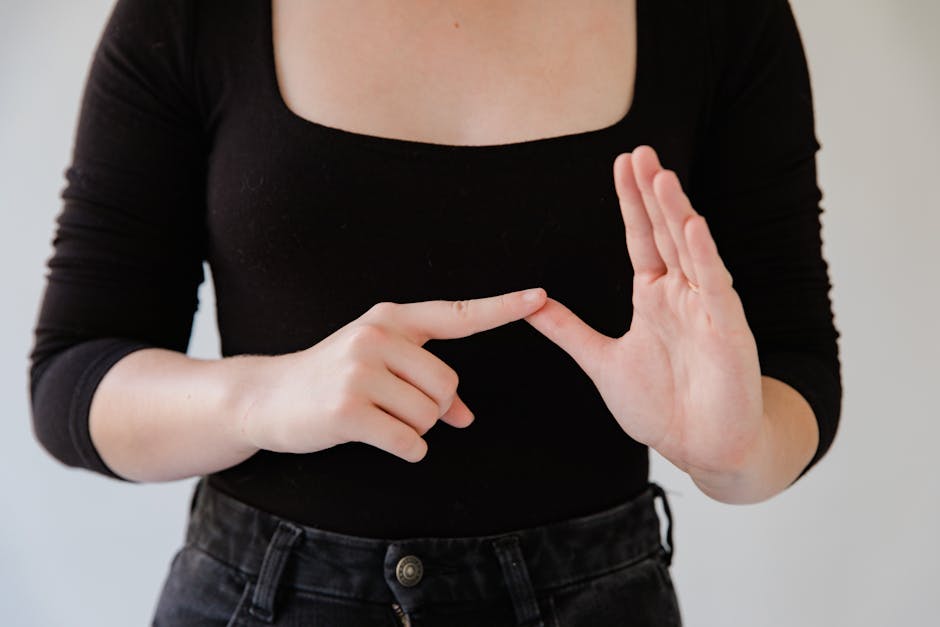
The sign “brailleread” (brailletuhi kāpōnoun; verb) is used in the New Zealand Deaf community to describe the action of reading Braille. This sign is particularly relevant for those who are visually impaired or blind and utilize Braille as a means of reading and communication. It’s a wonderful example of how NZSL integrates concepts that support inclusivity and accessibility.
Table of Contents
How to Sign “Brailleread Brailletuhi KāPōNoun; Verb” in NZSL
- Start with your dominant hand in a flat, open shape, resembling a “B” handshape.
- Position your hand slightly above your non-dominant hand, which should be in a flat palm-down position, representing the surface of a book.
- Move your dominant hand downwards, lightly tapping your non-dominant hand as if you are reading lines of Braille.
- Maintain a focused facial expression that conveys concentration, as you would while reading.
Common Mistakes
- Inadequate hand positioning: Some learners may place their hands too far apart or at incorrect angles.
- Incorrect movement: Failing to use a tapping motion may lead to misinterpretation of the sign.
- Neglecting facial expression: A neutral face can diminish the meaning, as facial expressions are crucial in NZSL.
NZSL vs ASL
In NZSL, the sign for “brailleread” incorporates a unique handshape and movement that differ from ASL. While ASL may use a different hand configuration and motion, the core concept remains similar. It’s an example of how NZSL developed its distinct style influenced by both its own cultural context and elements from BSL.
Related Signs
- Braille – The tactile writing system used by visually impaired individuals.
- Read – The action of interpreting written text.
- Book – A collection of pages bound together, often containing text or images.
- Learn – The process of acquiring knowledge or skills.
- Language – A system of communication used by a community.
Frequently Asked Questions
Can I use “brailleread” in a sentence?
Yes! For example, you can say, “I can brailleread books,” which would be signed by incorporating the sign for “I,” followed by “brailleread” and then “books.”
Are there regional variations for this sign?
While “brailleread” is widely recognized across New Zealand, some regions may have slight variations in hand positioning or movement.
What are some similar signs?
Related signs include “Read” and “Braille”, both of which are important for literacy.
How can I improve my signing?
Practice regularly and consider joining a local NZSL class or community group to enhance your skills.
Is facial expression really important in NZSL?
Absolutely! Facial expressions convey meaning and emotion, so they are essential for effective communication in NZSL.
Can I use this sign while teaching others?
Yes, using “brailleread” can help raise awareness about Braille and inclusivity in learning environments.
What resources are available for learning NZSL?
There are many resources including online courses, local classes, and community groups focused on NZSL.
Practice This Sign
Try signing Brailleread Brailletuhi KāPōNoun; Verb with your camera and get AI coaching on your handshape, movement, and location.
Free · No signup required