
Different in Sign Language (ASL)
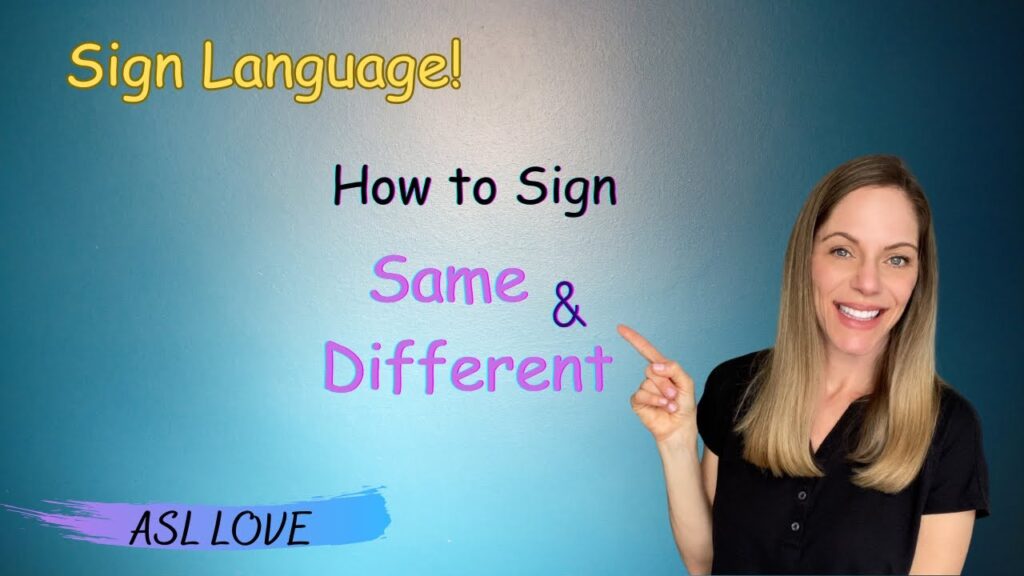
The sign “Different” expresses the concept of dissimilarity or distinction between two or more entities. It’s commonly used in conversations when comparing objects, ideas, or experiences. This sign can help clarify thoughts or emphasize unique characteristics in various contexts.
[VIDEO_PLACEHOLDER]
Table of Contents
How to form the sign Different
- Handshape: The sign begins with both hands in the “F” handshape. This handshape is formed by touching the tips of your thumb and index finger together while keeping the other fingers extended and relaxed.
- Location: Position your hands in front of your body, slightly apart from each other. The spatial arrangement is crucial for conveying the intended meaning, as it visually represents the concept of difference.
- Movement: Start with both hands moving outward and slightly away from each other. This outward motion symbolizes the idea of divergence or distinction. Maintain the “F” handshape throughout the movement.
- Non-manual signals: You may incorporate facial expressions to enhance the sign. A quizzical or raised eyebrow can help convey curiosity about the differences being discussed.
When signing “Different,” it’s essential to emphasize the movement and spacing between your hands. This helps clarify that you are discussing how two or more things do not share similarities. Keep your facial expressions animated to enhance understanding of your message.
Using Different in sentences
Incorporating “Different” into sentences can help clarify comparisons or contrasts. For example:
- “My brother and I are different in personality.” (sign the phrase, then “Different” to emphasize the distinction)
- “These two paintings are different in style.” (show the paintings with your hands before signing)
- “I prefer different types of music, like jazz and classical.” (sign “music” before “Different”)
Signs related to Different
Understanding “Different” can be enhanced by recognizing related signs:
- Same – The opposite of different, indicating similarity.
- Unique – Highlighting something that is one-of-a-kind.
- Change – Conveying transformation or alteration, which can also relate to differences.
- Vary – Referring to variations or multiple forms of something.
A note on regional variations
Variations in signing can occur depending on the region or community. While the core sign for “Different” is widely recognized, some areas may use slight modifications in handshape or movement. It’s beneficial to observe the local signing practices and adapt as needed, ensuring effective communication within diverse settings.
FAQ about Different
What is the significance of using facial expressions when signing “Different”?
Facial expressions convey emotions and context in ASL. Using appropriate expressions while signing “Different” reinforces your message and helps clarify the distinctions being made.
Can “Different” be used in various contexts?
Yes, “Different” can apply to a wide range of topics, including people, objects, ideas, or experiences. It is a versatile sign that helps emphasize contrasts.
Are there any common mistakes when signing “Different”?
One common mistake is not using enough movement or space between the hands. Ensure that your hands move apart to illustrate the concept of difference effectively.
Is “Different” used in both casual and formal settings?
Absolutely! “Different” is suitable for both casual conversations and formal discussions. Its clarity makes it applicable in various contexts.
Practice ASL Signs
Use your camera to practice signs and get real-time AI feedback on your technique.
Free · No signup required