
Both (adjective) in New Zealand Sign Language (NZSL)
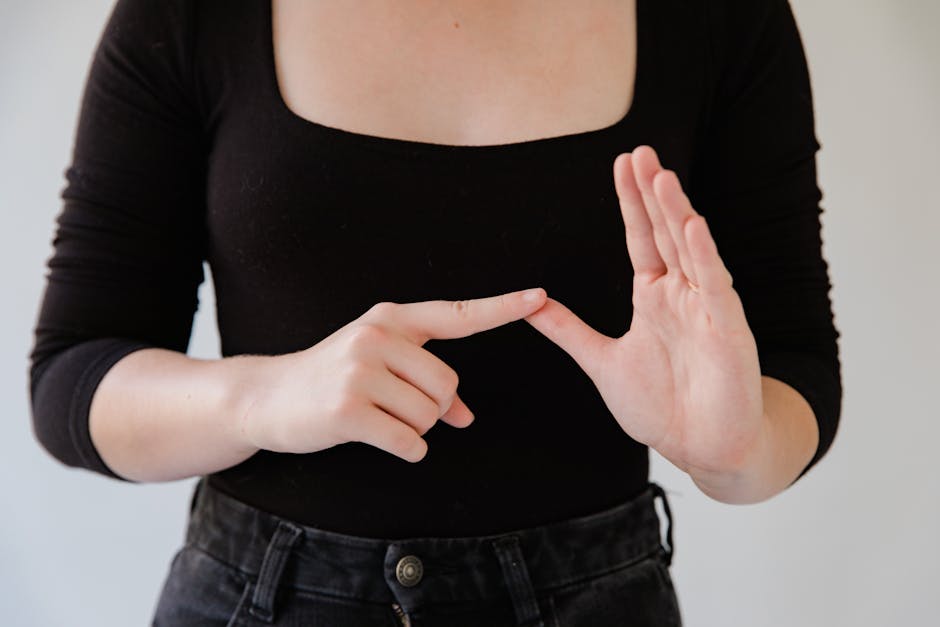
The sign “bothboth ofrāua tahi, tokorua” is used to indicate two items or people together in the New Zealand Deaf community. It is commonly used in everyday conversation, often to express inclusivity or to refer to two things in a shared context.
Table of Contents
How to Sign “Bothboth Ofrāua Tahi, Tokoruaadjective; Determiner; Pronoun” in NZSL
- Start with both hands in a flat handshape (palm facing down) at shoulder height.
- Move both hands slightly apart and then bring them back together in front of your body, maintaining the flat handshape.
- As you bring your hands together, nod your head slightly to indicate the connection between the two items or people.
- Make sure your facial expression is friendly and engaging to convey a positive meaning.
Common Mistakes
- Forgetting to use both hands, which can lead to confusion about the meaning.
- Using a single hand instead of both, which may imply singularity rather than duality.
- Neglecting facial expressions, which are essential for conveying the context of the sign.
NZSL vs ASL
In NZSL, the sign for “bothboth ofrāua tahi, tokorua” distinctly uses both hands moving together to signify duality. In contrast, ASL may use a different handshape and movement, often relying on a single hand to represent two entities, which can create confusion for learners transitioning between the two sign languages.
Related Signs
- (All Of) You – Used to refer to a group of people.
- (All Of) Youyou Allkoutou (Katoa)Pronoun – A pronoun for addressing multiple individuals collectively.
- (Baby’S) Dummy – Refers to a pacifier.
- (Be) Careful – A warning sign to encourage caution.
- (Be) Passive – To indicate a state of being non-active.
Frequently Asked Questions
How can I use “bothboth ofrāua tahi, tokorua” in a sentence?
You can use it in sentences like “I have bothboth ofrāua tahi, tokorua options available for you,” where you are referring to two choices.
Are there any regional variations in how this sign is used across New Zealand?
While the sign remains generally the same across New Zealand, some regions may have slight variations in handshape or movement. It’s always good to check with local signers for any nuances.
What is a similar sign in NZSL?
A similar sign is “both” which can be used in different contexts, but the specific “bothboth ofrāua tahi, tokorua” emphasizes the duality more strongly.
What tips do you have for learning this sign?
Practice in front of a mirror to see your hand shapes and facial expressions. Try using it in conversation to reinforce your learning.
Can this sign be used in formal settings?
Yes, “bothboth ofrāua tahi, tokorua” is appropriate in both informal and formal contexts, as it is a clear and inclusive way to refer to two entities.
What resources can help me learn more NZSL?
Consider joining local Deaf community groups or accessing online NZSL courses to practice and learn from experienced signers.
Practice This Sign
Try signing Bothboth OfrāUa Tahi, Tokoruaadjective; Determiner; Pronoun with your camera and get AI coaching on your handshape, movement, and location.
Free · No signup required