
BSL Video Relay Service – Phone Access for Deaf People

A BSL Video Relay Service (VRS) enables Deaf people to make and receive phone calls through a BSL interpreter. The Deaf person signs to an interpreter via video, and the interpreter voices their words to the hearing caller, then signs the hearing person’s response back. This essential service gives BSL users equivalent phone access to hearing people, removing one of the most persistent communication barriers in daily life.
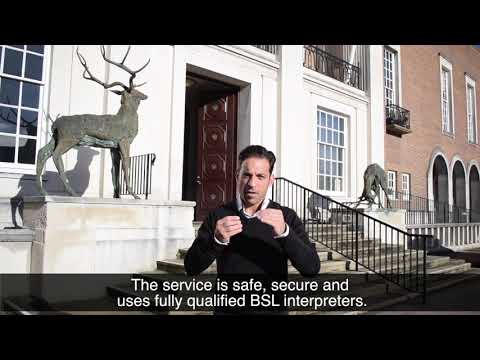
How BSL Video Relay Service Works
The VRS process is straightforward. A Deaf person opens the VRS app or website on their smartphone, tablet, or computer. They connect to a BSL interpreter via video call. The Deaf person tells the interpreter what number they want to call, the interpreter dials it, and the three-way conversation begins.
The interpreter translates in both directions throughout the call. They sign everything the hearing person says so the Deaf person can understand, and voice everything the Deaf person signs so the hearing person can understand. The interpreter maintains neutrality and confidentiality, functioning purely as a language conduit.
Incoming calls can also be handled through VRS. When a hearing person calls a Deaf person’s VRS number, the call is routed through the relay service. The interpreter answers the video call with the Deaf person and voices the hearing caller’s words in BSL. This means Deaf people can receive phone calls just like hearing people.
The entire process happens in real time, making conversations feel natural and immediate. Modern VRS technology has reduced lag and improved video quality significantly, creating smooth communication experiences that closely mirror direct phone calls.
VRS Providers in the UK
Several VRS providers operate in the UK, offering BSL relay interpreting services. These services are typically free to Deaf users, funded through telecommunications industry contributions or direct government funding. The service landscape has evolved significantly in recent years with improved technology and expanded operating hours.
UK VRS providers employ teams of qualified BSL interpreters who work from call centres or home studios. These interpreters handle a wide variety of calls, from routine appointments and customer service enquiries to personal calls and business communications. The role requires fast processing skills and adaptability to constantly changing topics.
Registration with a VRS provider is usually straightforward. Deaf users create an account, receive a dedicated phone number, and can begin making calls immediately. Some services are available 24/7 while others operate during extended business hours. Check individual provider details for current availability.
The quality of VRS varies between providers. Look for services that employ NRCPD-registered interpreters, offer reliable technology with good video quality, and provide adequate operating hours for your needs. User reviews from the Deaf community are valuable sources of information about service quality.
Practice Makes Perfect
Test your sign language skills with our free practice app.
Using VRS Effectively
Ensure you have a stable internet connection before making a call. VRS relies on clear video transmission, and poor connectivity causes frozen screens, lag, and dropped calls. Wi-Fi is generally more reliable than mobile data for VRS calls, though 4G and 5G networks can work well in areas with strong signal.
Set up your device properly. Position yourself in a well-lit area where the interpreter can see your hands, face, and upper body clearly. A plain background helps the interpreter read your signs without visual distractions. These setup steps take seconds but significantly improve communication quality.
Be prepared to brief the interpreter at the start of the call. Tell them who you’re calling, the purpose of the call, and any specific terminology that might come up. This brief context helps the interpreter prepare and provides smoother interpretation from the first moment.
Remember that the hearing person on the other end may not be familiar with relay calls. The interpreter will explain the process if needed, but some hearing callers initially find it unusual to communicate through a third party. Patience from both sides makes the experience comfortable and effective for everyone involved.
VRS for Businesses and Organisations
Businesses should be prepared to receive relay calls from Deaf customers. When a VRS interpreter introduces themselves and explains they’re interpreting for a Deaf caller, staff should treat the call normally. Speak directly as you would to any caller — the interpreter handles the translation seamlessly.
Training customer service staff to handle relay calls improves the experience for Deaf customers. Simple awareness — understanding what VRS is, speaking at a normal pace, and being patient with the slight processing delay — makes a significant difference. Some organisations include relay call handling in their standard customer service training.
Providing your organisation‘s contact details on your website with a note welcoming VRS calls demonstrates accessibility awareness. Deaf customers who know their relay calls will be handled smoothly are more likely to use your services. This small gesture of welcome makes a meaningful impression.
Large organisations can explore whether establishing a dedicated VRS line or BSL-accessible customer service channel serves their Deaf customers better than general relay calls. Some companies with significant Deaf customer bases have developed direct BSL video customer service, eliminating the need for relay interpretation entirely.
The Future of BSL Video Relay
VRS technology continues to improve with better video quality, faster connections, and more user-friendly apps. As 5G networks expand, mobile VRS becomes more reliable, allowing Deaf people to make relay calls from anywhere with the same quality as a fixed broadband connection.
The BSL Act 2022 has increased government attention on BSL accessibility, including phone-based communication access. Policy developments around telecommunications accessibility may lead to expanded VRS funding, longer operating hours, and mandated standards for relay service quality.
Emergency VRS access is an ongoing priority. Ensuring Deaf people can reliably contact 999 through BSL relay in genuine emergencies is critical for safety. Progress has been made, but campaigners continue to push for guaranteed, reliable emergency relay access equivalent to hearing people’s ability to call emergency services.
The integration of VRS with other technologies — smart home devices, video doorbells, and workplace communication platforms — points toward a future where BSL relay becomes seamlessly embedded in daily technology. As these integrations develop, the barriers Deaf people face in a phone-dependent world will continue to diminish, bringing greater equality of access to communication for everyone in the UK’s Deaf community.
Related Articles
Practice ASL Signs
Use your camera to practice signs and get real-time AI feedback on your technique.
Free · No signup required