
BSL Deaf Awareness – Understanding Deaf Culture

BSL Deaf awareness goes beyond learning a few signs — it means understanding Deaf culture, communication needs, and the barriers Deaf people face in a hearing-dominated world. Whether you’re an employer, service provider, educator, or simply someone who wants to be more inclusive, developing genuine Deaf awareness transforms how you interact with Deaf people and makes your environment more accessible.
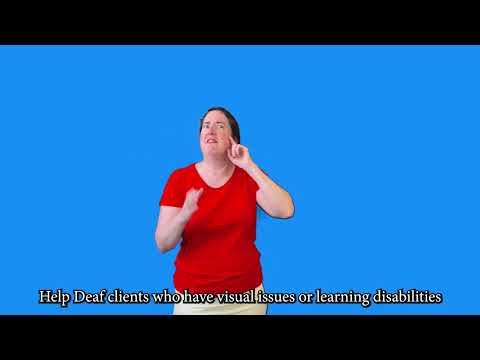
Understanding Deaf Culture
The Deaf community views deafness primarily as a cultural and linguistic identity rather than a medical condition. The capital D in “Deaf” signifies this cultural identity, distinguishing it from “deaf” (lowercase) which refers to the audiological condition. This distinction is important — it reflects how Deaf people see themselves and their community.
British Sign Language is the cornerstone of Deaf culture in the UK. BSL is not just a communication tool — it’s the language through which Deaf people express their identity, share their stories, and build their community. The BSL Act 2022 formally recognised BSL as a language of England, Wales, and Scotland, a landmark achievement for the Deaf community.
Deaf clubs have historically been the social heart of Deaf communities across the UK. These clubs provide spaces where Deaf people can communicate freely in BSL, socialise without barriers, and maintain cultural traditions. While some Deaf clubs have closed in recent years, the community spirit they represent continues through social media, events, and gatherings.
The history of Deaf education in the UK includes a painful period of oralism, when BSL was banned from schools and Deaf children were forced to lip-read and speak. This history shapes the Deaf community’s strong commitment to BSL preservation and their wariness of approaches that prioritise “fixing” deafness over accepting Deaf people as they are.
Communicating with Deaf People
Get the person’s attention before speaking. A gentle wave in their line of sight, a light tap on the shoulder, or flashing a nearby light are appropriate ways to attract a Deaf person’s attention. Never shout, throw objects, or stamp your feet aggressively — these are startling and disrespectful.
Face the person directly and maintain eye contact. If the person lip-reads, they need to see your mouth clearly. Don’t cover your mouth, turn away while talking, or speak while walking. Good lighting on your face helps lip-readers see your lip patterns. Speak at a normal pace — slowing down excessively actually makes lip-reading harder because it distorts natural mouth movements.
Ask how the person prefers to communicate. Not all Deaf people use BSL — some prefer lip-reading, written communication, or a combination of methods. Never assume. A simple “how would you like to communicate?” shows respect and ensures effective interaction from the start.
If a BSL interpreter is present, speak directly to the Deaf person, not to the interpreter. Maintain eye contact with the Deaf person and address them in the first person. “How are you feeling?” rather than “Ask them how they’re feeling.” The interpreter is a language conduit, not a participant in the conversation.
Practice Makes Perfect
Test your sign language skills with our free practice app.
Creating Deaf-Friendly Environments
Visual information is essential. Ensure that announcements, alerts, and instructions are available visually, not just auditorily. Fire alarms should include flashing lights. Queue systems should use screen displays, not just called numbers. Information shared over tannoy or intercom should also be displayed on screens.
Provide BSL interpreter access for appointments, meetings, and events. Under the Equality Act 2010, organisations must make reasonable adjustments for Deaf people. This includes providing BSL interpreters when requested. Budget for interpreter provision and establish relationships with interpreting agencies before the need arises.
Train your staff in basic Deaf awareness. Every employee who interacts with the public should know how to communicate respectfully with Deaf people, how to book an interpreter, and where to find written communication materials. Even basic knowledge prevents awkward situations and demonstrates organisational commitment to inclusion.
Consider your physical environment. Good lighting, minimal background noise, clear sightlines, and quiet meeting spaces all benefit Deaf visitors and employees. Loop systems for hearing aid users, video relay equipment, and visual displays for key information create an environment where Deaf people can participate fully.
Deaf Awareness Training
Formal Deaf awareness training is available from numerous providers across the UK. Courses typically cover Deaf culture, communication strategies, basic BSL, working with interpreters, and legal obligations. Training ranges from half-day awareness sessions to multi-day programmes with practical BSL instruction.
Deaf-led training is the most impactful option. Courses designed and delivered by Deaf professionals provide authentic insight into the Deaf experience. Learning directly from Deaf trainers gives participants genuine cultural understanding and the opportunity to practise communicating with a Deaf person in a supportive setting.
The British Deaf Association, SignHealth, and other Deaf organisations offer bespoke training for organisations. They can tailor content to your sector, whether healthcare, education, retail, or public services. Sector-specific training addresses the particular communication scenarios your staff encounter and provides practical solutions.
Online Deaf awareness courses offer flexible learning for individuals and teams. While less immersive than face-to-face training, online courses provide convenient access to essential knowledge. Look for courses that include video content featuring Deaf presenters and practical exercises, not just text-based information about deafness.
Related Articles
Practice ASL Signs
Use your camera to practice signs and get real-time AI feedback on your technique.
Free · No signup required