
24 in Sign Language (ASL)
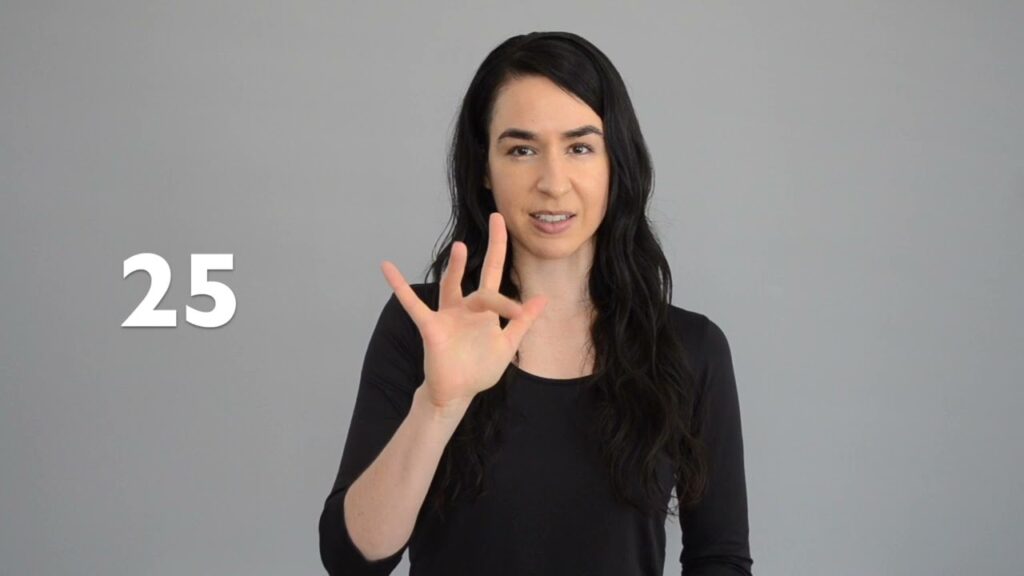
The sign “24” represents the numerical value twenty-four and is commonly used in various contexts, such as counting, telling time, or discussing dates. Whether you are talking about age, sports scores, or other situations where the number is relevant, knowing how to sign “24” is essential for clear communication in the Deaf community.
[VIDEO_PLACEHOLDER]
Table of Contents
How to form the sign “24”
- Handshape: Extend your dominant hand with the palm facing outward. The index and middle fingers should be extended while the other fingers are tucked in. This creates a “2” shape, followed by a “4” shape.
- Location: Place your hand approximately at shoulder height, slightly in front of your body. This position is comfortable for visibility while ensuring the sign is easily recognized.
- Movement: The sign begins by holding the “2” shape and then transitions into the “4” shape. You can do this by touching your chin with the tips of your fingers in the “2” position and then moving your hand forward slightly to form the “4”.
- Non-manual signals: Maintain a neutral facial expression while signing “24”. However, you can emphasize the number or indicate surprise by raising your eyebrows slightly when making the transition between the two shapes.
Signing “24” requires a smooth transition from the “2” to the “4” shape. Practicing the movement will help in fluidity and recognition when communicating with others.
Using “24” in sentences
When incorporating the sign “24” into sentences, it’s often used in contexts such as age, time, or quantity. For example, you might say “I am 24 years old” or “The event starts at 24:00.” Here are a few more examples to illustrate its use:
- “I bought 24 apples at the store.”
- “My favorite number is 24.”
- “The meeting is scheduled for 24 hours from now.”
Related signs
20 – The sign for twenty, often used in conjunction with other numbers.
4 – The sign for four, which is helpful for forming compound numbers.
30 – The next whole number, sometimes used in comparisons or discussions.
24 hours – A useful phrase when discussing time.
Date – Frequently combined with numbers to indicate specific days.
Common regional variations
The sign “24” may vary slightly depending on the region and local Deaf culture. For instance, some regions might use a different handshape or motion. Observing how local Deaf individuals sign “24” can provide insight into these regional differences. This knowledge can enhance your signing fluency and communication with diverse Deaf communities.
FAQ
What is the significance of “24” in Deaf culture?
The number “24” can hold various meanings, including references to age, time, or dates. It can also symbolize an important event or personal milestone.
Can “24” be used in different contexts?
Yes, “24” is versatile, used for counting, indicating time, or discussing specific dates, such as someone’s birthday or an appointment.
Is there a different sign for 24 in other countries?
Yes, other sign languages may have their unique way of signing the number 24. It’s essential to learn the local signs when communicating internationally.
How can I practice signing “24”?
To practice, start by signing in front of a mirror to observe your handshape and movement. You can also sign with a friend or record yourself signing to check your technique.
What are some common mistakes when signing “24”?
A common mistake is not transitioning smoothly between the “2” and “4” shapes. Ensure you practice the flow of the movement for better clarity.
Practice ASL Signs
Use your camera to practice signs and get real-time AI feedback on your technique.
Free · No signup required