
British Sign Language History and Development Guide

The British Sign Language history development story spans centuries of resilience, oppression, and eventual recognition. BSL has evolved from informal communication among Deaf communities into a legally recognised language of the United Kingdom. Understanding this history gives context to BSL’s current status and the ongoing efforts to ensure full accessibility for Deaf people across the UK.
Early Origins of BSL
Sign languages have existed wherever Deaf people have gathered, long before any formal documentation. In Britain, evidence of organised Deaf communities and shared sign languages dates back several centuries. Early records from the 16th and 17th centuries reference Deaf individuals communicating through signs, though these accounts come from hearing observers with limited understanding.
The establishment of Deaf schools in the late 18th and early 19th centuries was pivotal for BSL’s development. Thomas Braidwood opened the first school for Deaf children in Edinburgh in 1760, and similar institutions followed across Britain. These schools brought Deaf children together in significant numbers, creating environments where sign language could flourish and standardise.
Deaf clubs, which began forming in the 19th century, became the social heart of the Deaf community. These clubs provided spaces where Deaf adults could communicate freely in sign language, share culture, and build community. The language that developed in these spaces was shaped by its users, evolving naturally as any living language does.
Regional variations in BSL emerged as different Deaf schools and communities developed their own signs for common concepts. These regional dialects remain part of BSL today. The sign for certain colours, days of the week, and everyday objects can vary significantly between Scotland, Northern England, and the South.
Deaf Education and the Oralist Era
The Milan Conference of 1880 marked a devastating turning point for sign languages worldwide. This international congress of educators voted to promote oral education methods — lip reading and speech — over sign language in Deaf schools. The resolution, passed almost entirely by hearing delegates, had profound consequences for BSL and Deaf communities globally.
Following the Milan Conference, BSL was banned from most Deaf schools in Britain. Children were punished for signing, forced to sit on their hands, and made to focus exclusively on lip reading and speech production. This oralist approach dominated Deaf education for nearly a century, causing immeasurable harm to generations of Deaf children.
Despite the ban in schools, BSL survived because Deaf communities continued to use it outside the classroom. Deaf clubs, family homes, and social gatherings maintained the language through oral education’s darkest period. The resilience of BSL users ensured the language was passed between generations even when institutions tried to eliminate it.
The impact of oralism on Deaf education was devastating. Many Deaf adults educated during this period left school with poor literacy in English and suppressed signing skills, denied full access to either language. The educational and psychological harm of this era continues to affect older Deaf people today.
Practice Makes Perfect
Test your sign language skills with our free practice app.
The Revival and Recognition of BSL
The 1970s and 1980s saw a growing movement to recognise BSL as a legitimate language. Linguistic research, particularly by scholars like Mary Brennan, demonstrated that BSL had all the properties of a natural language including grammar, syntax, and morphology. This academic validation challenged the long-held misconception that sign languages were merely gesture systems.
The British Deaf Association launched campaigns for BSL recognition that gained momentum through the 1990s and 2000s. Deaf activists, supported by hearing allies, lobbied Parliament, organised protests, and raised public awareness of BSL’s status. The community’s determination to see their language formally acknowledged drove decades of advocacy.
In 2003, the UK Government gave BSL informal recognition as a language in its own right. While not legally binding, this acknowledgement was an important symbolic step. It encouraged public bodies to consider BSL accessibility and paved the way for the legislative recognition that would eventually follow.
The development of BSL qualifications through organisations like Signature professionalised BSL education. Standardised courses and examinations created clear pathways for hearing people to learn BSL and for Deaf professionals to gain recognition as tutors, interpreters, and language experts.
The BSL Act 2022 and Beyond
The BSL Act 2022 was a landmark achievement for the UK’s Deaf community. Passed with cross-party support, it legally recognised British Sign Language as a language of England, Wales, and Scotland. The Act places a duty on the Secretary of State for Work and Pensions to report regularly on what government departments have done to promote and facilitate BSL.
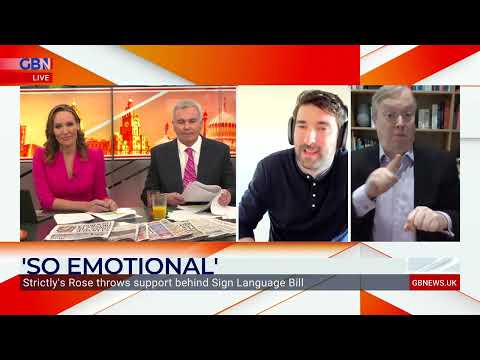
The campaign for the BSL Act was led by Deaf activist and EastEnders actress Rose Ayling-Ellis, whose visibility on Strictly Come Dancing in 2021 brought BSL to mainstream attention. Her passionate advocacy, combined with years of groundwork by organisations like the BDA, created the political will for legislation.
The Act’s practical impact is still developing. Government departments are required to issue guidance on BSL accessibility, and a BSL Advisory Board has been established to oversee implementation. However, campaigners note that the Act primarily covers government communications and does not extend to all public services, education, or the private sector.
Further legislation and policy changes are needed to achieve full BSL accessibility across UK society. Access to BSL interpreters in healthcare, legal settings, and education remains inconsistent. The shortage of qualified BSL interpreters continues to limit Deaf people’s access to essential services despite legal recognition of their language.
BSL Today and Its Future
BSL is used by approximately 87,000 Deaf people as their first or preferred language, with over 150,000 users in total across the UK. It continues to evolve, with new signs emerging for modern concepts like technology, social media, and contemporary culture. Like all living languages, BSL adapts to reflect the world its users inhabit.
Technology has transformed how BSL is taught, shared, and used. Video calling enables Deaf people to sign across distances, BSL content thrives on social media platforms, and video relay services provide interpreted telephone access. These innovations have expanded BSL’s reach and visibility beyond traditional community settings.
Interest in learning BSL from hearing people has surged in recent years. The combination of the BSL Act, Rose Ayling-Ellis’s public profile, and growing awareness of Deaf rights has driven unprecedented demand for BSL courses. This increased interest benefits the Deaf community through greater communication access and cultural understanding.
The future of BSL depends on continued advocacy, education, and community strength. Ensuring Deaf children have access to BSL from birth, training sufficient interpreters, and embedding BSL accessibility across public services remain priorities. The language’s remarkable survival through centuries of suppression speaks to the resilience of the Deaf community and the enduring value of visual communication.
Related Articles
- British Sign Language History Development UK
- British Sign Language for Beginners
- British Sign Language Courses
Practice ASL Signs
Use your camera to practice signs and get real-time AI feedback on your technique.
Free · No signup required