
Know in British Sign Language (BSL)
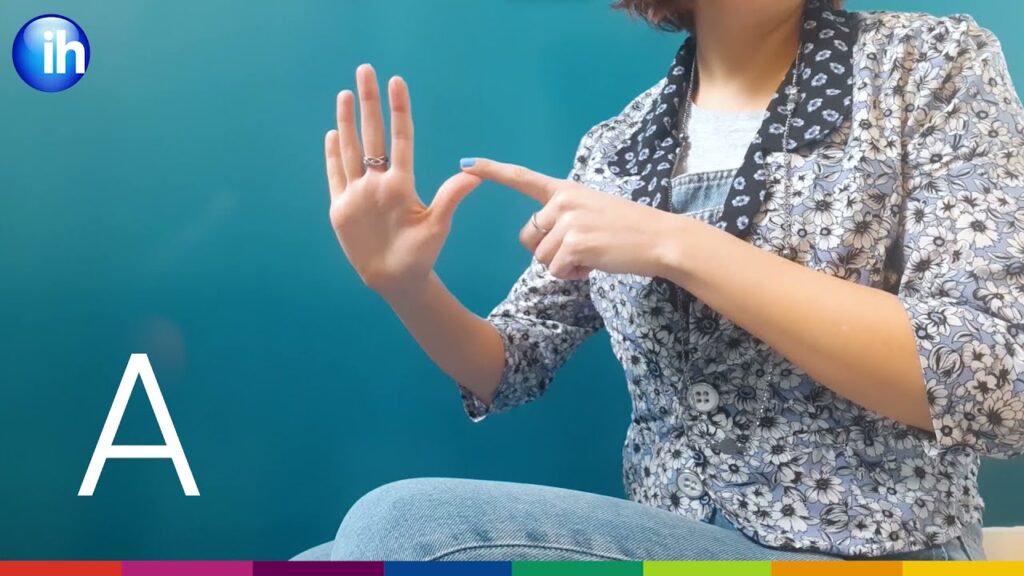
The sign for “know” in BSL is an essential part of everyday communication, conveying understanding or familiarity with a subject. It’s often used in conversations to share knowledge or confirm information among the Deaf community across the UK.
How to Sign “Know” in BSL
- Start with your dominant hand in a flat ‘B’ handshape, palm facing down.
- Position your hand near your forehead, with your fingertips touching your forehead.
- Move your hand away from your forehead in a small arc, keeping your fingers extended and hand flat.
- Maintain a neutral facial expression or a slight nod to indicate understanding, which is important for non-manual features in BSL.
- Optionally, you can add context by using space to indicate who or what you know about, shifting your hand towards that person or object.
Common Mistakes
- Not using the correct handshape; some learners may mistakenly use a fist instead of a flat hand.
- Forgetting to incorporate facial expressions, which are crucial in conveying meaning in BSL.
- Neglecting to use space effectively to clarify whom or what you are referring to when signing “know.”
BSL vs ASL
In BSL, the sign for “know” involves a flat hand moving away from the forehead, while in ASL, the sign uses a similar handshape but may involve a different movement and facial expression. This highlights the unique grammatical structures and visual languages of BSL and ASL.
Related Signs
- (Bsl) – A sign often used in discussions about the British Sign Language.
- 1 – The sign for the number one, useful in various contexts.
- 10 – The sign for the number ten, commonly used in counting.
- 100 – The sign for one hundred, another number sign.
- 11 – The sign for eleven, helpful in numerical conversations.
Frequently Asked Questions
How can I use “know” in a BSL sentence?
You can use “know” in a sentence like “I know her” by signing “I” (pointing to yourself), then signing “know,” followed by the sign for “her” (pointing to the person).
Are there regional variations for the sign “know”?
While the sign for “know” is generally consistent, some regional variations may exist in how emphatic the movement is, depending on local dialects.
What are some similar signs to “know”?
Related signs include “understand,” which can be signed with a different movement, and “learn,” which has its own distinct gesture.
What tips do you have for learning this sign?
Practice in front of a mirror and watch fluent signers to get a sense of the non-manual features and movement.
Can “know” be used in different contexts?
Yes, “know” can be used for various topics, such as knowing facts, people, or places, and context can be indicated through facial expressions and body language.
How does handshape affect meaning in BSL?
Handshape is crucial in BSL; using the correct shape helps convey the intended meaning and maintain clarity in communication.
Practice ASL Signs
Use your camera to practice signs and get real-time AI feedback on your technique.
Free · No signup required