
British Sign Language Course for Kids – Fun BSL Guide

Enrolling your child in a British Sign Language course for kids opens up a world of communication, empathy, and cognitive development. Whether your child is Deaf, hard of hearing, or simply curious about learning a new language, BSL classes designed for younger learners make the experience engaging, age-appropriate, and genuinely enjoyable.
Why Kids Should Learn BSL
Children are natural language learners, and introducing British Sign Language at a young age takes advantage of their remarkable capacity for picking up new communication systems. Research consistently shows that bilingual children — including those who learn a signed and a spoken language — develop stronger cognitive flexibility and problem-solving skills.
Beyond the academic benefits, learning BSL gives children the ability to communicate with Deaf and hard of hearing peers, family members, and community members. This builds empathy and an understanding of Deaf culture from an early age. The British Deaf Association has long advocated for BSL education in schools, recognising its value for all children, not just those who are Deaf.
Kids who learn to sign hello and other everyday phrases often become more confident communicators overall. The visual and kinaesthetic nature of signing engages different parts of the brain, which can benefit children who struggle with traditional auditory learning methods.
There is also a practical side. In noisy environments — playgrounds, swimming pools, or across a crowded room — signing gives children an alternative way to communicate clearly. Many parents report that even basic BSL knowledge reduces frustration in young children who are still developing their spoken language skills.
Types of BSL Courses for Kids
Several formats of BSL courses are available for children, each suited to different ages, learning styles, and family situations. Understanding the options helps you find the best fit.
In-person group classes are offered by Deaf organisations, community centres, and some schools across the UK. These classes typically run for 6 to 12 weeks and are taught by qualified Deaf tutors. Group settings allow children to practise signing with peers, which builds both skill and social confidence.
Online courses have become increasingly popular and offer flexibility for families with busy schedules. Many platforms provide video-based lessons with interactive exercises specifically designed for children aged 4 to 12. The advantage is that kids can learn at their own pace and revisit tricky signs as often as they need.
School-based programmes are growing in the UK, with some primary schools now offering BSL as part of their curriculum or as an after-school club. These programmes are often supported by organisations such as the National Deaf Children’s Society (NDCS) and give children regular, structured exposure to signing.
Family learning sessions allow parents and children to learn together. These workshops, often run by local Deaf communities, ensure that signing becomes a shared skill within the household, making practice more natural and consistent.
Practice Makes Perfect
Test your sign language skills with our free practice app.
What Kids Learn in BSL Classes
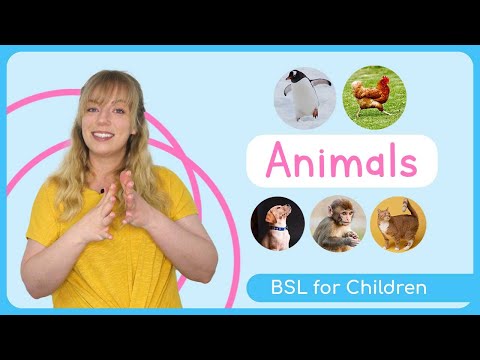
A well-designed BSL course for kids covers much more than just memorising signs. Lessons are built around themes that matter to children — family, animals, colours, food, and school — keeping the content relevant and interesting.
In the earliest stages, children learn the BSL fingerspelling alphabet (which uses two hands, unlike the one-handed ASL alphabet). They practise spelling their own names and simple words, developing fine motor control alongside language skills.
As they progress, kids learn conversational phrases: greeting people, asking questions, describing their day, and expressing emotions. Signs for words like thank you, please, and help are introduced early because they are immediately useful.
Courses also introduce non-manual features — facial expressions and body language that carry grammatical meaning in BSL. Children often find this aspect fun because it gives them permission to be expressive in ways that spoken language does not always encourage.
Cultural awareness is woven throughout good courses. Children learn about the Deaf community, the history of BSL, and why respectful communication matters. This gives context to the language and helps kids understand that BSL is not simply “English on the hands” but a complete language with its own grammar and structure.
Choosing the Right Course for Your Child
Not all BSL courses for kids are created equal. Here are the key factors to consider when selecting one for your child.
Tutor qualifications: Look for courses taught by Deaf tutors or qualified BSL instructors. Deaf tutors provide authentic language models and cultural insight that hearing instructors may not be able to offer to the same degree. Check whether the tutor holds a recognised BSL teaching qualification.
Age-appropriate content: A course designed for 5-year-olds should look very different from one aimed at 11-year-olds. Younger children need games, songs, and stories. Older kids can handle more structured vocabulary building and basic grammar concepts.
Class size: Smaller groups mean more individual attention. For in-person classes, look for a maximum of 8 to 10 children per tutor. Online courses should include some form of interaction, not just passive video watching.
Accreditation: Some courses lead to recognised qualifications, such as Signature’s Level 1 Award in BSL. While formal qualifications are not essential for young children, knowing that a course follows a recognised syllabus gives you confidence in its quality and structure.
Reviews and recommendations: Ask other parents, check online reviews, and contact your local Deaf organisation for recommendations. The NDCS and regional Deaf associations often maintain lists of approved courses for children.
Tips for Parents Supporting BSL Learning
Your child’s progress in BSL will be significantly faster if signing extends beyond the classroom and into daily life. Here are practical ways to support their learning at home.
Learn alongside your child whenever possible. Even if you are not enrolled in the same course, pick up the signs they bring home each week and use them during everyday routines — at mealtimes, during car journeys, and at bedtime.
Make it fun, not forced. Use signing games, watch BSL story videos together, and celebrate small milestones. Children who associate signing with positive experiences are far more likely to stick with it long term.
Connect with the Deaf community. Attend Deaf events, visit Deaf cafes, or join family sign language groups in your area. Seeing BSL used in real-life contexts by fluent signers motivates children and normalises signing as a genuine means of communication.
Be patient with the process. Like any language, BSL takes time to learn. Children may mix up similar-looking signs or forget vocabulary between sessions. Consistent, low-pressure practice is more effective than intensive drilling.
Use technology wisely. BSL apps and online dictionaries can supplement formal learning, but they should not replace interaction with real signers. Screen-based tools work best as revision aids rather than primary learning resources.
Related Articles
- British Sign Language Course for Children
- British Sign Language Course Free
- British Sign Language Course Level 1
- British Sign Language Alphabet for Kids
Practice ASL Signs
Use your camera to practice signs and get real-time AI feedback on your technique.
Free · No signup required