
Similarities Between ASL and BSL in British Sign Language (BSL)
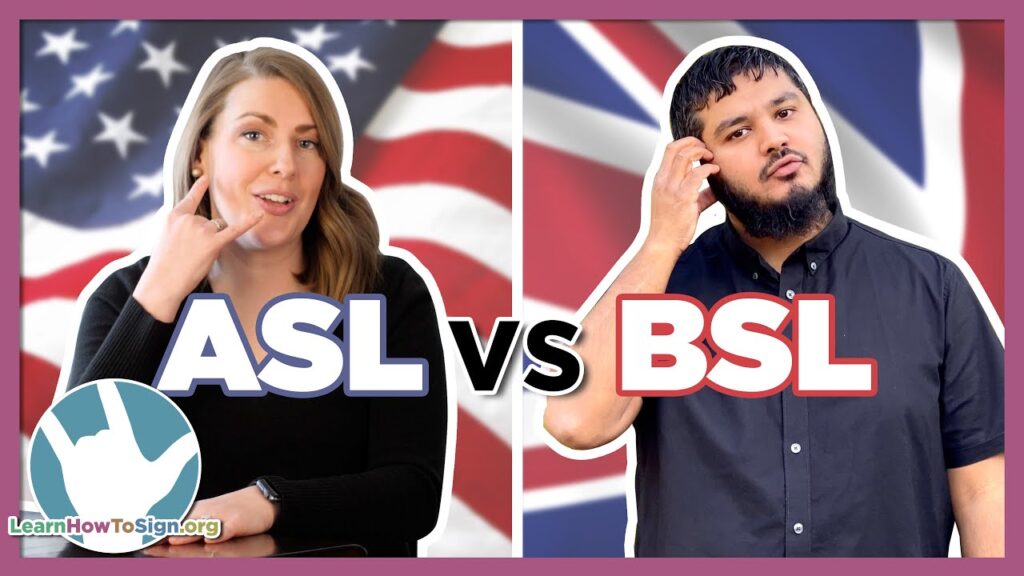
The sign for “similarities between ASL and BSL” is used to discuss the common features and shared concepts between American Sign Language and British Sign Language. This topic is often explored in educational settings or during discussions about sign language development within the UK Deaf community.
How to Sign “Similarities Between Asl And Bsl” in BSL
- Start with your dominant hand in a flat ‘B’ shape, palm facing forward, at about chest height.
- Move your hand slightly forward while keeping the ‘B’ shape, and then bring it back to your chest, indicating the concept of ‘similarity.’
- Next, use your non-dominant hand to form an ‘A’ shape, palm facing outwards, positioned in front of your dominant hand.
- With both hands in position, use facial expressions such as raised eyebrows to emphasize the comparison aspect.
- For clarity, you can incorporate a slight head nod when mentioning BSL and ASL to indicate the two languages.
Common Mistakes
- Forgetting to use facial expressions which are crucial for conveying meaning in BSL.
- Not maintaining the correct hand shapes; learners often switch from ‘B’ to ‘A’ mistakenly.
- Using only one hand instead of both, which can lead to confusion about the comparison being made.
BSL vs ASL
In BSL, the sign for “similarities between ASL and BSL” emphasizes the topic-comment structure, where the focus is on the relationship between the two languages. In ASL, the sign may differ in hand shapes and movements, often relying more on spatial referencing to illustrate comparisons.
Related Signs
- (Bsl: This sign represents the concept of BSL itself.
- (Bsl): Another way to refer to BSL in different contexts.
- 1: The numeral sign used in both languages.
- 1 Dollar: A common sign for currency, relevant in discussions about finance.
- 10: The sign for the number ten, useful in counting or comparisons.
Frequently Asked Questions
How can I use this sign in a BSL sentence?
You can use the sign within a sentence by first establishing the topic (ASL and BSL) and then following the comment about their similarities.
Are there regional variations for this sign in the UK?
While the core sign remains consistent, certain regions may have slight variations in hand shapes and movements based on local dialects.
Are there any similar signs in BSL?
Yes, signs for ‘different,’ ‘compare,’ and ‘language’ can be related and useful in discussing ASL and BSL.
What are some tips for learning this sign?
Practice in front of a mirror and watch native signers to observe the non-manual features that enhance the sign.
Can I use this sign to refer to other sign languages?
Yes, you can adapt the sign to refer to similarities between any two sign languages by incorporating their names into the sign.
What should I focus on when signing this?
Pay attention to your facial expressions and ensure you maintain clear hand shapes for effective communication.
Practice ASL Signs
Use your camera to practice signs and get real-time AI feedback on your technique.
Free · No signup required