
60 in Sign Language (ASL)
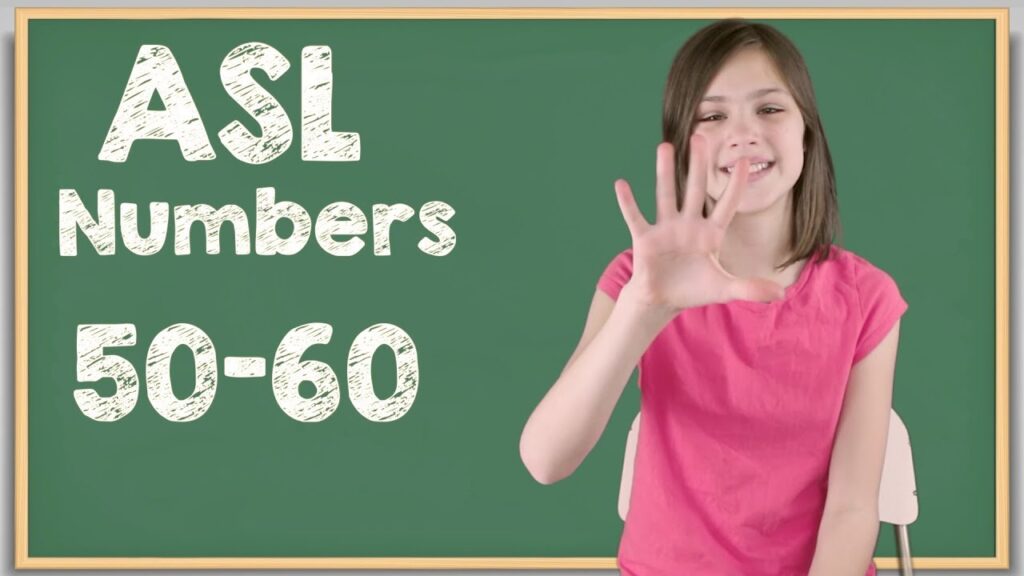
The sign for 60 is used to represent the numeral sixty in American Sign Language (ASL). It is frequently employed in contexts involving counting, numbering, or discussing quantities. Understanding how to form and use this sign can enhance communication in various situations, such as shopping, discussing time, or conveying age.
[VIDEO_PLACEHOLDER]
Table of Contents
Forming the sign
- **Handshape**: Start with your dominant hand in a fist with the thumb extended, forming the number 6.
- **Location**: Position your hand in front of your body, typically at chest height.
- **Movement**: Hold the 6 handshape steady without any movement; this is a static sign.
- **Non-manual signals**: Relax your facial expression as you sign. There are no specific non-manual signals required for this sign.
The sign for 60 is simple and straightforward. It consists of holding up the number 6, and since it is a static sign, there’s no need for movement. This makes it easy to learn for beginners, as well as for those who may be unfamiliar with numbers in ASL.
Using “60” in sentences
In practice, you might say, “I have 60 apples” by signing “I HAVE 60 APPLE.” The sentence structure in ASL often places the subject and action first, followed by the object, while the sign for 60 is integrated seamlessly into the sentence. Another example could be discussing age: “My sister is 60 years old” would be signed as “MY SISTER 60 YEAR OLD.”
Signs related to “60”
To expand your vocabulary, consider learning these related signs:
- 50 – the sign for fifty, commonly used in similar contexts.
- 70 – the sign for seventy, a sequential number following sixty.
- 80 – the sign for eighty, which can help in conversations about age or quantity.
- Counting – understanding counting in ASL can enhance your numeric fluency.
- Age – relevant when discussing years or birthdays, often used in conjunction with numbers.
Common confusion with a similar sign
Many learners often confuse the signs for 60 and 16. While 60 is made with a fist and an extended thumb, 16 is formed by using the dominant hand to make a fist with the thumb extended and then moving the hand slightly while holding the number 6. Being aware of these differences will help maintain clarity in communication.
FAQ
How do I remember the sign for 60?
One effective way to remember the sign is to associate the shape of your hand (the number 6) with the concept of sixty. Practicing in context can also solidify your memory.
Is there a different sign for 60 in different regions?
Generally, the sign for 60 is consistent across ASL users, though regional variations may exist in other signs. It’s always good to be aware of local signing preferences.
Can I use facial expressions when signing 60?
While the sign for 60 itself does not require specific facial expressions, using relaxed expressions can enhance overall communication and help convey your message more effectively.
Are there different ways to sign numbers in ASL?
Yes, there are various methods for signing numbers in ASL, including cardinal numbers, ordinal numbers, and specific contexts such as age, time, and quantities.
Practice ASL Signs
Use your camera to practice signs and get real-time AI feedback on your technique.
Free · No signup required