
Flexible (adjective) in New Zealand Sign Language (NZSL)
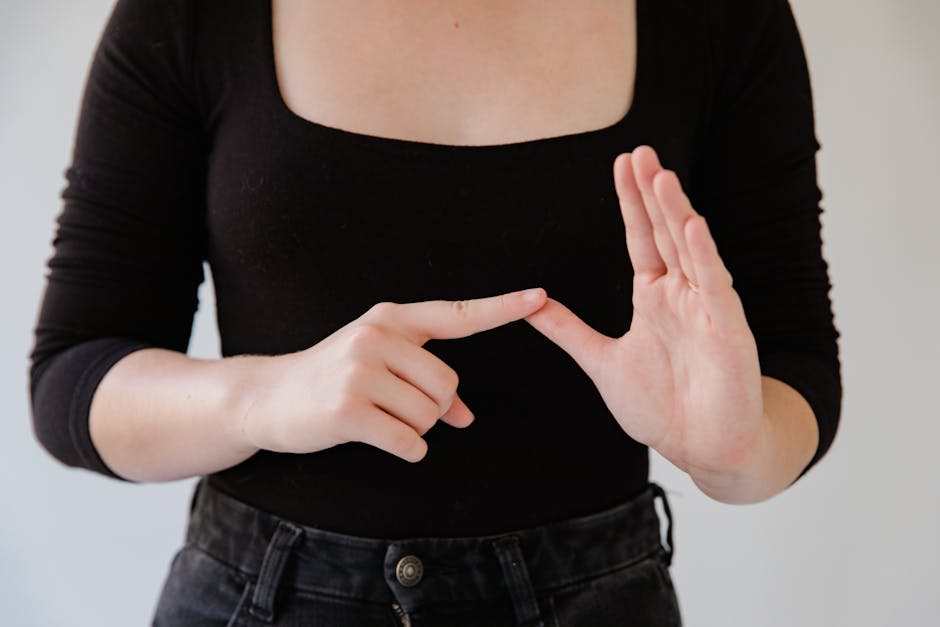
The sign “flexible” or “flexibility” in NZSL conveys the idea of being adaptable or pliable, both in a physical and metaphorical sense. This sign is commonly used in discussions about materials, plans, or personal characteristics, reflecting the importance of adaptability in various contexts within the Deaf community.
Table of Contents
How to Sign “Flexibleflexibility, Pliablehangoreadjective” in NZSL

- Start with both hands in a flat handshape (like a “B” handshape) with palms facing each other.
- Position your hands in front of your body, about shoulder-width apart.
- Move your hands in a gentle bending motion as if you are demonstrating flexibility, slightly pulling your fingers apart while keeping the palms facing each other.
- While performing the movement, maintain a relaxed facial expression to indicate the softness of the concept.
Common Mistakes
- Using stiff hands instead of relaxed ones can misrepresent the meaning of flexibility.
- Not moving the hands in a bending motion may lead to confusion, as the sign needs to visually convey adaptability.
- Forgetting to maintain an appropriate facial expression can make the sign feel less natural.
NZSL vs ASL
In NZSL, the sign for “flexible” emphasizes a smooth, flowing motion that conveys adaptability. In contrast, ASL may use different hand shapes and movements, reflecting variations in regional signing practices. Understanding these differences can enhance communication when interacting with Deaf communities globally.
Related Signs
- (Be) Careful – Indicates caution or the need for carefulness.
- (Be) Passive – Represents the concept of being passive or non-active.
- (All Of) You – A sign that addresses a group collectively.
- (Baby’s) Dummy – Refers to a pacifier, often used in discussions about babies.
- (Be) Born, (Give) Birth – Relates to the concepts of birth and new beginnings.
Frequently Asked Questions
Can you use “flexible” in a sentence in NZSL?
Yes, you can say “My schedule is flexible” by combining the sign for “my,” “schedule,” and “flexible.” This shows how flexibility applies to your plans.
Are there regional variations for this sign in NZ?
Most regions use a similar sign for “flexible,” but slight variations in hand movement may occur. It’s always good to observe local signing practices.
What is a similar sign to “flexible”?
The sign for “adaptable” shares similar movements and can be used interchangeably in some contexts.
What tips do you have for learning this sign?
Practice in front of a mirror to ensure your hand shape and movement are accurate, and incorporate facial expressions to enhance clarity.
Is “flexible” used in everyday conversations?
Yes, it is commonly used when discussing plans, materials, or personalities, making it an essential sign for everyday communication.
How can I improve my NZSL skills?
Engage with the Deaf community, attend NZSL classes, and practice regularly with friends or tutors to enhance your signing abilities.
Practice This Sign
Try signing Flexibleflexibility, Pliablehangoreadjective with your camera and get AI coaching on your handshape, movement, and location.
Free · No signup required