
Bias in New Zealand Sign Language (NZSL)
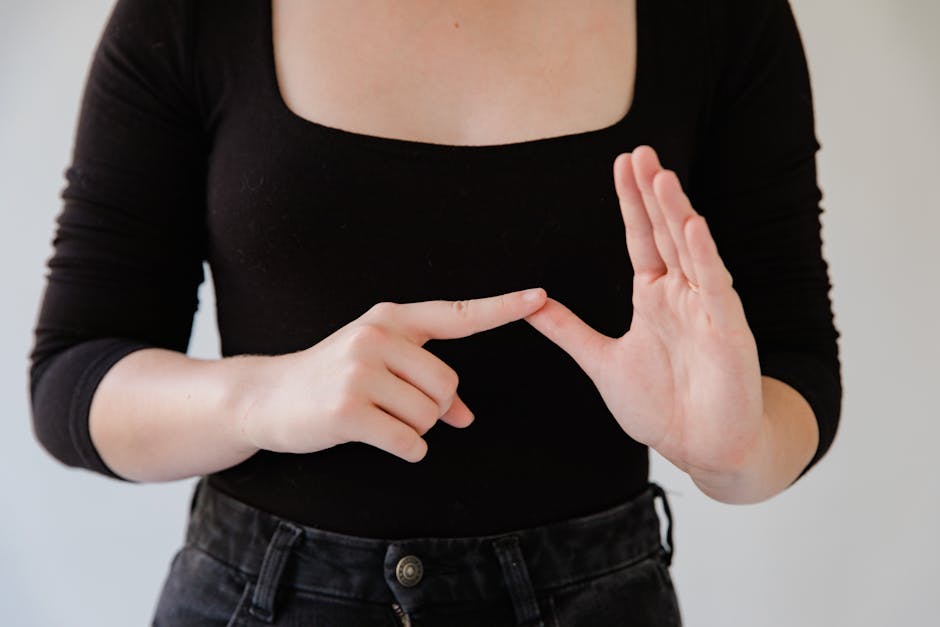
The sign for “bias” or “prejudice” in NZSL is used to describe attitudes or actions that are unfairly influenced by personal opinions or stereotypes. This sign is commonly used in discussions about social issues, inclusivity, and equality within the Deaf community and beyond.
Table of Contents
How to Sign “Biasbiased, PrejudicetīTaha Atu, Tautoko Atuadjective” in NZSL
- Start with your dominant hand in a flat handshape (like the letter “B“) positioned at your forehead.
- Move your hand outward and away from your forehead in a small arc, while maintaining the flat handshape.
- As you perform this movement, slightly furrow your brow to show a questioning or critical expression, reflecting the concept of bias.
- Finish with your hand in front of you, palm facing down, indicating the impact of the bias being discussed.
Common Mistakes
- Not using the flat handshape correctly, which can confuse the meaning.
- Over-exaggerating the movement; it should be subtle and controlled.
- Neglecting facial expressions, which are crucial for conveying the meaning in NZSL.
NZSL vs ASL
In NZSL, the sign for “bias” is distinct and typically involves a more subtle hand movement, while in ASL, the sign may use a different handshape and movement. This reflects the unique cultural context and sign language development in New Zealand compared to the American context.
Related Signs
- (All Of) You – A sign used to refer to a group.
- (Be) Careful – A sign conveying caution.
- (Be) Passive – A sign indicating passivity or lack of action.
Frequently Asked Questions
How can I use “bias” in a NZSL sentence?
You can say: “I feel bias towards this situation” by first signing “I,” then the sign for “bias,” and finally the sign for “situation.”
Are there regional variations for this sign?
While the sign for “bias” is generally consistent, some regions may have slight variations in movement or facial expressions, so it’s good to learn from local Deaf individuals.
What are some similar signs to “bias”?
Similar signs include “prejudice” and “discrimination,” which may have overlapping meanings and contexts.
What tips do you have for learning this sign?
Practice in front of a mirror to see your handshape and facial expressions. Also, watch fluent NZSL users to see how they use the sign in context.
Can I use this sign in formal settings?
Yes, this sign can be used in formal discussions about social justice, equality, or advocacy. Just ensure your facial expressions are appropriate for the discussion.
How does this sign connect with te reo Māori?
Understanding the cultural context of bias in te reo Māori can enhance your comprehension. Consider incorporating Māori perspectives on fairness and equality in discussions.
Practice This Sign
Try signing Biasbiased, PrejudicetīTaha Atu, Tautoko Atuadjective with your camera and get AI coaching on your handshape, movement, and location.
Free · No signup required