
Error, Faulty (adjective) in New Zealand Sign Language (NZSL)
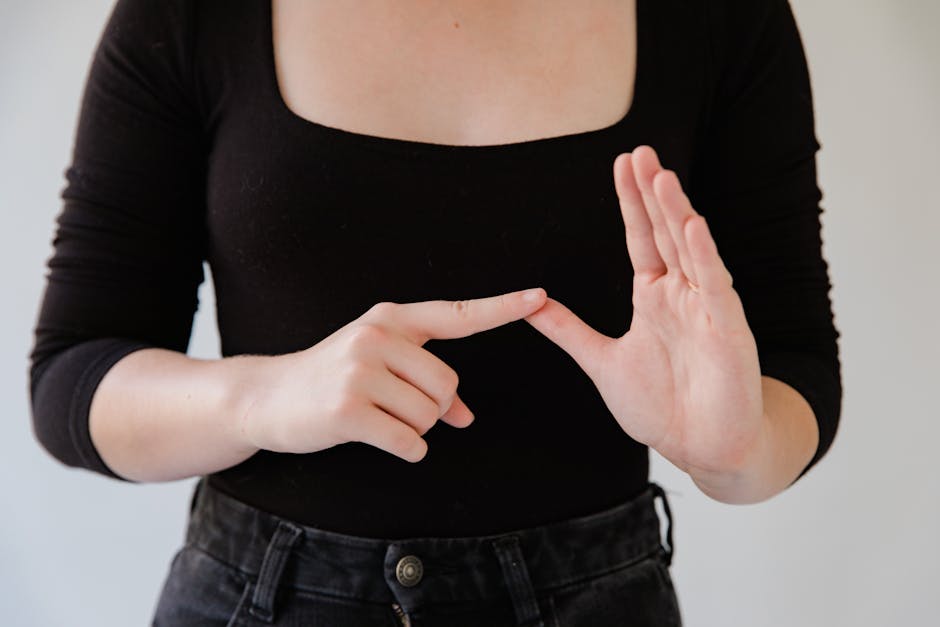
The sign for “error, faulty, defective, fault, go wrong, mistake, wrong” is commonly used in the New Zealand Deaf community to express a mistake or something that is not correct. This sign is versatile and can be used in various contexts, from discussing errors in work to personal mistakes.
Table of Contents
How to Sign “Error, Faultydefective, Fault, Go Wrong, Mistake, Wronghapa, HēAdjective; Noun; Verb” in NZSL
- Start with a dominant hand in a flat handshape (palm facing down).
- Position your hand at about shoulder height in front of your body.
- Make a small circular motion with your hand, moving it slightly to the left and then back to the starting position.
- While performing this movement, maintain a neutral or concerned facial expression to convey the meaning of error or mistake.
- Finish by bringing your hand back to the starting position to complete the sign.
Common Mistakes
1. Some learners may forget to maintain the correct facial expression, which is crucial for conveying the sign’s meaning.
2. Using an incorrect handshape; some may try to use a fist instead of the flat hand, which changes the meaning.
3. Not moving the hand in a circular motion; instead, they might only point, which may not effectively communicate the concept of an error.
NZSL vs ASL
In NZSL, the sign for “error” involves a specific circular motion with a flat hand, while in ASL, it may use a different handshape or movement. This highlights the unique characteristics of NZSL, influenced by its own history and cultural context, including aspects borrowed from BSL (British Sign Language).
Related Signs
- (Be) Careful – a sign used to indicate caution.
- (Baby’s) Dummy – refers to a pacifier, often used in discussions about childcare errors.
- (All Of) You – useful for addressing a group when discussing mistakes made by multiple people.
- (Be) Born, (Give) Birth – can be relevant when discussing life events that may include errors.
Frequently Asked Questions
How can I use this sign in a sentence?
You can use it in a sentence like, “I made an error in my report” by signing “I” + “error” + “report.”
Are there regional variations of this sign in New Zealand?
Yes, some regional variations may exist, particularly in the South Island compared to the North Island, so it’s beneficial to learn from local Deaf communities.
What is a similar sign to “error”?
A similar sign is “mistake,” which is often used interchangeably in conversation.
Can this sign be used in a formal context?
Yes, it can be used in both formal and informal settings, such as in meetings or casual chats.
Any tips for learning this sign?
Practice in front of a mirror to check your handshape and facial expressions. Additionally, watching fluent signers can help reinforce the correct usage.
What if I’m unsure about the sign’s meaning?
Asking a member of the Deaf community for clarification or checking reliable resources can be very helpful.
Practice This Sign
Try signing Error, Faultydefective, Fault, Go Wrong, Mistake, Wronghapa, HēAdjective; Noun; Verb with your camera and get AI coaching on your handshape, movement, and location.
Free · No signup required