
Escape in New Zealand Sign Language (NZSL)
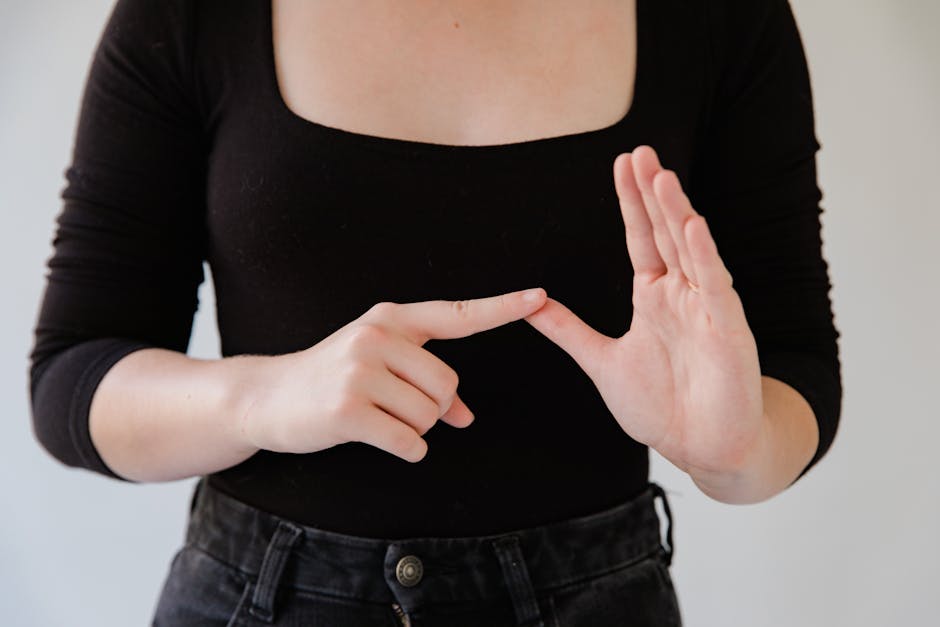
The sign for “escape, break out, run away, take off” is commonly used in the NZ Deaf community to express the action of fleeing from a situation or place. It can convey a sense of urgency and is often used in storytelling or when discussing experiences related to escaping or moving quickly away from something. This sign can be particularly engaging when used in dramatic contexts.
Table of Contents
How to Sign “Escapebreak Out, Run Away, Take Offomaverb” in NZSL
- Start with both hands open and palm facing down, with fingers slightly spread apart.
- Position your hands at shoulder height and slightly in front of your body.
- Quickly move your hands outward and away from your body, like you’re pushing something away.
- As you do this, lean your body slightly forward to indicate movement.
- Facial expressions should reflect urgency or excitement, enhancing the meaning of the sign.
Common Mistakes
- Not using enough movement: The sign should be quick and dynamic to convey the sense of urgency.
- Incorrect hand shape: Ensure your hands are open and fingers slightly apart, as a fist can change the meaning.
- Facial expressions: Forgetting to incorporate appropriate facial expressions can make the sign less impactful.
NZSL vs ASL
In NZSL, the sign for “escape” is distinct in both movement and hand shape compared to ASL. While ASL may use a different gesture, NZSL emphasizes the outward movement and urgency with a specific hand position that relates closely to local expressions of motion.
Related Signs
- (All Of) You – A sign referencing a group or addressing multiple people.
- (Baby’S) Dummy – A sign for a pacifier, often used in contexts involving children.
- (Be) Careful – A sign that can denote caution, which may relate contextually to escape scenarios.
Frequently Asked Questions
How can I use this sign in a sentence?
You might say, “I want to escape!” by signing “I” followed by the sign for “escape” to convey your message clearly.
Are there regional variations for this sign in New Zealand?
While this sign is generally consistent across New Zealand, some individuals may have variations based on personal or regional style.
What are some similar signs?
Signs like “run” or “hide” involve similar movements but have distinct meanings. It’s helpful to learn these to provide context in conversations.
Any tips for learning this sign?
Practice in front of a mirror to check your movements and expressions. Watching native signers can also help refine your technique.
Can this sign be used in different contexts?
Yes, it can be used in various situations, from playful scenarios to serious discussions about escaping danger.
What should I focus on while signing?
Focus on your hand shapes, the speed of the movement, and facial expressions to convey the right emotions effectively.
Practice This Sign
Try signing Escapebreak Out, Run Away, Take Offomaverb with your camera and get AI coaching on your handshape, movement, and location.
Free · No signup required