
As Well As in New Zealand Sign Language (NZSL)
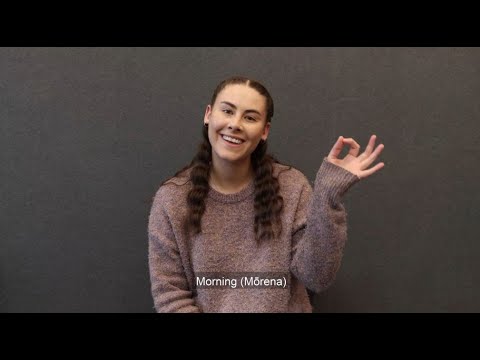
The sign for “as well as” in New Zealand Sign Language (NZSL) is used to indicate addition or inclusion, similar to how you might use it in spoken language. This sign is commonly utilized in conversations to connect ideas or add information. It reflects the natural flow of communication within the Deaf community in New Zealand.
Table of Contents
How to Sign “As Well As” in NZSL

- Start with your dominant hand in a flat ‘B‘ handshape (palm facing down).
- Position your hand at chest height, slightly to the side of your body.
- Move your hand outward in a small arc, away from your body, while maintaining the ‘B‘ handshape.
- As you make this movement, raise your eyebrows slightly to indicate that you are adding information.
- End the movement by bringing your hand back to your chest to signify the completion of the thought.
Common Mistakes
- Forgetting to maintain the correct handshape; ensure it’s a flat ‘B‘ handshape.
- Not using facial expressions, which are crucial for conveying the meaning in NZSL.
- Inconsistent movement; the arc should be smooth and fluid, not abrupt.
NZSL vs ASL
In American Sign Language (ASL), the sign for “as well as” differs significantly from NZSL. While ASL may use a different handshape and movement, NZSL’s sign emphasizes a fluid arc motion, reflecting its unique structure and cultural context. Understanding these differences can enhance cross-cultural communication.
Related Signs
- (All Of) You – A sign used to refer to a group of people.
- (All Of) Youyou Allkoutou (Katoa)Pronoun – Another form to refer to everyone in a group.
- (Be) Careful – A sign indicating caution.
- (Be) Passive – Describing a state of inaction.
Frequently Asked Questions
How can I use “as well as” in a sentence?
You can use the sign in sentences like “I like apples as well as oranges” by signing the components separately and incorporating the sign for “as well as” between them.
Are there regional variations of this sign in New Zealand?
The sign is generally consistent across New Zealand, but some regions may have slight variations in movement or emphasis.
What are some similar signs in NZSL?
Signs such as “and,” “plus,” or related conjunctions may share similarities in structure and use, but each has its unique characteristics.
What tips do you have for learning this sign?
Practice in front of a mirror to ensure your handshape and movement are correct. Also, pay attention to your facial expressions, as they convey important context.
Can I use this sign in formal settings?
Yes, this sign is appropriate for both casual and formal conversations within the Deaf community.
How does this sign connect to te reo Māori?
While the sign itself is NZSL, the integration of te reo Māori into NZSL enriches the language, reflecting New Zealand’s cultural heritage.
Practice This Sign
Try signing As Well As with your camera and get AI coaching on your handshape, movement, and location.
Free · No signup required