
ASL vs Australian Sign Language – Differences

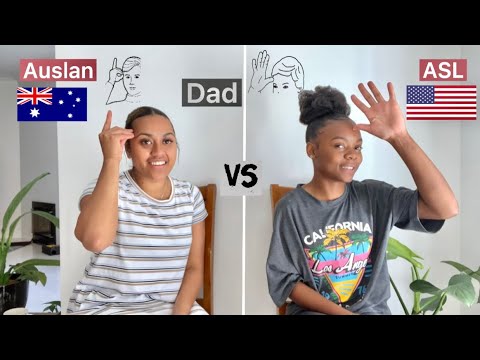
Comparing ASL vs Australian Sign Language reveals two entirely separate languages with different origins, vocabularies, and grammatical structures. While both are used in English-speaking countries, they developed independently and are not mutually intelligible. This guide explores the major differences and what they mean for learners and the Deaf community.
Why ASL and Auslan Are Different Languages
The misconception that all sign languages are the same persists widely, but ASL and Australian Sign Language (Auslan) demonstrate clearly why this is incorrect. These two languages evolved from different parent languages on different continents, resulting in systems as distinct from each other as Japanese is from Portuguese.
ASL developed primarily from French Sign Language (LSF), introduced to the United States in 1817. It blended with existing sign systems used by Deaf Americans and evolved over two centuries into the language used by approximately 500,000 Deaf Americans today. ASL grammar, vocabulary, and structure reflect this French Sign Language heritage.
Auslan grew from British Sign Language (BSL), which arrived in Australia with Deaf educators and immigrants from Britain during the 19th century. Over generations, Auslan evolved its own distinct vocabulary and regional variations while maintaining its BSL roots. Today, Auslan is used by approximately 10,000 Deaf Australians and was recognized as a community language by the Australian government in 1991.
Because ASL belongs to the French Sign Language family and Auslan belongs to the British Sign Language family (known as BANZSL), they share almost no linguistic DNA. An ASL signer visiting Australia would not be able to understand Auslan conversation without specific study, and vice versa. The only shared elements tend to be highly iconic signs where the gesture naturally resembles the concept it represents.
Alphabet and Fingerspelling Comparison
The most striking visual difference between ASL and Australian Sign Language is their manual alphabets. ASL uses a one-handed fingerspelling system where all 26 letters are formed with a single hand. Each letter has a specific handshape, and experienced ASL signers can fingerspell at remarkable speed because only one hand needs to move.
Auslan uses a two-handed fingerspelling system inherited from BSL. Both hands work together to form each letter, creating configurations that look completely different from their ASL counterparts. The letter “A” in ASL, for example, is a closed fist with the thumb alongside — in Auslan, it involves both hands in an entirely different arrangement.
The two-handed Auslan alphabet has some practical advantages. The larger hand formations are generally easier to read at a distance and in poor lighting conditions. Some Deaf Australians also note that the two-handed system is more physically comfortable for extended fingerspelling because the effort is distributed across both hands.
ASL’s one-handed alphabet, meanwhile, offers the advantage of speed and the ability to hold something in the non-dominant hand while fingerspelling. It also allows signers to fingerspell while simultaneously signing with the other hand in certain contexts. Both systems are perfectly suited to their respective languages, and neither is inherently superior.
Practice Makes Perfect
Test your sign language skills with our free practice app.
Sign Vocabulary Differences
Everyday signs differ dramatically between the two languages. The sign for hello in Auslan looks nothing like the ASL version. Basic vocabulary for food, colors, animals, and common verbs are all different, requiring complete relearning if you switch from one language to the other.
Numbers present a particularly interesting contrast. In ASL, counting begins with the index finger for “one.” In Auslan, counting begins with the thumb for “one,” following the BSL convention. The numbers six through nine also differ significantly in their handshapes. These differences may seem minor but can cause genuine confusion in practical situations like exchanging phone numbers or discussing prices.
Some concepts that require a single sign in one language may need a phrase or compound sign in the other. Technical vocabulary, place names, and culturally specific concepts naturally differ because each language evolved within its own community. Australian-specific signs for concepts like “AFL” (Australian Football League) or “Centrelink” have no ASL equivalents, just as ASL signs for “Super Bowl” or “IRS” have no Auslan equivalents.
The way new signs enter each language also differs. ASL tends to be influenced by its proximity to other sign languages in the Americas and by American Deaf culture. Auslan absorbs influences from BSL, NZSL, and the broader Asia-Pacific Deaf community. Social media has increased cross-pollination between sign languages globally, but each language maintains its distinct character.
Grammatical Differences
Both ASL and Australian Sign Language are fully developed languages with complex grammatical systems independent of English. They use space, movement, and facial expressions as core grammatical elements, but their specific rules differ.
ASL frequently uses a topic-comment structure, placing the topic at the beginning of a sentence and following with a comment about it. Auslan, while also capable of topicalization, tends to use subject-verb-object order more regularly. These different default sentence structures mean that a direct sign-for-sign translation between the languages would produce unnatural results in both.
Question formation differs subtly between the two languages. Both use raised eyebrows for yes/no questions and furrowed brows for wh-questions (who, what, where, when, why), but the specific timing and intensity of these facial expressions can vary. The position of the question word within the sentence also follows different patterns in each language.
Verb agreement and spatial referencing — where signers assign locations in signing space to represent people or objects and then direct verb movements between those locations — are used in both languages but with different conventions. An intermediate signer in one language would need to relearn these spatial grammar rules when studying the other, as the principles are similar but the specific applications are not interchangeable.
Learning Both Languages
If you are interested in learning both ASL and Australian Sign Language, the good news is that some foundational skills transfer. Understanding that sign languages use space grammatically, that facial expressions carry grammatical meaning, and that sign languages have their own syntax independent of spoken language — these conceptual understandings apply across all sign languages.
However, vocabulary, fingerspelling, and specific grammatical rules must be learned separately for each language. Most linguists and Deaf educators recommend achieving a solid foundation in one sign language before beginning another, to avoid the confusion that can arise from mixing two systems. A strong base in either ASL or Auslan will give you frameworks for understanding how sign languages work in general.
Resources for learning each language are most accessible in their home countries. ASL courses, classes, and Deaf community events are widely available across the United States. Auslan courses are available through Australian TAFE institutions, Deaf societies, and community organizations. Online resources for both languages have expanded dramatically, making initial exposure possible from anywhere in the world.
For those who need both languages for professional reasons — such as interpreters, researchers, or educators working across borders — the investment in learning both is significant but rewarding. Bilingual sign language users report that their understanding of language itself deepens with each additional sign language they acquire, much as learning a third spoken language is easier than learning a second.
Related Articles
Practice ASL Signs
Use your camera to practice signs and get real-time AI feedback on your technique.
Free · No signup required