
What Is British Sign Language? A Complete Introduction

So what is British Sign Language? BSL is a complete, natural language that uses hand movements, facial expressions, body posture, and spatial positioning to convey meaning. It is the primary language of the Deaf community across the United Kingdom, used by over 150,000 people as their first or preferred means of communication. BSL is not a visual version of English — it is an independent language with its own grammar, vocabulary, and cultural heritage.
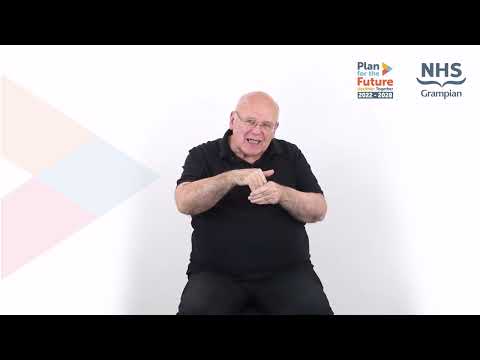
How BSL Works
BSL communicates through five key parameters that linguists use to describe any sign: handshape (the configuration of the fingers and palm), location (where the sign is produced relative to the body), movement (the direction and type of motion), orientation (which way the palm faces), and non-manual features (facial expressions, mouth patterns, and body movements that carry grammatical meaning).
BSL grammar differs fundamentally from English. It uses topic-comment sentence structure — placing context before action. Instead of “I went to the shop yesterday,” BSL structures this as YESTERDAY SHOP I GO. Facial expressions serve mandatory grammatical functions: raised eyebrows mark yes/no questions, furrowed eyebrows mark information questions, and head movements can indicate negation or conditionals.
BSL does not use the small function words that English relies on. There’s no “the,” “is,” “a,” or “to” in BSL. Instead, spatial relationships, sign modifications, and non-manual features handle the grammatical work these words do in English. A BSL sentence typically uses fewer individual signs than the equivalent English sentence uses words, but conveys the same information through these additional channels.
The language uses the three-dimensional space in front of the signer productively. People, objects, and concepts can be “placed” in specific locations within this signing space, then referenced by pointing or directing signs toward those locations. This spatial grammar allows BSL to convey complex relationships, movement, and perspectives in ways that spoken languages handle through word order and prepositions.
Who Uses BSL
The primary BSL-using community is Deaf people across the UK who identify as culturally Deaf — meaning they see themselves as members of a linguistic and cultural minority rather than as people with a disability to be fixed. For many Deaf people, BSL is their first language and the language in which they think, dream, and express themselves most naturally.
Children of Deaf adults (CODAs) often grow up bilingual in BSL and English, acquiring BSL as a first language from their Deaf parents. CODAs occupy a unique position as hearing members of the Deaf community, often serving as cultural bridges between the Deaf and hearing worlds. Many CODAs go on to careers in interpreting, Deaf education, or Deaf community services.
Hearing people who learn BSL include sign language interpreters, teachers of the deaf, social workers specialising in Deaf services, family members of Deaf people, and a growing number of people who learn BSL for personal enrichment or professional development. The BSL learner community has expanded significantly in recent years, driven by increased public awareness and media visibility.
Practice Makes Perfect
Test your sign language skills with our free practice app.
BSL has regional dialects that reflect the geographic spread of Deaf communities across Britain. A BSL user from Glasgow signs differently from one in London or Cardiff — different vocabulary for common concepts, different number systems in some cases, and different stylistic preferences. These regional variations developed naturally, often influenced by local Deaf schools.
BSL Recognition and Status
The BSL Act 2022 formally recognised BSL as a language of England, Wales, and Scotland. This legislation, championed by Deaf campaigners over decades, established government duties to promote BSL use and consult with the Deaf community on BSL-related policy. Scotland had previously recognised BSL through the BSL (Scotland) Act 2015.
Historical suppression of BSL in education lasted nearly a century following the 1880 Milan Conference, which endorsed oral methods over sign language. Many Deaf children were forbidden from signing in school and forced to use speech and lip-reading. BSL survived through Deaf clubs and community networks, but the suppression damaged its institutional status and delayed formal recognition by generations.
Today BSL is available as a formal qualification through Signature, the UK’s leading awarding body for sign language. Levels 1 through 6 provide a structured pathway from beginner to professional interpreter standard. BSL is also offered as a GCSE subject, and several universities offer degree programmes in BSL, Deaf studies, and BSL/English interpreting.
The Equality Act 2010 provides practical protections for BSL users, requiring reasonable adjustments to ensure Deaf people can access services, employment, and education. This legal framework means organisations must provide BSL interpretation or other communication support when needed, establishing access to BSL interpretation as a right rather than a courtesy.
Learning BSL
BSL courses are widely available across the UK through colleges, adult education centres, Deaf organisations, and online providers. A Signature-accredited Level 1 course is the recommended starting point, typically running 20 to 30 weeks with a qualified Deaf tutor. Costs range from £150 to £500, with some local authorities offering subsidised or free places.
Free resources provide an accessible entry point. YouTube tutorials from Deaf educators, BSL SignBank (a free online dictionary with video demonstrations), and social media content from Deaf creators offer vocabulary building and basic grammar instruction at no cost. These resources work best as a complement to structured learning rather than as a complete replacement for formal instruction.
Engaging with the Deaf community is the most powerful accelerator for BSL learning. Deaf clubs, social events, and community gatherings welcome learners and provide real-world interaction that develops genuine fluency. The British Deaf Association and regional Deaf organisations can connect you with local events and groups.
Learning BSL is more than acquiring a communication skill — it’s engaging with a rich cultural tradition. Deaf culture encompasses shared values, artistic expression, social norms, and community bonds that are expressed through and shaped by BSL. Every new BSL learner contributes to a more accessible, inclusive society and supports the vitality of a language community that enriches British life.
Related Articles
Practice ASL Signs
Use your camera to practice signs and get real-time AI feedback on your technique.
Free · No signup required