
(Video) Clip in New Zealand Sign Language (NZSL)
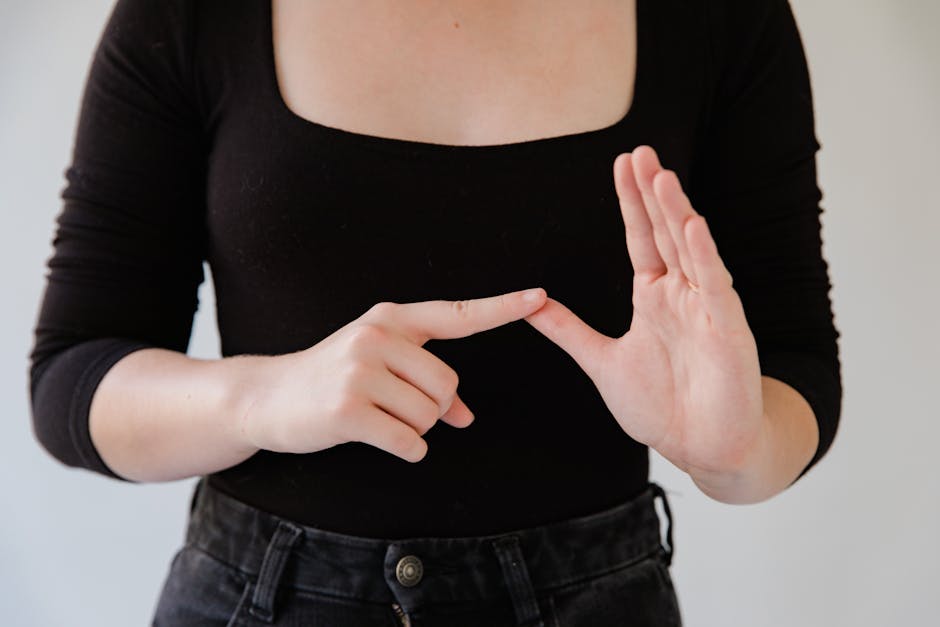
The sign “(video) clip, audio clip, cut scene” refers to a short segment of video or audio, often used in the context of media, film, or presentations within the New Zealand Deaf community. This sign is commonly used when discussing film editing, sharing media content, or referencing specific moments in a video.
Table of Contents
How to Sign “(Video) Clipaudio Clip, Cut Sceneataatanoun” in NZSL

- Start with your dominant hand in a flat handshape (like the palm of your hand facing down).
- Position your hand about eye level, slightly in front of you.
- Move your hand forward in a short, quick motion, as if you are pushing the clip away from you.
- As you move your hand, raise your eyebrows to indicate that you are presenting or highlighting something.
- Finish the movement with a slight pause, keeping your hand still for emphasis.
Common Mistakes
- Forgetting to maintain the flat handshape, which can change the meaning of the sign.
- Not using facial expressions, which are crucial in NZSL for conveying the right context.
- Moving the hand too slowly or without enough emphasis, making the sign less impactful.
NZSL vs ASL
In NZSL, the sign for “(video) clip, audio clip, cut scene” focuses on the hand movement and facial expression to convey action and emphasis. In contrast, ASL may use a different handshape or movement, reflecting its unique syntax and structure. Understanding these differences helps in appreciating the nuances of each sign language.
Related Signs
- (All Of) You
- (Baby’s) Dummy
- (Be) Careful
- (Be) Passive
Frequently Asked Questions
Can you use this sign in a sentence?
Yes, you can use it to say something like, “I will send you the video clip” by incorporating the sign into the sentence structure.
Are there regional variations in New Zealand for this sign?
While the core sign is consistent, some regions may have slight variations in handshape or movement style.
What are some similar signs?
Similar signs include those for “video,” “film,” or “scene,” which may have overlapping movements but differ in specific handshapes.
What tips do you have for learning this sign?
Practice in front of a mirror to ensure your handshape and facial expressions are correct, and watch native signers to learn contextual usage.
How do you express the concept of a longer clip or segment?
You can modify the sign by extending the movement or using additional signs to clarify that it is longer than a typical clip.
Is this sign used in formal or informal settings?
This sign can be used in both formal and informal settings, making it versatile for discussions around media.
Practice This Sign
Try signing (Video) Clipaudio Clip, Cut Sceneataatanoun with your camera and get AI coaching on your handshape, movement, and location.
Free · No signup required