
Equal in New Zealand Sign Language (NZSL)
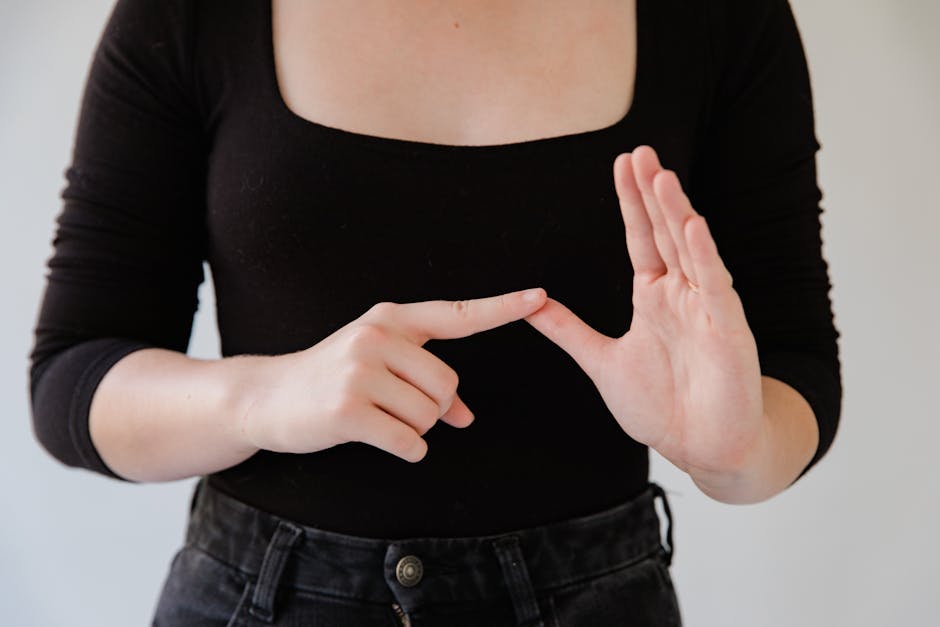
The sign “equalsequationka huanoun; verb” in NZSL relates to mathematical equality and is commonly used in educational contexts, especially during discussions involving mathematics, equations, and problem-solving. This sign is essential for students and educators within the Deaf community to express concepts related to equality and equivalence in a visual and accessible way.
Table of Contents
How to Sign “Equalsequationka Huanoun; Verb” in NZSL
- Start with both hands in a flat handshape, palms facing each other.
- Position your hands at chest level, about shoulder-width apart.
- Move your hands together slowly until they touch, indicating the concept of equality.
- Maintain a neutral facial expression, but you can add emphasis by slightly raising your eyebrows as your hands come together.
Common Mistakes
- Confusing the handshape; learners may use a fist instead of a flat handshape.
- Not aligning the hands properly, leading to unclear communication of the concept.
- Forgetting to incorporate facial expressions, which are crucial in NZSL for conveying meaning and context.
NZSL vs ASL
In ASL, the sign for “equal” uses a different handshape and movement. While ASL might involve a single hand or a more dynamic motion, NZSL emphasizes the use of both hands coming together to clearly depict the concept of equality, reflecting its unique linguistic structure and cultural context.
Related Signs
- (All Of) You – A sign used to refer to a group of people.
- (Be) Careful – A sign to indicate caution.
- (Baby’S) Dummy – Refers to a pacifier used for infants.
- (Be) Born, (Give) Birth – Sign for birth-related concepts.
Frequently Asked Questions
How do I use “equalsequationka huanoun; verb” in a sentence?
You can use it in sentences like “2 + 2 equalsequationka 4” to express mathematical equations clearly.
Are there regional variations in NZSL for this sign?
While the sign is generally consistent across New Zealand, some regions may have slight variations in hand movement or speed.
What are some similar signs to “equalsequationka huanoun; verb”?
Similar signs include “greater than” and “less than,” which express comparative values in mathematics.
What tips do you have for learning this sign?
Practice in front of a mirror to ensure hand shapes and movements are accurate, and watch videos of fluent signers to see the sign in context.
Can this sign be used outside of mathematical contexts?
Yes, it can also be used metaphorically in discussions about balance, fairness, or equality in social contexts.
What facial expressions should I use while signing?
Use neutral expressions when stating facts, but feel free to express enthusiasm or emphasis with raised eyebrows when discussing important concepts.
Practice This Sign
Try signing Equalsequationka Huanoun; Verb with your camera and get AI coaching on your handshape, movement, and location.
Free · No signup required