
Cable Car in New Zealand Sign Language (NZSL)
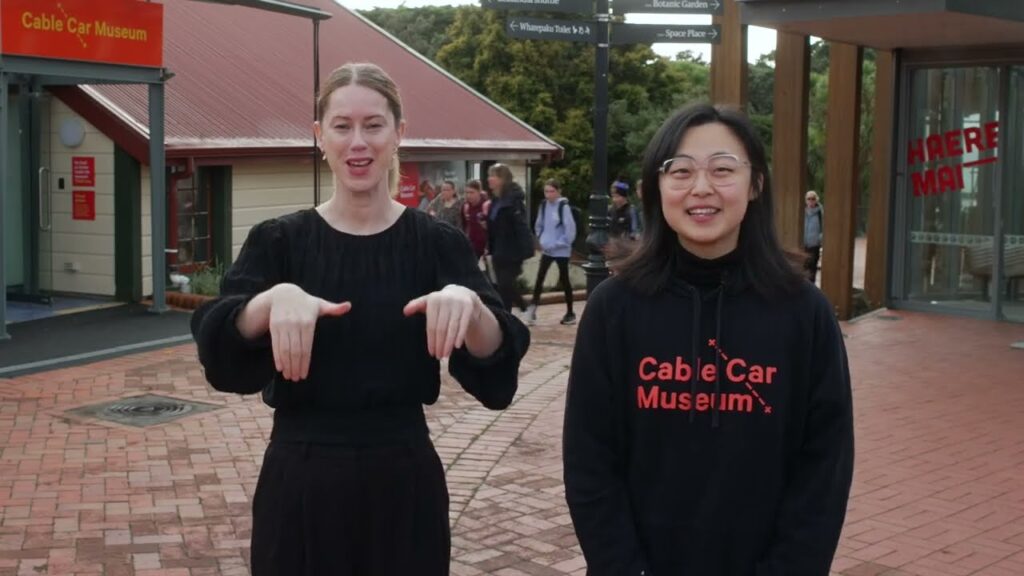
The sign for “cable car” in NZSL represents the popular mode of transport found in various tourist locations, particularly in places like Wellington and Queenstown. It is commonly used in everyday conversations among the Deaf community, especially when discussing travel or local attractions.
Table of Contents
How to Sign “Cable Car” in NZSL

- Start with both hands in a flat ‘B’ shape (palm down).
- Position your dominant hand slightly above your non-dominant hand, as if showing the height of the cable car.
- Move your dominant hand forward and slightly up, simulating the movement of a cable car going up a hill.
- As you move your hand, tilt your head slightly back to show the upward motion.
- Finish with a facial expression that conveys excitement or curiosity, to reflect the fun of riding a cable car.
Common Mistakes
- Forgetting to use both hands; some learners may only use one hand, which doesn’t fully convey the meaning.
- Not tilting the head during the movement, which can make the sign appear flat and less dynamic.
- Misplacing the hands; ensure the ‘B’ hand shapes are flat and clearly visible.
NZSL vs ASL
In NZSL, the sign for “cable car” uses a unique handshape and movement, while in ASL, the sign may differ significantly, focusing more on the concept of a tram or gondola. This highlights the distinct evolution of NZSL, which incorporates local elements and influences, including aspects from BSL and te reo Māori.
Related Signs
- Tram – A similar mode of transport that runs on tracks.
- Bus – Another common form of public transport.
- Travel – The act of moving from one place to another.
- Mountain – Often a destination for cable car rides.
- View – What you enjoy when riding a cable car.
Frequently Asked Questions
Can I use the sign for “cable car” in a sentence?
Absolutely! For example, you can say, “I love riding the cable car.” In NZSL, you would combine the signs for “I,” “love,” and “cable car” to form a clear sentence.
Are there regional variations for the sign across New Zealand?
The sign for “cable car” is generally consistent across New Zealand, but some regions might have slight variations in the hand movement. It’s always good to connect with local Deaf community members to learn.
What are some similar signs to “cable car”?
Similar signs include tram, bus, and travel. Each sign reflects different aspects of movement and transport.
Do I need to use facial expressions when signing?
Yes, facial expressions are important in NZSL as they add emotion and context to the sign, making your communication more effective.
What tips do you have for learning this sign?
Practice regularly in front of a mirror to ensure your hand shapes and movements are correct. You can also watch videos of native signers to improve your technique.
Is the sign for “cable car” used in other contexts?
While primarily used to refer to the actual cable car, it can also be used metaphorically when discussing upward movements or experiences.
Practice This Sign
Try signing Cable Car with your camera and get AI coaching on your handshape, movement, and location.
Free · No signup required