
Butcher in New Zealand Sign Language (NZSL)

The sign for “butcher” in NZSL refers to someone who prepares or sells meat. This sign is commonly used in everyday conversations within the Deaf community, especially when discussing food, shopping, or local businesses. It reflects the importance of butchers in New Zealand‘s culinary culture.
Table of Contents
How to Sign “Butcher” in NZSL
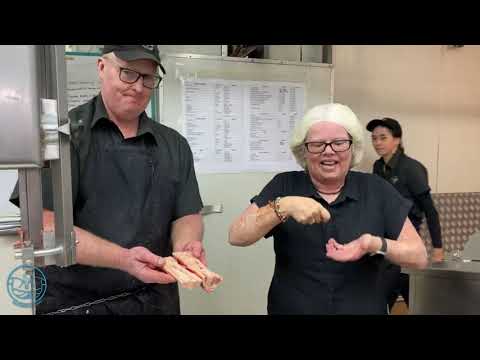
- Begin with your dominant hand in a flat “B” shape, palm facing down.
- Position your hand near the side of your mouth, with your fingers pointing towards your chin.
- Move your hand outward slightly away from your face while keeping the “B” shape.
- Maintain a neutral facial expression or add a slight nod to indicate the action of butchering.
Common Mistakes
- Forgetting to use the correct handshape; some learners may use a fist instead of a flat hand.
- Not maintaining a clear movement away from the face, which can make the sign unclear.
- Using an exaggerated expression instead of a neutral one, which can distract from the sign’s meaning.
NZSL vs ASL
In NZSL, the sign for “butcher” involves a specific handshape and movement that is distinct from ASL. In ASL, the sign typically uses a different handshape and may incorporate additional movements. This highlights the unique features of NZSL influenced by both local sign language use and te reo Māori.
Related Signs
- Meat – The general sign for meat products.
- Shop – A sign used for any type of store or shop.
- Food – The sign representing food items.
- Cook – The action of preparing food.
- Sell – The act of selling goods.
Frequently Asked Questions
How do I use “butcher” in a sentence?
You can say, “I am going to the butcher.” This would be signed as “I GO BUTCHER.”
Are there regional variations for this sign in New Zealand?
While the sign is fairly consistent across New Zealand, some regions may have slight variations in the speed or emphasis of the movement.
What are some signs similar to “butcher”?
Related signs include “meat,” “shop,” and “cook,” which are commonly used in discussions about food and shopping.
What tips do you have for learning this sign?
Practice in front of a mirror to ensure your handshape and movement are clear, and watch native signers to see how they perform the sign.
Can I use this sign in a formal context?
Yes, “butcher” is appropriate in both casual and formal contexts when discussing the profession or related topics.
How can I improve my NZSL skills?
Engaging with the Deaf community through events or classes can significantly enhance your learning experience.
Is this sign influenced by te reo Māori?
Yes, NZSL has been influenced by te reo Māori, and understanding both languages can enrich your signing experience.
Practice This Sign
Try signing Butcher with your camera and get AI coaching on your handshape, movement, and location.
Free · No signup required