
Button in New Zealand Sign Language (NZSL)
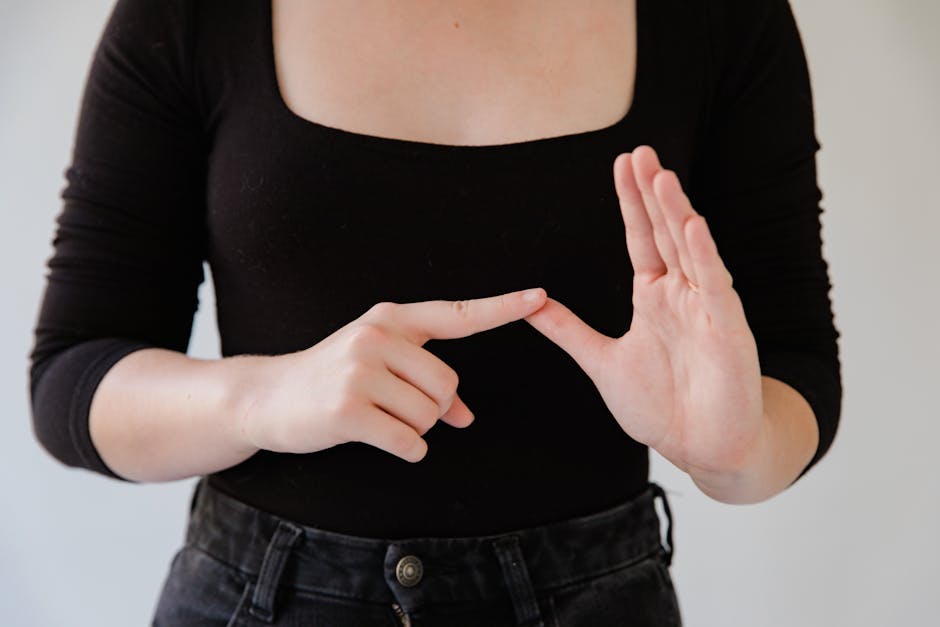
The sign “buttonspāte” is used in the New Zealand Deaf community to refer to the small fasteners found on clothing, such as shirts, jackets, or trousers. This sign is handy in everyday conversations about fashion, tailoring, or clothing repairs.
Table of Contents
How to Sign “ButtonspāTenenoun” in NZSL
- Start with your dominant hand in a flat handshape, palm facing down.
- Position your hand near your chest, at about the height of the buttons on a shirt.
- Move your hand slightly forward while keeping the fingers straight, mimicking the action of pressing or fastening a button.
- As you sign, maintain a neutral facial expression to convey the action clearly.
Common Mistakes
- Confusing the handshape by using a fist instead of a flat hand.
- Incorrectly positioning the hand too high or too low, making it unclear what is being referenced.
- Forgetting to maintain a neutral facial expression, which can lead to misinterpretation.
NZSL vs ASL
In NZSL, the sign for “button” focuses on a flat handshape and the action of pressing. In contrast, ASL uses a different handshape and movement that may involve more of a pinching motion. This highlights the unique characteristics of NZSL as it continues to evolve, influenced by local culture and language.
Related Signs
- (Baby’s) Dummy – a sign for a baby’s pacifier.
- (Be) Careful – a sign indicating caution.
- (All Of) You – used to refer to a group of people.
- (Be) Born, (Give) Birth – related to childbirth.
Frequently Asked Questions
Can I use “buttonspāte” in a sentence?
Yes! For example, you might say, “I need to sew a buttonspāte on my shirt.”
Are there regional variations of this sign in New Zealand?
Yes, some regions may have slight variations in handshape or movement, but the general concept remains the same.
What sign is similar to “buttonspāte”?
The sign for “(Baby’s) Dummy” is related, as it also involves a small object associated with clothing.
What tips can help me learn this sign better?
Practice in front of a mirror to ensure your handshape and positioning are correct. Watching video demonstrations can also be helpful.
Is this sign used in everyday conversation?
Yes, it’s quite common in discussions about clothing, fashion, or repairs.
What other signs should I learn that are related?
Learning signs related to clothing and accessories can enhance your vocabulary, such as “zipper” or “belt.”
Practice This Sign
Try signing ButtonspāTenenoun with your camera and get AI coaching on your handshape, movement, and location.
Free · No signup required