
How to Sign “Sign Language” in BSL – Quick Guide

Knowing how to sign sign language in BSL is one of the first things every learner should master. It’s a sign you’ll use constantly — when telling people you’re learning, when discussing BSL itself, and when navigating conversations about communication. The sign is intuitive once you know it, and this guide breaks down the handshape, movement, and common variations.
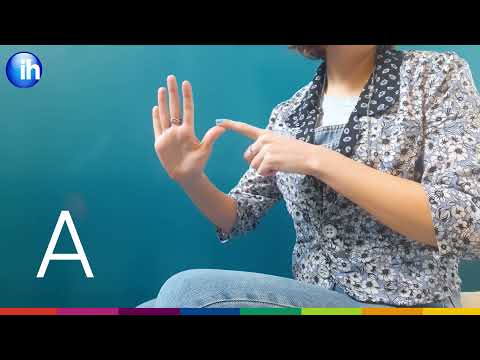
The BSL Sign for Sign Language
The most common BSL sign for “sign language” uses both hands making alternating circular movements in front of your body. Each hand has the index finger extended and pointing forward, and the hands move in small alternating circles — when one hand moves up, the other moves down. The movement represents the visual back-and-forth of signed conversation.
Position your hands at chest height, roughly shoulder-width apart. The circles should be small and controlled, about the size of a tennis ball, with your index fingers pointing forward and slightly toward each other. The movement is relaxed and fluid, not rigid or mechanical. Practice until the alternating rhythm feels natural.
Some signers produce a variation where the hands use open handshapes (all fingers extended) rather than just the index finger. Both versions are widely understood. The key element that identifies this sign is the alternating circular movement of both hands in signing space — the specific handshape may vary regionally.
The sign can also be produced as a single concept (SIGN-LANGUAGE as one sign) or as two separate signs (SIGN + LANGUAGE). The combined version with alternating circular movements is more common in everyday conversation because it’s faster and flows more naturally. The two-sign version might be used for emphasis or clarity in formal or educational contexts.
Regional Variations and Related Signs
BSL has significant regional variation, and the sign for “sign language” is no exception. In some areas, the sign uses a slightly different movement path — forward-and-back rather than circular, or side-to-side rather than alternating. If you’re learning BSL in a specific region, check with local Deaf signers to learn the variant most commonly used in your area.
The sign for “signing” (the verb — the act of using sign language) is related but distinct. It typically involves both hands moving in the signing space with a more general gesture representing active communication. Context makes it clear whether you’re referring to the language itself or the act of using it.
The sign for BSL specifically sometimes incorporates the fingerspelled letters B-S-L before or instead of the general “sign language” sign. In formal or educational contexts, specifying BSL rather than generic “sign language” is more precise, since there are many different sign languages worldwide. Most casual conversations use the general sign, with context making the specific language clear.
Practice Makes Perfect
Test your sign language skills with our free practice app.
Related signs to learn alongside “sign language” include INTERPRETER (a specific sign showing mediation between two parties), DEAF (touching the ear and mouth areas), and HEARING (often a small circular movement near the ear). These signs frequently appear in the same conversations and contexts as “sign language.”
Using the Sign in Conversation
The most common context for using this sign is the phrase “I’m learning sign language,” which in BSL follows topic-comment order: SIGN LANGUAGE — I — LEARN. This establishes what you’re talking about first, then adds who and what action. Practise this complete phrase until it flows smoothly — you’ll use it frequently when meeting Deaf people.
“Do you know sign language?” is another frequent use. In BSL, this becomes SIGN LANGUAGE — YOU — KNOW, with raised eyebrows to mark it as a yes/no question. This question is useful when you meet someone and want to establish whether BSL communication is possible.
“I love sign language” uses the sign followed by I and LOVE — a simple sentence that Deaf people hear frequently from learners and that demonstrates positive attitude toward the language. While it’s a simple phrase, it communicates genuine enthusiasm and respect for BSL as a language in its own right.
In discussions about Deaf education, rights, or accessibility, you might use “sign language” in more complex sentences. “Sign language should be taught in schools” or “sign language interpreters are needed in hospitals” are examples of sentences where this sign appears in context with other vocabulary. As your BSL develops, you’ll use this sign in increasingly sophisticated ways.
Signs for Specific Sign Languages
BSL has specific signs or naming conventions for other sign languages. American Sign Language (ASL) is often indicated by fingerspelling A-S-L or by using the general “sign language” sign followed by AMERICA. Similarly, Auslan might be signed as SIGN LANGUAGE + AUSTRALIA, and other national sign languages follow the same pattern of combining the general sign with the country name.
International Sign (IS), used at international Deaf events and by the World Federation of the Deaf, has its own sign that differs from any national sign language sign. If you’re involved in international Deaf contexts, learning the sign for International Sign alongside BSL-specific vocabulary is useful for navigating multilingual signing environments.
Understanding that sign languages are distinct national languages — not universal — is fundamental cultural knowledge for any BSL learner. BSL and ASL are mutually unintelligible despite both being used in English-speaking countries. A BSL user meeting an ASL user would face significant communication barriers, similar to a speaker of English meeting a speaker of Mandarin.
Learning the sign for “sign language” in BSL naturally leads to conversations about linguistic diversity in the Deaf world. There are over 300 documented sign languages worldwide, each with its own grammar, vocabulary, and cultural context. BSL belongs to the BANZSL family alongside Auslan and NZSL, which share historical roots and have some mutual intelligibility, unlike the completely separate ASL which descended from French Sign Language.
Related Articles
- How to Say I’m Learning Sign Language in BSL
- What Does BSL Mean in Sign Language
- Sign Language Alphabet BSL
Practice ASL Signs
Use your camera to practice signs and get real-time AI feedback on your technique.
Free · No signup required