
BSL and ASL in British Sign Language (BSL)

The sign for “BSL and ASL” is used to refer to both British Sign Language and American Sign Language. It can be used in discussions about language differences, learning resources, and cultural exchanges between the UK and the US Deaf communities.
How to Sign “Bsl And Asl” in BSL
- Start with your dominant hand in a flat ‘B’ shape (like the palm of your hand facing down) for “BSL”. Place it on the side of your forehead.
- Move your hand slightly forward from your forehead while keeping the ‘B’ shape. This indicates the sign for “B” in “BSL”.
- Next, switch to your non-dominant hand in a flat ‘A’ shape (palm down) for “ASL”. Position it near your opposite shoulder.
- Move your ‘A’ hand forward a little, similar to how you did with the ‘B’ hand. This indicates the sign for “A” in “ASL”.
- Throughout the sign, maintain a neutral facial expression. You can use raised eyebrows while signing to show that you are discussing two languages.
Common Mistakes
- Some learners confuse the hand shapes for ‘B’ and ‘A’, using incorrect hand forms.
- Not moving the hands forward enough can make the sign unclear.
- Forgetting to use appropriate facial expressions, which are important for clarity in BSL.
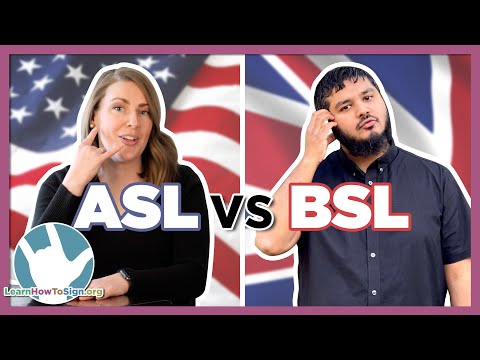
BSL vs ASL
In BSL, the sign for “BSL and ASL” uses distinct hand shapes and movements to represent the two languages. In ASL, the sign is more streamlined and combines the two letters in a different way. This illustrates the visual and grammatical differences between the two languages.
Related Signs
- (Bsl) – The sign for British Sign Language.
- 1 – The sign for the number one.
- 10 – The sign for the number ten.
- 100 – The sign for the number one hundred.
- 11 – The sign for the number eleven.
Frequently Asked Questions
Can I use this sign in a sentence?
Yes, you can use it to describe learning resources: “I am studying BSL and ASL.”
Are there regional variations for this sign?
The basic sign remains consistent, but some regions might have slight variations in hand shape or movement.
What are some similar signs?
Related signs include those for other languages or numbers, such as “1” and “100”.
How can I improve my signing?
Practice regularly with Deaf friends or attend local BSL classes for feedback and learning.
Is there a difference in how BSL is signed in different regions?
While the core signs are the same, some regional dialects may influence the speed or style of signing.
What resources can help me learn BSL and ASL?
Look for online videos, local classes, and Deaf community events to enrich your learning experience.
Practice ASL Signs
Use your camera to practice signs and get real-time AI feedback on your technique.
Free · No signup required