
Sign Language Alphabet BSL – Learn the Manual Alphabet

The sign language alphabet BSL uses is a distinctive two-handed system that sets it apart from most other sign language alphabets worldwide. This manual alphabet is your first tool for BSL communication — it lets you spell any word, giving you a way to communicate even before you’ve learned vocabulary signs. Mastering it thoroughly is essential because fingerspelling appears in every BSL conversation.
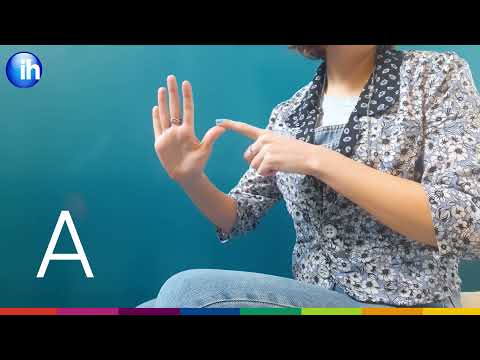
The Two-Handed BSL Alphabet
Every letter in the BSL alphabet involves both hands working together. Your non-dominant hand (left for right-handers) acts as the base, while your dominant hand creates the distinctive shape or touches a specific location on the base hand. This two-handed approach creates visually clear letter formations that are readable from a greater distance than one-handed alphabets.
The vowels follow an elegant pattern. A is indicated by pointing to the thumb of the non-dominant hand, E to the index finger, I to the middle finger, O to the ring finger, and U to the little finger. Moving sequentially across the fingers from thumb to little finger spells A-E-I-O-U. This systematic design makes the vowels one of the easiest letter groups to learn and recall.
Consonants use a variety of formations. Some involve the dominant hand touching the non-dominant hand in specific ways — B places the flat dominant hand against the flat non-dominant hand, C curves both hands together, D points the dominant index finger into the cupped non-dominant hand. Others create letter shapes — H lines up two index fingers side by side, V extends two fingers upward, and Z traces a zigzag path.
The BSL alphabet is shared with Auslan (Australian Sign Language) and NZSL (New Zealand Sign Language), reflecting their common heritage in British Deaf education. A BSL user can fingerspell to an Auslan or NZSL user and be understood immediately. This connection extends the practical value of learning the BSL alphabet beyond British borders.
Why BSL Uses Two Hands
The two-handed alphabet is historically rooted in British Deaf education traditions dating back centuries. While the exact origins are debated, the system was well established by the time formal Deaf education began in Britain in the 18th century. It developed independently from the one-handed French manual alphabet that spread to the Americas and much of continental Europe.
Practical advantages of the two-handed system include greater visibility at distance and larger, more distinctive letter formations. In environments like classrooms, workshops, or outdoor spaces, two-handed fingerspelling is easier to read from further away than the smaller one-handed formations used in ASL and other sign languages. The larger visual footprint reduces misreadings.
The two-handed alphabet does require both hands to be free, which can be a limitation in situations where one hand is occupied — carrying something, holding a phone, or using a mobility aid. In practice, experienced BSL users adapt by producing abbreviated or one-handed versions of letters when necessary, though the standard form always uses both hands.
Practice Makes Perfect
Test your sign language skills with our free practice app.
Learning the BSL two-handed alphabet after knowing a one-handed alphabet (or vice versa) is surprisingly manageable. The letter-sound associations are the same — only the hand formations differ. Many people who know both ASL and BSL alphabets report that they can switch between them with practice, though confusion can occur when both systems are used in the same period.
Tips for Mastering the BSL Alphabet
Learn from video, not static images. The transitions between letters — how your hands move from one formation to the next — are a critical part of fluent fingerspelling that no chart or photograph can convey. Watch BSL alphabet tutorials that demonstrate each letter in sequence and practise along with the video until the movements become natural.
Group similar letters together for focused practice. Practise the vowels as a group (A-E-I-O-U across the fingers). Practise letters that use pointing gestures together (A, E, I, O, U, and others that point to specific hand locations). Practise visually distinctive letters (C, H, V, Z) together. Grouping by formation type helps you organise the alphabet in your memory and reduces confusion between similar letters.
Spell real words from your very first practice session. Don’t just cycle through the alphabet in order — that develops alphabetical recall but not practical fingerspelling ability. Spell your name, your town, your job title, and common everyday words. Real-word practice builds the transition fluency you need for actual BSL conversation where words, not alphabetical sequences, are what you’ll spell.
Develop reception skills alongside production. Ask a friend to fingerspell words for you, or use online fingerspelling practice tools that display signed letters for you to read. Being able to read fingerspelling at natural speed is just as important as being able to produce it. Many learners focus on production and then struggle to understand fingerspelling when Deaf people use it in conversation at full speed.
When Fingerspelling Is Used in BSL
Names are the primary use of fingerspelling in BSL. People’s names, place names, brand names, and other proper nouns are typically fingerspelled when first introduced. Deaf people often have name signs — personalised signs that identify them — but these are given by the Deaf community, and fingerspelling is used until a name sign has been established.
Technical vocabulary and jargon that doesn’t have an established BSL sign is fingerspelled. In specialised contexts like medicine, law, technology, or specific workplaces, niche terminology may be spelled out. As certain technical terms become more commonly discussed in BSL, the community may develop signs for them, but until then, fingerspelling fills the gap.
Clarification and emphasis use fingerspelling strategically. If a conversation partner hasn’t understood a sign, fingerspelling the English word can clarify the intended meaning. Similarly, signers sometimes fingerspell a key word for emphasis even when a sign exists, drawing attention to that specific term. This strategic fingerspelling is a natural part of BSL communication style.
Some common short words are routinely fingerspelled in BSL rather than signed. Words like “bus,” “pub,” and “tea” are frequently fingerspelled because the letter sequence is faster than any vocabulary sign, or because the fingerspelled version has become the conventional way to express the concept. These fingerspelled words function essentially as signs in their own right, produced with the speed and fluency of any vocabulary sign.
Related Articles
Practice ASL Signs
Use your camera to practice signs and get real-time AI feedback on your technique.
Free · No signup required