
How to Say I’m Learning Sign Language in BSL
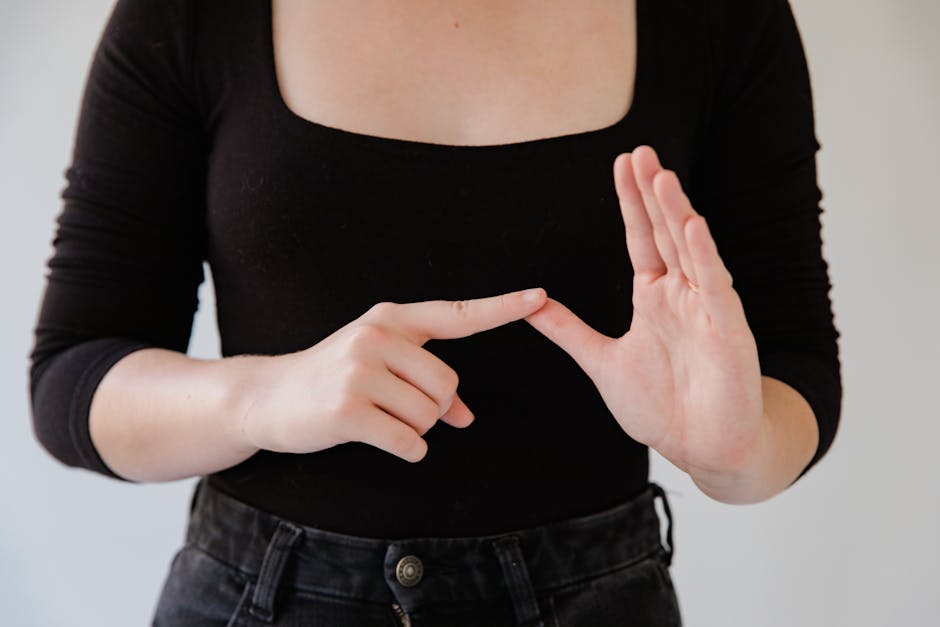
Knowing how to say I’m learning sign language in BSL is one of the most useful phrases you can master early. It immediately tells Deaf people that you’re a learner, which sets appropriate expectations for the conversation and almost always earns you patience, encouragement, and slower signing. This single phrase transforms your interactions with the Deaf community from awkward to welcoming.
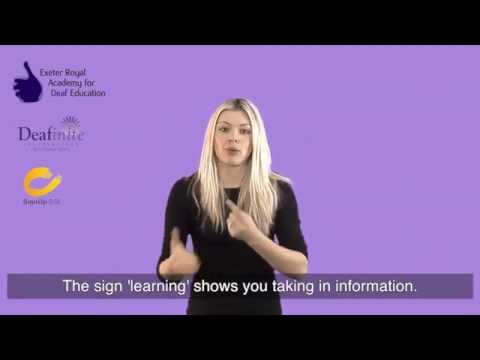
Signing “I’m Learning Sign Language” Step by Step
In BSL, this phrase uses a different word order from English. Rather than signing each English word in sequence, you express the concept using BSL grammar. The typical BSL structure is: SIGN LANGUAGE — I — LEARN. This follows BSL’s topic-comment structure, establishing what you’re talking about (sign language) before the action (learning).
The sign for SIGN LANGUAGE involves both hands moving in alternating circular motions in front of your body, representing the act of signing. Some regional variations exist, but this is the most widely understood form. Keep the movements controlled and in your signing space — roughly the area between your waist and the top of your head, and between your shoulders.
Point to yourself for “I” using your index finger directed at your chest. This is intuitive and consistent across almost all sign languages. The pointing should be clear but brief — it’s a grammatical marker, not an emphatic gesture.
The sign for LEARN typically involves one hand moving from an open book position (flat hand, palm up) to the forehead, representing taking knowledge from a source and putting it into your mind. This sign is clear, memorable, and immediately understood. Combine all three elements — SIGN LANGUAGE, I, LEARN — smoothly, and you’ve expressed yourself in grammatically natural BSL.
Related Phrases Every Learner Needs
“Please sign slowly” is your best friend as a learner. In BSL, you sign PLEASE followed by SIGN then SLOW, with a gentle facial expression that conveys the request politely. Most Deaf people are happy to adjust their signing speed for learners, but they need to know you need it — native signers naturally sign much faster than tutorial videos demonstrate.
“I don’t understand” — UNDERSTAND combined with a headshake — is essential for honest communication. It’s far better to indicate when you’ve lost the thread than to nod along pretending to follow. Deaf people respect honesty from learners and will typically rephrase, use simpler signs, or find another way to communicate the idea.
“Can you repeat that?” is another phrase to have ready. The sign for REPEAT (or AGAIN) followed by a questioning facial expression with raised eyebrows works naturally in conversation. Don’t feel embarrassed about asking for repetition — it shows you’re genuinely trying to understand rather than passively watching.
Practice Makes Perfect
Test your sign language skills with our free practice app.
“Thank you” and “sorry” are social lubricants that make every interaction smoother. Thank Deaf people for their patience, and apologise naturally when communication breaks down. These polite signs, combined with appropriate facial expressions, demonstrate respect and cultural awareness that Deaf people appreciate from learners.
When and How to Use This Phrase
Use “I’m learning sign language” as an opening when you meet a Deaf person for the first time. It immediately contextualises the conversation — the Deaf person understands they need to sign more slowly and clearly, use simpler vocabulary, and be patient with your responses. Without this context, they might assume you’re more fluent than you are and sign at natural speed.
In professional settings, this phrase demonstrates initiative and respect. If you encounter a Deaf colleague, customer, or service user, signing even this one phrase — rather than immediately reaching for pen and paper — shows that you’ve made an effort to communicate in their language. The impact of this small gesture on relationship-building is disproportionately large.
At Deaf community events, identifying yourself as a learner is both practical and culturally appropriate. It helps people calibrate their signing to your level and often opens the door to helpful interactions where experienced signers teach you new signs, correct your production, and share cultural knowledge. Most Deaf community members are enthusiastic about supporting genuine learners.
Don’t overuse this phrase as a crutch to avoid attempting more complex communication. Once you’ve established that you’re a learner, focus on using whatever BSL you know rather than repeatedly defaulting to this disclaimer. Deaf people would rather see you try and make mistakes than constantly apologise for your level. The phrase sets the scene — your signing effort tells the real story.
Building Confidence in Deaf Interactions
Many learners avoid Deaf community interaction because they feel their BSL isn’t “good enough.” This creates a frustrating cycle — you can’t improve without practice, but you avoid practice because you’re not good enough. Knowing key phrases like “I’m learning sign language” breaks this cycle by giving you a comfortable entry point into any conversation.
Start with low-pressure situations. Deaf awareness events, learner-friendly practice sessions, and online social meetups are designed for people at your level. You don’t need to jump straight into a conversation at a Deaf club where everyone is signing at full speed. Build your confidence gradually through interactions where mistakes are expected and welcomed.
Remember that communication is broader than language proficiency. Gesture, facial expression, pointing, fingerspelling, and even writing can supplement your developing BSL skills. Deaf people are expert visual communicators who are accustomed to finding ways to communicate across language barriers. They’ll meet you halfway — and often much more than halfway — if you show willingness.
Every interaction with a Deaf person is a learning opportunity, regardless of how awkward it feels in the moment. The signs you learn in real conversation stick in your memory far more effectively than signs learned from videos. The embarrassment of making a mistake in front of someone fades within minutes, but the BSL skill you gained from that interaction stays with you permanently. Embrace the discomfort — it’s the feeling of genuine progress.
Related Articles
Practice ASL Signs
Use your camera to practice signs and get real-time AI feedback on your technique.
Free · No signup required