
Waken in British Sign Language (BSL)
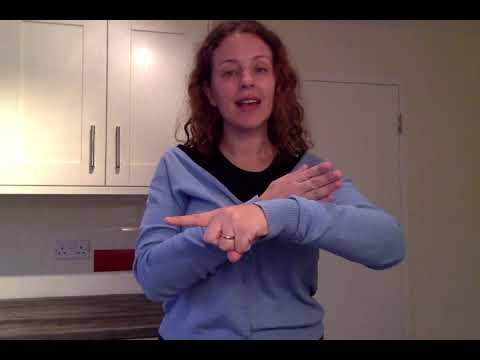
The sign “waken” in BSL is used to describe the action of waking up, commonly used in conversations about daily routines or experiences. It conveys the idea of transitioning from sleep to wakefulness and is often accompanied by facial expressions that reflect the feelings associated with waking up. This sign is an essential part of everyday communication within the UK Deaf community.
How to Sign “Waken” in BSL
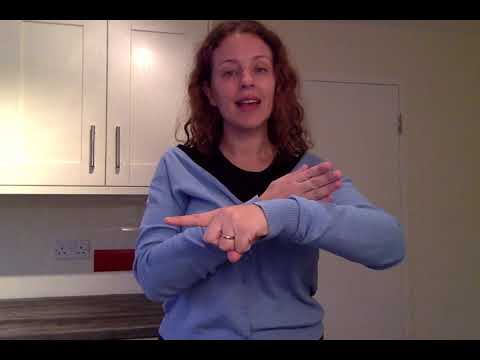
- Start with your dominant hand in a flat handshape (like the palm of your hand facing down).
- Position your hand just above your head, with the fingertips touching your forehead.
- As you move your hand upward, slightly arch your hand so that your palm rotates forward.
- Simultaneously, open your eyes wide and raise your eyebrows to express the action of waking up.
- Finish the movement by bringing your hand down slightly, as if you are indicating the end of the waking process.
Common Mistakes
- Forgetting to use facial expressions, which are crucial in conveying the meaning of the sign.
- Incorrect hand shape; ensure your hand is flat rather than in a fist.
- Not using the topic-comment structure, which may lead to unclear communication.
BSL vs ASL
In BSL, “waken” is typically signed with a flat hand moving upward from the forehead, while in ASL, the sign often uses a different handshape and movement. This highlights the unique grammar and structure of BSL compared to ASL, including the emphasis on facial expressions and eye contact in BSL.
Related Signs
- 1 – The sign for the number one.
- 10 – The sign for the number ten.
- 100 – The sign for the number one hundred.
- 12 – The sign for the number twelve.
- 14 – The sign for the number fourteen.
Frequently Asked Questions
Can “waken” be used in different contexts?
Yes, “waken” can be used in various contexts, such as discussing waking up in the morning or being startled awake. The context will determine the accompanying facial expressions.
Are there regional variations for this sign in the UK?
While the sign for “waken” is generally consistent across the UK, some regional dialects may have slight variations in hand movement or facial expression.
What are some similar signs to “waken”?
Signs like “sleep,” “tired,” and “awake” are related and can be used in conjunction with “waken” to describe various states of being.
How can I improve my BSL skills for signing “waken”?
Practice regularly with Deaf friends or attend BSL classes to enhance your fluency. Focus on incorporating facial expressions and body language.
Is it important to use non-manual features when signing?
Absolutely! Non-manual features, like facial expressions, are integral to conveying meaning in BSL and should be included in your signing practice.
What is the topic-comment structure in BSL?
The topic-comment structure involves presenting the topic first (e.g., “I”) followed by the comment (e.g., “waken”). This helps clarify the meaning of the sign within a sentence.
Practice This Sign
Try signing Waken In Bsl with your camera and get AI coaching on your handshape, movement, and location.
Free · No signup required