
10 in British Sign Language (BSL)

The sign for “10” in BSL is a fundamental number sign used frequently in everyday conversation, such as counting, giving directions, or stating amounts. It’s essential for both social interactions and practical situations in the Deaf community across the UK.
How to Sign “10” in BSL
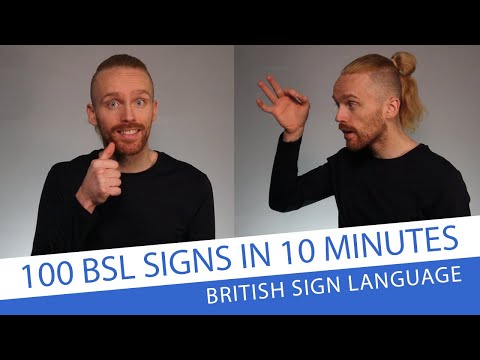
- Begin with your dominant hand in a fist shape, with your thumb extended alongside your fingers.
- Position your hand in front of your body, approximately at chest height.
- Quickly open your fist, extending your fingers outwards while keeping your thumb up.
- Maintain a relaxed but confident facial expression, as facial expressions are an important part of BSL communication.
- Finish the sign by returning to the fist position if you are continuing to sign numbers or counting.
Common Mistakes
- Some learners may forget to keep their facial expressions neutral or appropriate, which can lead to misunderstandings.
- Using an incorrect handshape, such as spreading the fingers too far apart or not extending the thumb properly.
- Performing the sign too slowly; “10” should be signed with a quick, smooth motion to convey fluency.
BSL vs ASL
In BSL, the sign for “10” involves a specific handshape and movement that differs from ASL. In ASL, “10” is signed by holding up the index finger with the thumb tucked. It’s important to be aware of these differences, especially when interacting with members of the Deaf community from different regions.
Related Signs
- 1 – The sign for the number one in BSL, often used in counting.
- 10 – A direct link to the sign for ten, useful for practice.
- 100 – Sign for the number one hundred, useful in discussions about larger quantities.
- 11 – The sign for eleven, important for counting in a sequence.
- 12 – The sign for twelve, another essential number in counting.
Frequently Asked Questions
How do I use “10” in a BSL sentence?
You can say something like “I have 10 apples” by signing “I HAVE” followed by “10” to indicate the quantity.
Are there regional variations for the sign “10”?
Generally, the sign for “10” remains consistent across the UK, but some variations in speed or facial expression might be observed based on local dialects.
What is a similar sign to “10”?
The sign for “100” is similar, but with a different handshape and movement. It’s useful to practice both signs together.
Any tips for learning this sign?
Practice in front of a mirror to ensure your handshape and facial expressions are correct. Watching videos can also help with muscle memory.
Can I use “10” for counting?
Yes! “10” is commonly used when counting in BSL, especially when counting items or people.
Is this sign used in both formal and informal settings?
Yes, the sign for “10” is appropriate in both casual conversations and more formal discussions.
Practice ASL Signs
Use your camera to practice signs and get real-time AI feedback on your technique.
Free · No signup required