
Sleep in British Sign Language (BSL)
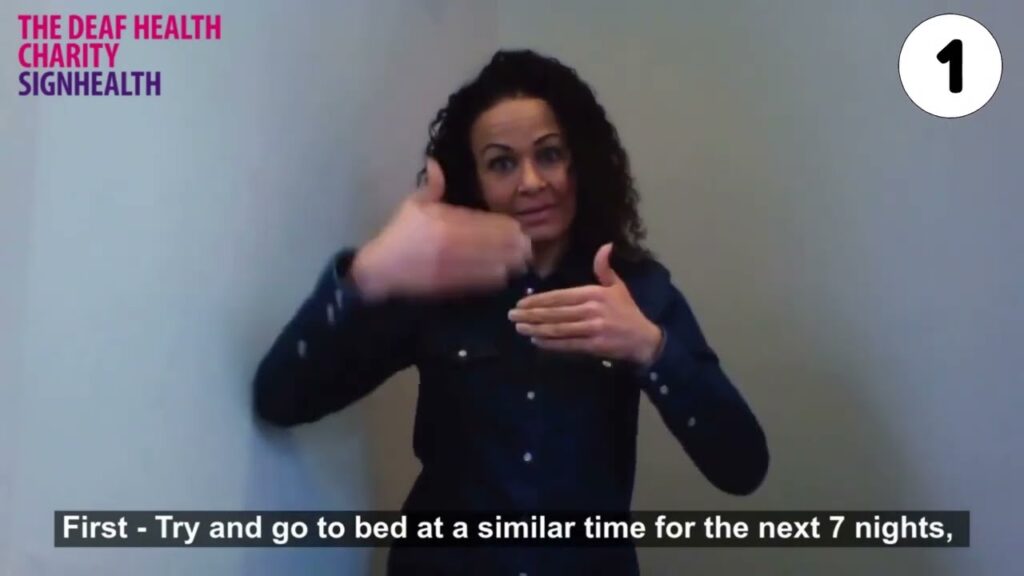
The sign for “sleep” in British Sign Language (BSL) represents the act of resting or sleeping. It’s commonly used in daily conversations, especially when discussing bedtime routines, feelings of tiredness, or when planning to take a nap. This sign is integral to expressing one’s state of rest within the UK Deaf community.
How to Sign “Sleep” in BSL
- Start with your dominant hand in a flat shape, fingers extended and together.
- Position your hand near your cheek, similar to how you would rest your head on a pillow.
- Gently move your hand downwards, as if you are laying your head down to sleep.
- Facial expressions are important: relax your face, and slightly close your eyes to convey the idea of sleeping.
- Maintain a calm and peaceful demeanor to enhance the meaning of the sign.
Common Mistakes
- Forgetting to use relaxed facial expressions, which can make the sign seem less expressive.
- Using a fist instead of a flat hand, which changes the meaning entirely.
- Rushing through the sign instead of taking the time to show the action of laying down.
BSL vs ASL
In American Sign Language (ASL), the sign for “sleep” is different. ASL often uses a more compact handshape and a distinct movement towards the head rather than the downward motion seen in BSL. This highlights the unique characteristics of each sign language and their cultural contexts.
Related Signs
- Sleepy – A sign indicating a feeling of tiredness.
- Night – Used to discuss the time of day when people typically sleep.
- Wake – The action of waking up from sleep.
- Rest – A sign for taking a break or relaxing.
- Dream – Related to what happens during sleep.
Frequently Asked Questions
How do I use “sleep” in BSL sentences?
You can use “sleep” in sentences like “I want to sleep” by signing “I” (point to yourself), followed by the sign for “sleep.”
Are there regional variations for the sign “sleep”?
While the sign is generally consistent, some regions might have slight variations in movement or facial expression.
What other signs are similar to “sleep”?
Signs like “rest” and “tired” convey related meanings and can be used in similar contexts.
What tips do you have for learning this sign?
Practice regularly in front of a mirror to ensure your facial expressions match the sign’s meaning.
Can I use this sign in a conversation about bedtime?
Absolutely! It’s perfect for discussing bedtime routines or plans for sleeping.
What is the importance of facial expressions in this sign?
Facial expressions add context and emotion to the sign, making it more meaningful in conversation.
Practice ASL Signs
Use your camera to practice signs and get real-time AI feedback on your technique.
Free · No signup required