
You Are in British Sign Language (BSL)

The sign for “you are in BSL” is a way to affirm someone’s presence or participation in British Sign Language. It is often used in conversations to encourage engagement and inclusion within the Deaf community, emphasizing the importance of communication in BSL.
How to Sign “You Are In Bsl” in BSL
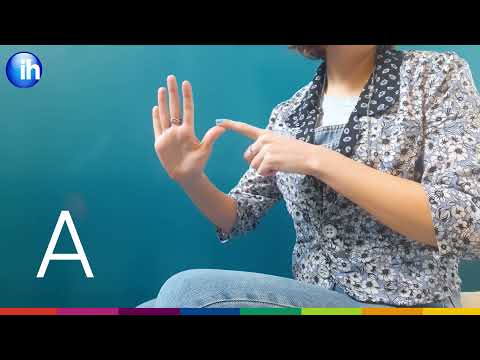
- Start with your dominant hand in a ‘flat hand’ shape (like the palm of your hand facing down) to represent ‘you’. Position this hand at about chest height, facing towards the person you are addressing.
- Next, to sign ‘are’, gently move your hand forward slightly, indicating the action of being or existing.
- For ‘in’, bring both hands together in front of your body, making a circular motion to indicate inclusion or being inside something.
- Now, for ‘BSL’, form the letters ‘B’, ‘S’, and ‘L’ using your dominant hand. Start with a ‘B’ handshape (fingers extended, thumb folded across the palm), then transition to ‘S’ (a fist with the thumb resting on the front), and finally to ‘L’ (index finger and thumb extended to form an L). You can sign this in the same space as the previous gestures, showing they are connected.
- Throughout the signing, maintain a friendly facial expression and engage with your audience to emphasize the connection and community.
Common Mistakes
- Forgetting to use facial expressions, which are crucial for conveying meaning in BSL.
- Not establishing the right space for the signs, leading to confusion about the subject and intent.
- Misforming the letters in ‘BSL’, which can lead to misunderstanding the sign.
BSL vs ASL
In American Sign Language (ASL), the sign for “you are in” would be different, often using a combination of gestures that do not resemble the BSL version. BSL places significant emphasis on the letters and the inclusion sign, while ASL may use more contextual gestures to convey similar meanings.
Related Signs
- Bsl – The sign for British Sign Language.
- 1 – The sign for the number one.
- 10 – The sign for the number ten.
- 100 – The sign for the number one hundred.
- 11 – The sign for the number eleven.
Frequently Asked Questions
Can I use this sign in a sentence?
Yes, you can incorporate it in a full sentence. For example, “You are in BSL right now” would follow the same sign sequence, just adjusting the context.
Are there regional variations for this sign?
While the core sign remains the same, some regions might have slight variations in how they emphasize ‘BSL’ or the movement of ‘in’.
What similar signs should I know?
Familiarizing yourself with signs like Bsl and numbers like 1 and 10 can enhance your communication skills.
What are some tips for learning this sign?
Practice in front of a mirror to check your hand shapes and facial expressions. Watching videos of native signers can also help you improve.
Is it important to use facial expressions?
Absolutely! Facial expressions are essential in BSL to convey tone and emotion, making your communication clearer.
Can I use this sign when speaking to someone learning BSL?
Yes, it’s a great way to encourage their use and participation in the language!
Practice ASL Signs
Use your camera to practice signs and get real-time AI feedback on your technique.
Free · No signup required