Practice sign language with AI coachingTry it free →
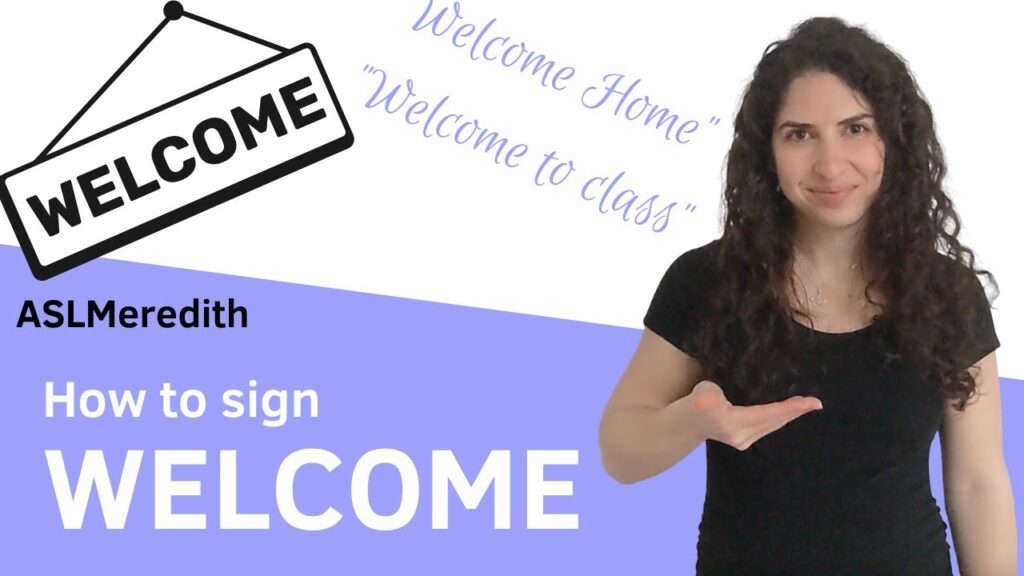
The sign for “welcome” is a warm and friendly gesture used to greet someone and make them feel accepted. It conveys an invitation and shows that you are pleased to see the other person. This sign is commonly used in both casual and formal settings.
You can use the sign ‘welcome’ to greet someone or invite them into a space. For example, you might sign ‘Welcome to my home’ by incorporating the sign with the appropriate signs for ‘my’ and ‘home’ to create a complete sentence.
Are there regional variations of the sign for ‘welcome’ in ASL?
Yes, there can be regional variations in the sign for ‘welcome.’ Some areas may have slight differences in hand shape or movement, so it’s beneficial to observe local Deaf community members to learn the preferred version in your area.
Is the sign ‘welcome’ used differently in formal versus informal contexts?
The sign ‘welcome’ can be used in both formal and informal contexts without modification. However, in formal settings, you might want to complement the sign with a polite smile and eye contact to convey respect and warmth.
What are some signs that are similar to ‘welcome’ and how can I avoid confusion?
The sign for ‘welcome’ can sometimes be confused with the sign for ‘thank you‘ due to the movement of the hands. To avoid confusion, pay attention to the direction and shape of your hands, and practice each sign in context to help solidify their differences.
How does the sign for ‘welcome’ compare to its British Sign Language (BSL) counterpart?
In BSL, the sign for ‘welcome’ is different from ASL. While ASL uses an open hand moving towards the signer, BSL may involve a more specific gesture. Understanding these differences is important for effective communication when interacting with BSL users.
What are some teaching tips for helping students learn the sign ‘welcome’?
Encourage students to practice the sign in context, perhaps by role-playing greeting scenarios. Using visual aids and incorporating friendly facial expressions can also enhance understanding, as ASL relies heavily on non-manual signals to convey meaning.