
Katikati in New Zealand Sign Language (NZSL)
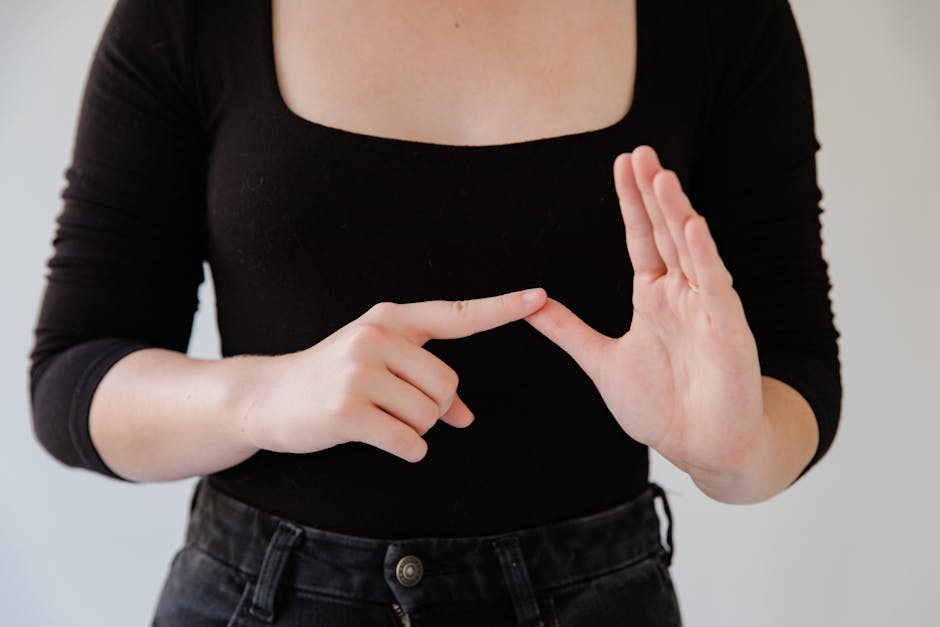
“Katikatikatikatinoun” refers to the act of repeatedly poking or prodding something, often used in a playful context or when describing a persistent action. This sign is commonly used in casual conversations within the NZ Deaf community, especially among friends and family during light-hearted exchanges.
Table of Contents
How to Sign “Katikatikatikatinoun” in NZSL
- Start with your dominant hand in a flat ‘B’ handshape, fingers extended and together.
- Position your hand in front of you, about shoulder height, with your palm facing down.
- Move your hand forward slightly, then return it to the starting position.
- Repeat this forward and backward motion a few times to indicate the action of poking or prodding.
- Incorporate a playful facial expression to convey the light-hearted nature of the action.
Common Mistakes
- Forgetting to use the playful facial expression, which is important in conveying the intent of the sign.
- Using a fist instead of a flat ‘B’ handshape, which alters the meaning of the sign.
- Not repeating the movement enough, which can lead to misunderstanding the context of the action.
NZSL vs ASL
In NZSL, “Katikatikatikatinoun” involves a flat handshape and a playful movement. In contrast, ASL may use a different handshape or movement pattern to convey a similar concept. While both forms of sign language share some similarities due to their historical influences, the specific signs can vary significantly.
Related Signs
- (All Of) You – A sign indicating a group of people.
- (Baby’s) Dummy – Referring to a pacifier for infants.
- (Be) Careful – A sign that conveys the idea of caution.
- (Be) Born, (Give) Birth – Relating to childbirth and new life.
- (Be) Passive – Indicating a non-active state or behavior.
Frequently Asked Questions
How can I use “katikatikatikatinoun” in a sentence?
You might say, “The child kept katikatikatikatinoun the toy,” to describe someone playfully poking at an object.
Are there regional variations for this sign in New Zealand?
While “katikatikatikatinoun” is generally understood across New Zealand, some regions may have slight variations in movement or handshape.
What is a similar sign to “katikatikatikatinoun”?
A similar sign would be “poke,” which conveys a more general action of prodding, but without the repeated motion aspect.
Do I need to exaggerate movements when signing?
Exaggerating movements can help convey meaning more clearly, especially in playful contexts. Facial expressions are equally important!
Where can I learn more about NZSL?
There are various resources available online, including courses, videos, and community classes focused on NZSL.
Can I use “katikatikatikatinoun” in formal settings?
This sign is more informal and best used in casual conversations. In formal settings, consider using more standard signs or expressions.
What tips do you have for mastering this sign?
Practice regularly, watch native NZSL users, and focus on incorporating the facial expressions that enhance the meaning of the sign.
Practice This Sign
Try signing Katikatikatikatinoun with your camera and get AI coaching on your handshape, movement, and location.
Free · No signup required