
Knock, Bang, Rap, Strike in New Zealand Sign Language (NZSL)
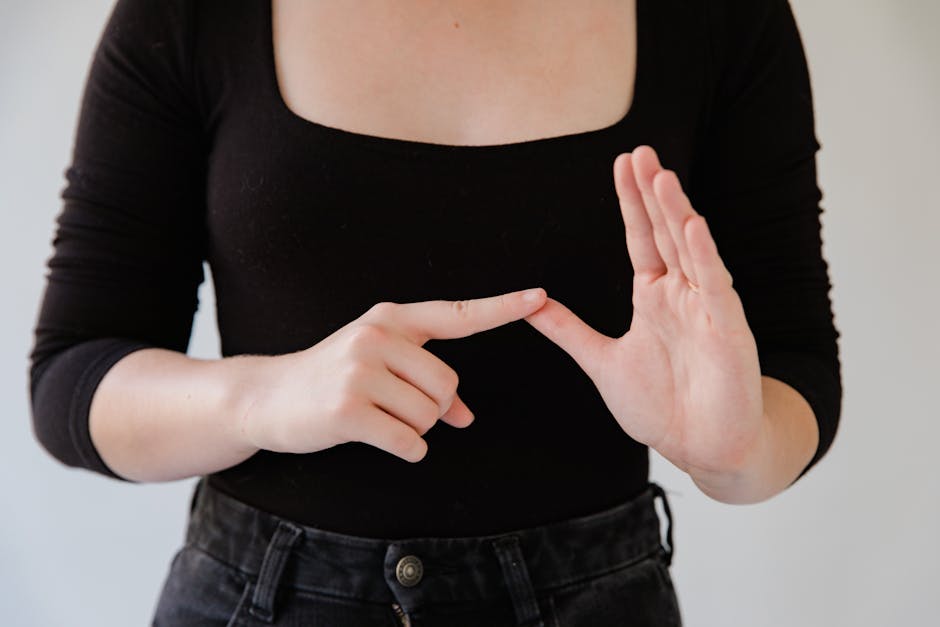
The NZSL sign for “knockbang, rap, strike” conveys the action of knocking or striking, often used when referring to knocking on a door or making a loud noise. This sign is commonly used in everyday conversations within the Deaf community, especially in social contexts or when asking someone to knock on a door.
Table of Contents
How to Sign “Knockbang, Rap, StrikepāTōTōVerb” in NZSL
- Start with your dominant hand in a flat handshape (similar to a ‘5’ handshape) and hold it in front of your chest.
- Bring your hand down sharply, mimicking a knock, while keeping your fingers extended. This movement should be quick and decisive.
- As your hand moves down, raise your eyebrows slightly and open your mouth as if producing a sound, emphasizing the action of knocking.
- Repeat the motion if necessary, depending on the context or the number of knocks you want to convey.
Common Mistakes
- Using a loose or relaxed handshape instead of a firm, flat handshape.
- Failing to include facial expressions, which are crucial in conveying the meaning and intent of the sign.
- Not performing the motion sharply enough, which can lead to confusion with other signs.
NZSL vs ASL
In NZSL, the sign for “knock” emphasizes a sharp downward movement with a flat hand, while ASL uses a more varied handshape and movement. Additionally, NZSL incorporates unique elements influenced by local culture and te reo Māori signs, reflecting its distinct identity.
Related Signs
- (All Of) You – Refers to a group of people or items.
- (Baby’s) Dummy – A sign for a baby’s pacifier.
- (Be) Careful – A sign conveying caution.
- (Be) Passive – Indicating a state of being passive.
Frequently Asked Questions
How do I use “knockbang” in a sentence?
You can use “knockbang” in sentences like “I will knock on the door” by signing “I knockbang door.” Remember to use appropriate facial expressions for clarity.
Are there regional variations for this sign in NZ?
While the sign is generally consistent across New Zealand, some regions might have slight variations in movement or emphasis. It’s always good to observe local Deaf signing patterns.
What is a similar sign to “knockbang”?
A similar sign is “tap,” which involves a lighter touch and is used to indicate a gentle knock or tap on a surface.
Any tips for learning this sign?
Practice in front of a mirror to ensure your handshape and movements are correct. Observing native signers can also help improve your fluency.
How can I emphasize a loud knock?
To emphasize a loud knock, increase the speed and sharpness of your movement, and use a more pronounced facial expression to convey urgency.
Can I use both hands for this sign?
For this sign, it’s common to use one hand, but you can experiment with both hands if it feels more natural for you, especially in emphasizing the action.
Is there a cultural significance to this sign?
Yes, the sign reflects everyday experiences in the Deaf community, reinforcing social interactions and communication norms within the culture.
Practice This Sign
Try signing Knockbang, Rap, StrikepāTōTōVerb with your camera and get AI coaching on your handshape, movement, and location.
Free · No signup required