
Knob, Doorknob in New Zealand Sign Language (NZSL)
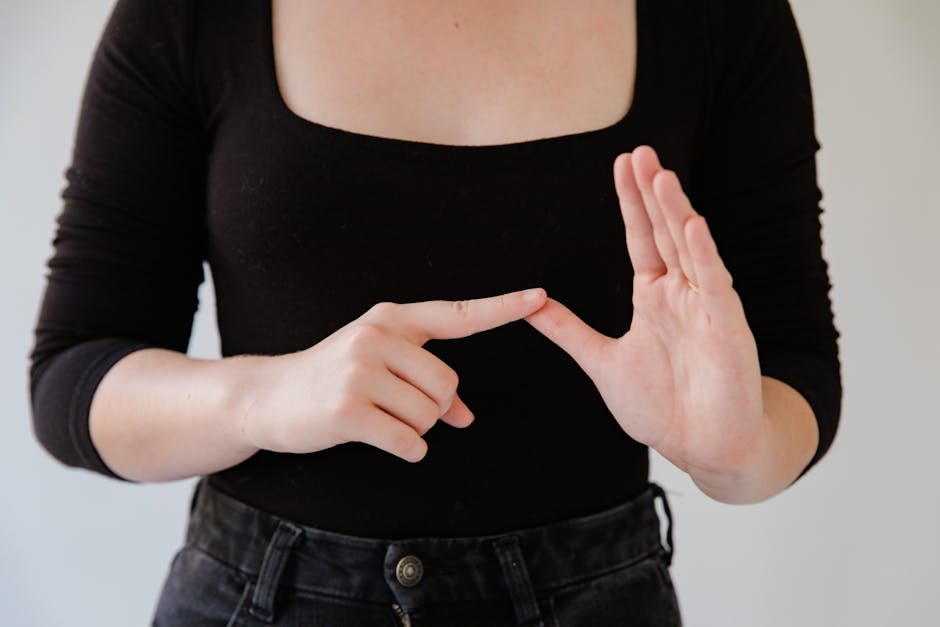
The sign “knobdoorknobpūrori, pōrorinoun” refers to a doorknob, an everyday object that is commonly used in the NZ Deaf community. It is useful in various contexts, such as discussing home design, security, or even when giving directions.
Table of Contents
How to Sign “KnobdoorknobpūRori, PōRorinoun” in NZSL
- Start with your dominant hand in a fist shape, mimicking the shape of a doorknob.
- Position your hand at about waist level, in front of your body.
- Rotate your fist slightly as if you’re turning a doorknob, moving it clockwise.
- Maintain a neutral facial expression or a slight smile to reflect the context of the sign.
- Finish the sign by returning your hand to the starting position.
Common Mistakes
- Some learners forget to mimic the turning motion of the doorknob, leading to confusion about the sign’s meaning.
- Using an open hand instead of a fist can result in misunderstanding, as it does not accurately represent the shape of a doorknob.
- Not maintaining appropriate facial expressions may make the sign less clear to viewers.
NZSL vs ASL
In NZSL, the sign for “doorknob” involves a fist and a turning motion, while in ASL, the sign typically uses an open hand to represent the knob and may not incorporate the same rotating action. This highlights the unique features of NZSL and its distinct cultural influences.
Related Signs
- (All Of) You – A sign used to refer to a group of people.
- (Baby’s) Dummy – Sign for a pacifier or soother for infants.
- (Be) Careful – A sign expressing caution or attentiveness.
- (Be) Born, (Give) Birth – Related to the concept of childbirth.
- (Be) Passive – A sign that denotes a passive action or state.
Frequently Asked Questions
How can I use “knobdoorknobpūrori, pōrorinoun” in a sentence?
You can say, “The doorknob is broken,” by signing “knobdoorknobpūrori, pōrorinoun” and pointing to the door.
Are there regional variations in signing “knobdoorknobpūrori, pōrorinoun”?
While the sign is generally consistent across New Zealand, some regions may have slight variations in hand shape or motion.
What are similar signs to “knobdoorknobpūrori, pōrorinoun”?
Related signs include “door” and “lock,” which may be useful when discussing home security.
What are some tips for learning this sign?
Practice in front of a mirror to ensure your hand shape and motion are accurate. Watching videos of native signers can also help.
Can I use this sign when discussing different types of doorknobs?
Yes, you can modify your description to include the type of doorknob while maintaining the basic sign.
Is there a formal sign language structure for describing objects?
Yes, NZSL has a rich structure that allows for descriptive signs, incorporating hand shapes and movements to represent various objects.
Practice This Sign
Try signing KnobdoorknobpūRori, PōRorinoun with your camera and get AI coaching on your handshape, movement, and location.
Free · No signup required