
Foreplay (verb) in New Zealand Sign Language (NZSL)
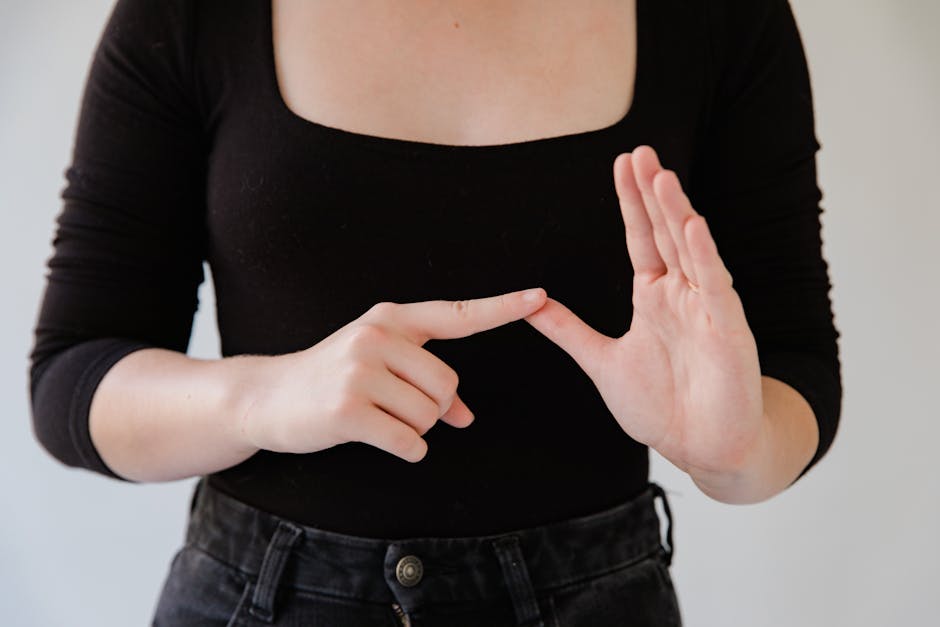
The NZSL sign for “foreplayfooling around, necking, petting, snogging” (whāwhā tahive) is commonly used to describe affectionate physical interactions, often in romantic contexts. This sign reflects the playful and intimate nature of such interactions and is frequently used in conversations among friends or when discussing relationships.
Table of Contents
How to Sign “Foreplayfooling Around, Necking, Petting, SnoggingwhāWhā Tahiverb” in NZSL
- Start with both hands in a relaxed “5” handshape (open fingers).
- Position your dominant hand in front of your chest, with the palm facing inward.
- Move your dominant hand in a gentle, circular motion while keeping the non-dominant hand stable.
- Maintain a playful facial expression that matches the affectionate nature of the sign.
Common Mistakes
- Using a flat handshape instead of the relaxed “5” handshape can change the meaning.
- Forgetting to incorporate appropriate facial expressions, which are important in NZSL for conveying emotions.
- Moving the hands too quickly or in a stiff manner, which may not accurately reflect the playful meaning of the sign.
NZSL vs ASL
In NZSL, the sign for “foreplay” is distinct with its specific hand movements and facial expressions, while in ASL, the sign may differ in handshape and placement. NZSL incorporates unique influences from te reo Māori and local cultural contexts, making it different from ASL signs that may not carry the same connotations.
Related Signs
- (All Of) You – A sign used to refer to a group of people.
- (Baby’s) Dummy – Refers to a pacifier for infants.
- (Be) Born, (Give) Birth – Used in discussions about childbirth.
Frequently Asked Questions
How can I use this sign in a sentence?
You might say, “We were just whāwhā tahive at the park,” to indicate playful affection with someone.
Are there regional variations for this sign in New Zealand?
While the sign is generally consistent, some regions may have slight variations in movement or handshape based on local Deaf community preferences.
What are some similar signs in NZSL?
Signs like “hug” and “kiss” may also be used in similar contexts of affection.
What tips do you have for learning this sign?
Practice in front of a mirror to ensure your handshape and facial expressions match the playful nature of the sign.
Can I use this sign in formal settings?
This sign is usually more appropriate in informal settings; for formal occasions, consider using more neutral signs for affection.
How can I improve my facial expressions while signing?
Watching native signers and practicing in front of others can help enhance your facial expressions to convey emotion effectively.
Practice This Sign
Try signing Foreplayfooling Around, Necking, Petting, SnoggingwhāWhā Tahiverb with your camera and get AI coaching on your handshape, movement, and location.
Free · No signup required