
Deaf Identity in New Zealand Sign Language (NZSL)

The sign for “deaf identity” in NZSL reflects the pride and sense of belonging within the Deaf community in New Zealand. It is often used in discussions about culture, community, and the unique experiences of being Deaf. This sign embodies the values and identity that many in the Deaf community share.
Table of Contents
How to Sign “Deaf Identity” in NZSL
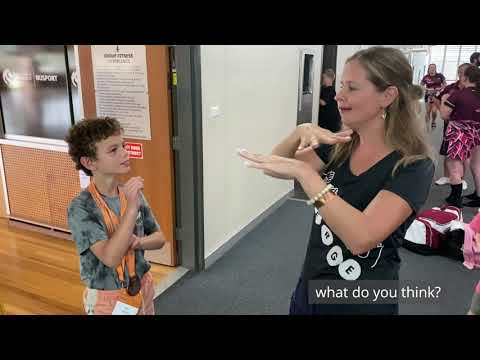
- Start with your dominant hand in the shape of the letter ‘D’.
- Position your hand near your forehead, with your palm facing outwards.
- Move your hand slightly away from your forehead while maintaining the ‘D’ shape.
- As you perform the movement, maintain a confident facial expression to convey pride in Deaf identity.
Common Mistakes
- Using the wrong handshape; some learners mistakenly use a flat hand instead of the ‘D’ shape.
- Not moving the hand away from the forehead enough, which can lead to misunderstanding.
- Forgetting to express emotion on the face, which is essential in NZSL for conveying meaning.
NZSL vs ASL
In NZSL, the sign for “deaf identity” emphasizes the ‘D’ handshape and movement from the forehead, reflecting cultural significance. In contrast, ASL may use a different sign entirely, highlighting the variations in expression and cultural context between the two sign languages.
Related Signs
- (All Of) You – A sign to refer to a group, emphasizing inclusivity.
- (Baby’S) Dummy – A sign related to common objects in daily life.
- (Be) Careful – A sign that conveys caution or care.
- (Be) Born, (Give) Birth – Related to the concepts of family and identity.
Frequently Asked Questions
How can I use “deaf identity” in a sentence?
You can say, “My deaf identity is important to me,” by signing “MY DEAF IDENTITY IMPORTANT.” This conveys the personal significance of being Deaf.
Are there regional variations for this sign in New Zealand?
While the sign is generally consistent, some regions may incorporate slight variations in movement or facial expression, reflecting local Deaf culture.
Is there a similar sign in ASL?
Yes, ASL has a different sign for “deaf identity,” which may not convey the same cultural context as in NZSL.
What tips do you have for learning this sign?
Practice in front of a mirror to see your handshape and facial expressions. Watching fluent signers can also help you grasp the nuances of the sign.
Can I use this sign in a group setting?
Absolutely! It’s a great way to express pride in Deaf identity during community events or discussions.
What are the cultural implications of this sign?
This sign represents belonging and pride within the Deaf community, highlighting the importance of cultural identity.
Practice This Sign
Try signing Deaf Identity with your camera and get AI coaching on your handshape, movement, and location.
Free · No signup required