
Breast(s) (noun) in New Zealand Sign Language (NZSL)
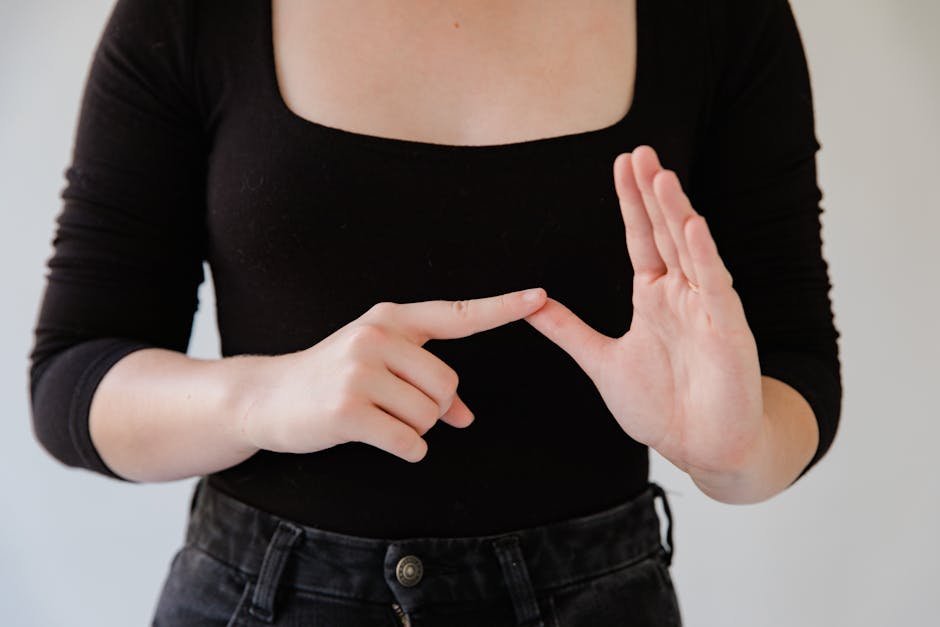
The NZSL sign for “breast(s)” or “bust” refers to the human breast, commonly used in medical contexts, discussions about health, or when talking about body image. This sign can often be seen in conversations relating to women’s health, parenting, or discussions around anatomy.
Table of Contents
How to Sign “Breast(S)BustūNoun” in NZSL
- Start with both hands open and positioned in front of your chest at about shoulder height.
- Use your dominant hand to form a flat ‘B‘ handshape (like a flat palm facing you) and place it over your non-dominant hand, which should remain open.
- Gently move your dominant hand downwards and slightly away from your body, maintaining the ‘B‘ handshape.
- As you make this movement, ensure your facial expression is neutral or reflects the context of your conversation.
Common Mistakes
- Using an incorrect handshape; some learners may try to use a fist instead of the flat ‘B‘.
- Not maintaining the appropriate distance from the body, which can make the sign unclear.
- Rushing the movement; it’s important to perform the sign smoothly and clearly.
NZSL vs ASL
In NZSL, the sign for “breast” involves a unique handshape and movement that differs from ASL. In ASL, the sign typically uses a different gesture and hand position, emphasizing the distinctiveness of NZSL as it has its own cultural and linguistic identity influenced by local context.
Related Signs
- (Baby’s) Dummy – A sign for a pacifier used by infants.
- (Be) Born, (Give) Birth – Related to childbirth and maternal health.
- (All Of) You – A sign for addressing a group directly.
- (Be) Careful – A sign indicating caution.
- (Be) Passive – Relates to a state of being inactive.
Frequently Asked Questions
How do I use “breast” in a sentence in NZSL?
You can incorporate the sign into sentences by pairing it with other signs related to health or anatomy, ensuring you maintain clear facial expressions to convey the context.
Are there regional variations for this sign in New Zealand?
While the sign is generally consistent across New Zealand, some regions may have slight variations in movement or emphasis based on local community preferences.
What similar signs should I learn alongside “breast”?
Consider learning signs for related topics like breastfeeding or maternal health to expand your vocabulary in this context.
Any tips for learning this sign?
Practice in front of a mirror to ensure your handshape and movement are correct, and consider asking a Deaf friend for feedback.
Can I use this sign in formal settings?
Yes, the sign is appropriate in both formal and informal conversations, especially in contexts discussing health or anatomy.
How does this sign relate to te reo Māori?
Some signs in NZSL have been influenced by te reo Māori, reflecting the cultural connections within New Zealand. While this sign may not have a direct te reo equivalent, understanding the cultural context can enhance your learning.
Practice This Sign
Try signing Breast(S)BustūNoun with your camera and get AI coaching on your handshape, movement, and location.
Free · No signup required