
Inklusion in Gebärdensprache in Deutscher Gebärdensprache (DGS)
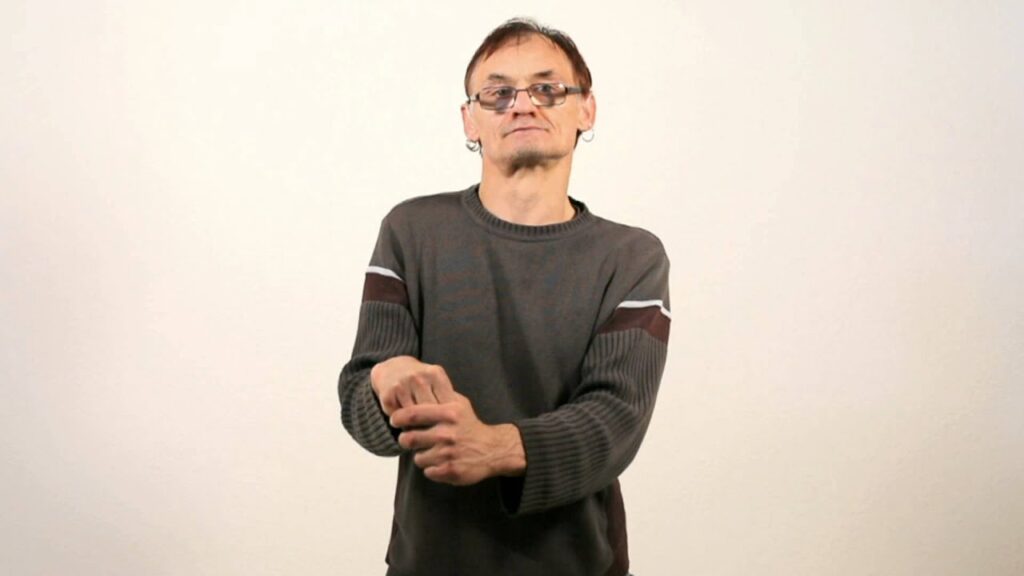
The sign for “Inklusion in Gebärdensprache” expresses the concept of inclusion within the context of sign language. This sign is often used in discussions about accessibility, community participation, and the importance of integrating Deaf individuals into various aspects of society. It emphasizes the value of inclusivity in communication and education.
Table of Contents
How to Sign “Inklusion In Gebärdensprache“
- Start with your dominant hand in a flat handshape (the “B” handshape) held palm down.
- Position your hand near your chest, slightly to one side.
- Move your hand outward and slightly upward in a smooth motion, representing the idea of spreading or expanding.
- As you perform the movement, maintain an open and inviting facial expression to convey warmth and acceptance.
Common Mistakes
- Forgetting to use an inviting facial expression, which can make the sign feel less inclusive.
- Rushing the movement, which can lead to a misunderstanding of the sign’s meaning.
- Incorrectly positioning the hand too far away from the body, losing the personal connection implied in the sign.
Related Signs
- 1 – The sign for the number one.
- 100 – Represents the number one hundred.
- 10 – The sign for the number ten.
- 11 – The sign for the number eleven.
- 12 – Represents the number twelve.
Frequently Asked Questions
How can I use this sign in a sentence?
You can say, “Inklusion in Gebärdensprache ist wichtig für die Gemeinschaft,” meaning “Inclusion in sign language is important for the community.”
Are there regional variations of this sign?
Yes, different regions may have variations in how this sign is performed, reflecting local Deaf culture and preferences.
Are there similar signs in other sign languages?
Yes, British Sign Language (BSL) has its own sign for inclusion, which may look different but convey a similar concept.
What are some tips for teaching this sign?
Encourage students to practice with each other and focus on facial expressions, as they are crucial for conveying meaning.
Can this sign be used in formal settings?
Absolutely! This sign is suitable for discussions in educational, professional, and community settings regarding inclusion.
How does this sign relate to Deaf culture?
This sign reflects the values of the Deaf community, highlighting the importance of inclusion and accessibility for Deaf individuals in all aspects of life.
Practice This Sign
Try signing Inklusion in Gebärdensprache with your camera and get AI coaching on your handshape, movement, and location.
Free · No signup required